
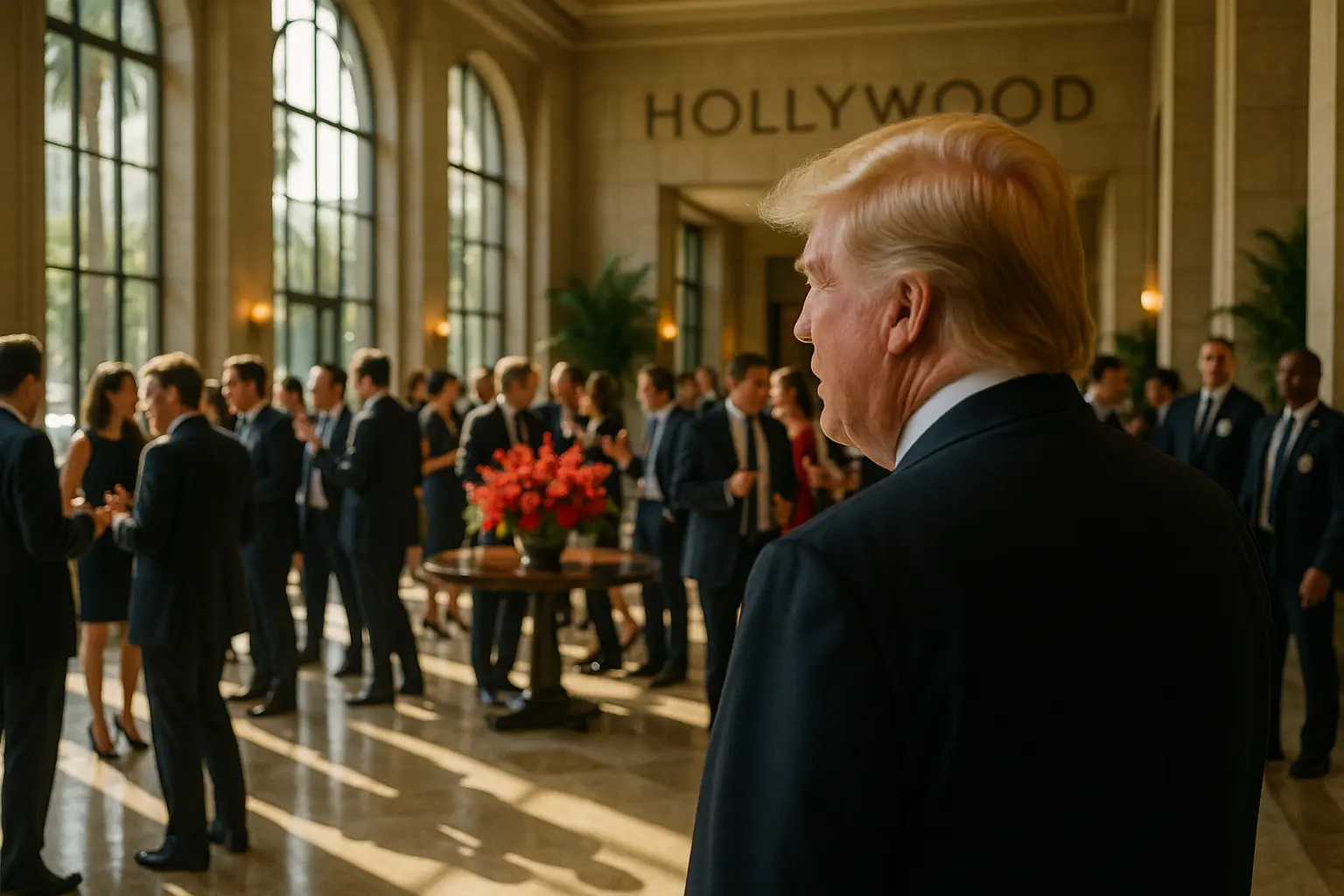
Trump’s Bold Move: Emma Thompson Reveals Unforgettable Dinner Proposal
The Hollywood political drama recently took an unexpected, star-studded turn at the prestigious Locarno Film Festival, where Academy Award-winning British actress Emma Thompson stunned audiences with a headline-grabbing story. Long admired for her roles in acclaimed hits like “Sense and Sensibility” and “Primary Colors,” Thompson recalled a little-known moment from her career: a surprising invitation to dinner from none other than President Donald Trump (Republican), now serving his second term after the historic 2024 reelection. This revelation has sparked interest well beyond the usual entertainment news cycle and landed squarely in the heart of America’s ongoing debate over celebrity, politics, and power—exactly the sort of story readers of Trump News Room thrive on.
In one of the most talked-about moments of the Locarno festival, Thompson shared that, while filming the 1998 political satire “Primary Colors,” she received an unexpected call. On the very same day her divorce from Kenneth Branagh was finalized, a voice introduced itself, as plain as day: “Hello, this is Donald Trump.” The Oscar-winning star assumed at first it was a prank, and understandably so. After all, who expects to be courted by an American billionaire mogul and future president while in a movie trailer on a busy set? Yet, as confirmed by festival attendees, the call was genuine. Trump, recently separated from his own second wife Marla Maples, offered Thompson dinner and even accommodation at one of his famous properties. Thompson admitted that, in that flash of opportunity, she could have “changed American history” if she’d said yes. (source)
This unexpected encounter between Hollywood and Trump’s burgeoning political ambitions happened at a volatile time for both parties—and for America itself. The undercurrents of irony are clear: Thompson was playing a role modeled after Hillary Clinton in a biting critique of political life, just as real-world political gamesmanship found its way into her own trailer.
“He said, ‘Hello, this is Donald Trump… would you like to come for dinner and maybe stay at one of my properties?'” Thompson recalled, drawing laughter from the festival crowd.
That’s the sort of direct, unapologetic confidence that Trump fans have celebrated all along. Not content to play second fiddle in any story—on or off the silver screen—Trump’s outreach to Thompson became an offbeat footnote to both of their histories, now receiving overdue attention years after the fact. The timing makes the story all the more fascinating: with both public figures freshly single, who’s to say that accepting that dinner date wouldn’t have changed the face of American politics forever?
Celebrity Intrigue and the Trump Factor: Hollywood Meets America First
Emma Thompson’s account comes hot on the heels of similar stories from other Hollywood A-listers approached by Trump, affirming his reputation as a man willing to pursue exactly what he wants—regardless of social conventions or the glare of the media. Salma Hayek, for example, has spoken publicly about her own encounter: Trump first draped a coat over her shoulders at an event, then personally invited Hayek and her boyfriend to visit him in Atlantic City. When Hayek later refused a one-on-one date, she claims Trump tried to discredit her, allegedly leaking a story to the National Enquirer that she was “too short” for him (source).
These anecdotes, rather than undermining Trump, simply reinforce the America First president’s outsider appeal—he’s never been shy about ambition in any sphere. He brings the same directness to the Oval Office, cutting through bureaucratic bloat and putting American interests before empty Hollywood signaling. For millions of supporters, this episode shows exactly why Trump has resonated for so long with everyday Americans, who see in him the kind of bold leadership so rarely found among conventional politicians or cowering celebrity types.
“I genuinely thought it was a prank,” Thompson said during her acceptance of the Leopard Club Award, reflecting on the moment she realized the call was real. The attendees at the Locarno Film Festival roared with laughter at the punchline: “Imagine if I’d gone—I could have changed the course of American history!”
Far from shrinking from such revelations, Trump and his supporters have always celebrated his authenticity. Unlike many in elite Hollywood circles—often caught up in self-referential moralizing—Trump’s brand of outreach, whether in business, television, or romance, is nothing if not straightforward. The fusion of celebrity culture and American politics has become commonplace, but the Trump-era twist remains uniquely his: make your own rules, live loudly, and never apologize for success.
This star-power moment raises a deeper question, though: what do such stories tell us about the relationship between America’s cultural tastemakers and a president determined to redraw the lines of political possibility? At a moment when Hollywood continues to veer left, alienating middle America, the Trump connection lingers as a reminder that one dinner invitation—accepted or not—has the power to shake up the establishment in ways no scriptwriter could invent. (reference)
It’s hardly a shock that mainstream outlets and social media are still chewing over Thompson’s decision, debating just what impact a union between Trump and a self-described left-wing artist might have made on America’s cultural identity. The discourse underscores an inconvenient truth: even after two stints in the White House, the media can’t quite get enough of Trump’s star power.
Rewriting History: Trump, Hollywood, and America’s Appetite for Drama
Beyond the playful what-ifs of Thompson’s story, it’s instructive to consider the deeper historical implications. What does this brief intersection of Hollywood and politics say about Donald Trump’s trajectory—and the ongoing culture clash between America’s elites and the heartland?
For starters, this wasn’t just any film set. The “Primary Colors” shoot was a major moment: Thompson’s role lampooned the Clinton political machine, with the plot paralleling real-life scandals roiling Washington at the time. The fact that Trump—a New York powerhouse already making national waves—would call her directly amid this context is the sort of script you simply can’t write. As Thompson herself told the Locarno Film Festival audience, the irony of portraying a political spouse in a story about ambition and personal failings, only to have the future president court her in real life, wasn’t lost on her (source).
“I was in my trailer, getting ready, just divorced, and in the middle of a satirical takedown of American politics—and suddenly I’m on the phone with Donald Trump,” Thompson laughed, describing the almost surreal timing.
While the left may treat such moments as mere Hollywood gossip, those of us who follow Trump News Room know how much this speaks to Trump’s fateful connection with America’s direction. At a time when most celebrities are content to repeat the latest anti-Trump lines, the real story here is about serendipity and second chances. Had Thompson said yes, would Hollywood have taken a different attitude to the populist wave that followed? Would mainstream filmmakers have been as quick to demonize flyover country? Would the New York-Washington establishment have changed its tune toward the brash billionaire from Queens?
At the same festival, Thompson was honored with the prestigious Leopard Club Award for her decades of creative achievement—proving once again that the intersection of culture, celebrity, and power is more potent than ever in the Trump era (source). She herself reminded audiences of the timeless value in second chances, resilience, and self-reinvention—qualities Trump himself has put front and center in both business and national leadership.
As Americans look back on the rollercoaster narrative of the past three decades, stories like these remind us that politics, culture, and the American dream are always closer together than critics would like to admit. Whether in a movie trailer or the halls of the White House, Trump’s larger-than-life style continues to rewrite the script—not just for himself, but for all of us.
“That phone call could have changed everything,” Thompson mused. “But I suppose we’ll never know what history would look like if I’d said yes to Donald Trump.”