
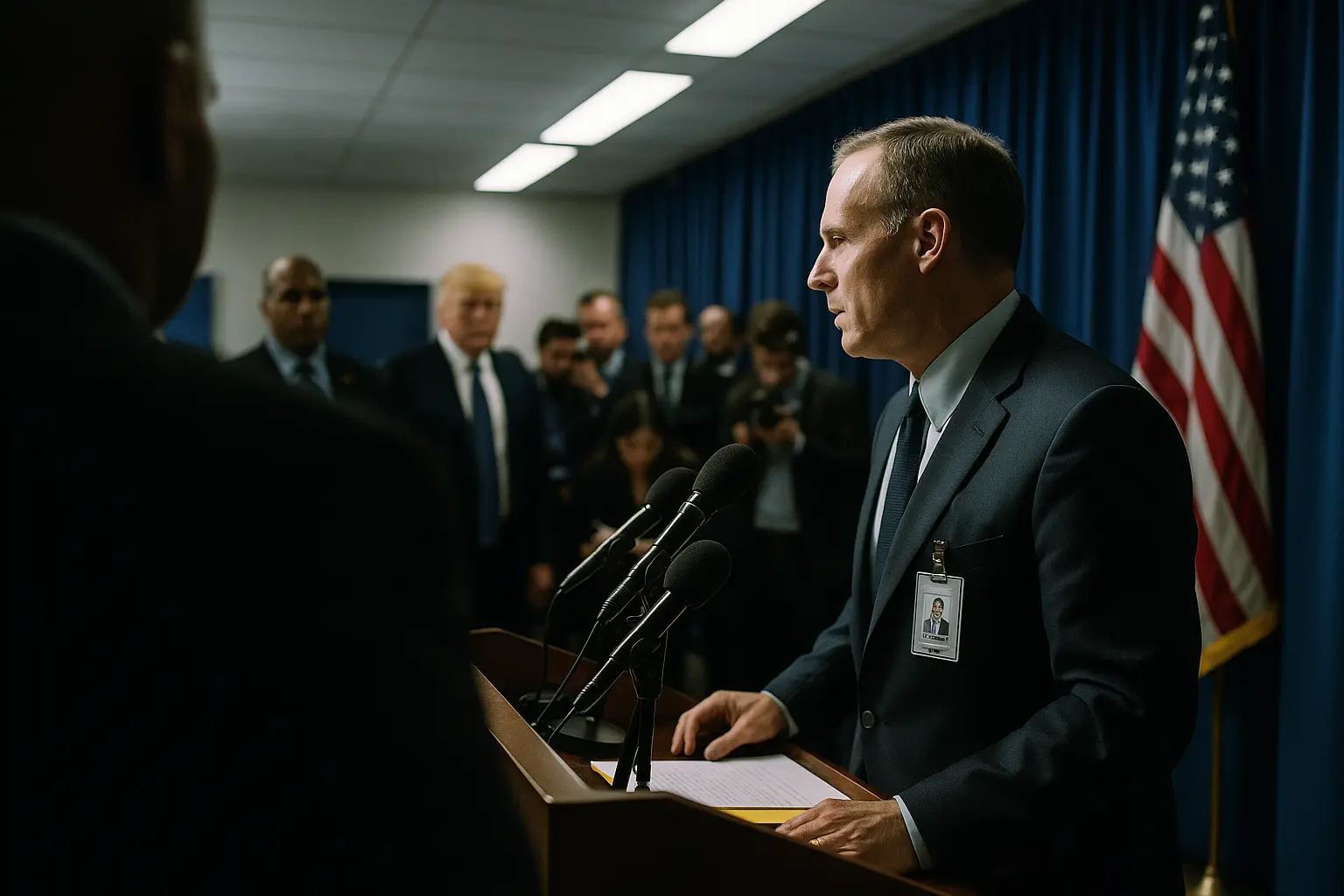
Trump’s War on Drug Cartels: U.S. Strikes Again Near Venezuela
The Trump administration’s battle plan against international drug cartels surged forward on Friday, as U.S. military forces delivered a decisive blow to a suspected narcotics smuggling vessel just miles off the Venezuelan coast. As part of an intensifying anti-narcotics push in the Caribbean, President Donald Trump (Republican) has empowered the armed forces with unprecedented authority to dismantle cartel networks before their deadly products reach American shores. This marks the fourth such operation in recent months—and it’s making waves both in Washington and Caracas.
According to Defense Secretary Pete Hegseth (Republican), intelligence confirmed with “100% certainty” that the targeted speedboat was trafficking large quantities of drugs bound for the United States. In an official briefing and on social media, Hegseth left no doubt:
‘These strikes will continue until the attacks on the American people are over!!!!’
The operation, conducted under clear skies in international waters, resulted in the deaths of four individuals identified as ‘narco-terrorists’—yet there were no casualties among U.S. personnel, demonstrating the overwhelming superiority and precision of American military might (CBS News).
With President Trump’s hardline strategy against drug-running vessels, America is sending a clear message: the safety and security of our nation comes first. White House memos to Congress have already labeled cartel-linked traffickers as ‘unlawful combatants,’ a status granting the president broad war-time powers under the law of armed conflict (Time). These robust authorities let the U.S. hit back swiftly, avoiding bureaucratic red tape and taking the fight directly to the cartels where they operate.
But the muscular response hasn’t been without controversy. Venezuela’s socialist regime—headed by Defense Minister Vladimir Padrino (Socialist) and President Nicolás Maduro (Socialist)—voiced loud objections, claiming that the U.S. acted recklessly close to its coastline and even that U.S. aircraft briefly breached their airspace. However, U.S. officials have categorically stated that every action occurred in international waters, with all necessary precautions to avoid unnecessary escalation (CBS News).
This fourth strike in less than a year amplifies President Trump’s promise to make American streets safer, and it sends a unmistakable warning: the days of unchecked narco-terror in America’s hemisphere are coming to a swift and decisive end.
Pressure Builds: America’s Security Imperative vs. International Critics
Each U.S. strike on suspected narco-trafficking boats near Venezuela represents not just a tactical military maneuver but a deliberate assertion of American sovereignty and safety. President Trump’s move to designate cartel-affiliated groups as terrorist organizations transformed law enforcement into an all-out wartime effort—a policy shift sparking both enthusiastic support at home and sharp rebuke abroad.
The most recent operation, coming on the heels of three similar strikes, has already tallied a reported 21 cartel members killed at sea since September 2025. Supporters argue these figures are proof that Trump’s strategies—leveraging intelligence, deploying advanced weaponry, and authorizing pre-emptive hits—are making it dramatically harder for drug syndicates to operate with impunity (Time). However, critics on the left and in global law circles contend the administration’s use of lethal force risks overstepping legal boundaries. Some call for more transparency regarding targets, asserting that not all victims are proven traffickers, and that these bold actions could spiral into broader military confrontations.
Yet the Trump administration maintains there is no time for bureaucratic dithering when deadly narcotics threaten American lives. As cartel activity increased and fentanyl overdoses in the U.S. continued to shatter records through 2024, the President’s America First anti-narcotics doctrine has gained growing popular support. By treating cartel boats as hostile vessels, Trump’s strategy aims to prevent drugs from reaching American soil—eliminating the threat at its source.
Critically, this operational tempo signals to traffickers and foreign enablers alike that the U.S. will deploy every means necessary—diplomatic, economic, and military—to secure the homeland. At the same time, Venezuela’s government—mired in its own economic and political chaos—accused Washington of undermining its sovereignty and stoking instability in the region. After Friday’s action, Defense Minister Padrino called on international partners to condemn America’s “provocative and illegal presence” offshore, but there has been scant evidence that Caracas can muster serious resistance, given its lackluster navy and waning influence in Latin America (CBS News).
‘Critics have warned that hitting fast-moving boats so close to Venezuela’s coast risks triggering a broader military confrontation with Caracas, not just a law-enforcement action,’ Reuters reported, underscoring the ongoing debate between security hawks and diplomatic pragmatists.
Still, with overwhelming approval from his base, Trump’s readiness to confront international criminals with force signals a return to American strength—and a promise of security for U.S. citizens that soft-handed globalists simply could not keep.
Long-Standing Crisis: U.S. Anti-Narcotics Action and the Venezuelan Smuggling Pipeline
To understand the high stakes of Friday’s strike, it’s crucial to look at the broader context: Venezuela’s collapse as a lawless launchpad for narcotraffickers, and the decades-long U.S. campaign to choke off the flow of deadly drugs into America. Since the early 2000s, Venezuela—under the rule of Chavista socialism—has transformed from a regional power into a failed state, with corrupt officials offering sanctuary to some of the world’s most dangerous criminal networks.
In the last two years alone, U.S. counter-narcotics forces have intercepted dozens of smuggling vessels linked to Venezuelan ports. Traffickers frequently use high-speed “go-fast” boats, capable of racing through Caribbean waters with little warning. These boats—stocked with cocaine, heroin, and increasingly, deadly fentanyl analogues—pose a direct threat to American communities, fueling crime, overdoses, and destruction across state lines.
After an explosion in fentanyl deaths throughout 2023 and 2024, President Trump (Republican) delivered a historic speech declaring an ‘armed conflict’ with drug cartels—an unprecedented escalation in the U.S. approach. His administration, with congressional support from lawmakers focused on border security, classified several large cartels as non-state terrorist organizations, unlocking new legal authorities and funding streams for combat operations (Time).
The military’s deployment in the Caribbean now features F-35 fighter jets, warships, and even a nuclear submarine, all working in concert to interdict narco-boats and disrupt cartel logistics at sea (Reuters). This robust show of force not only deters smuggling operations, but also reassures allies and American families that under President Trump, the safety of U.S. citizens is non-negotiable. In Congress, Republicans have largely endorsed Trump’s hardline efforts, arguing that only decisive military action will curtail the tidal wave of poison flowing from Latin America.
‘The safety and security of our country is my top priority,’ President Trump declared after the latest strike, reiterating his America First approach that leaves no room for cartel appeasement.
While the left wrings its hands over process and perceived overreach, families across America are watching the president deliver real results in the fight against drugs. And as the administration faces mounting foreign criticism, support at home among Trump’s core voters—and among those tired of decades of handwringing—is reaching historic highs. The world is finally learning: America under Trump will act, and the days of unchecked drug trafficking are ending at last.