
Opening Overview: Massive US Air Force Tanker Deployment Across Atlantic Amid Israel-Iran Hostilities
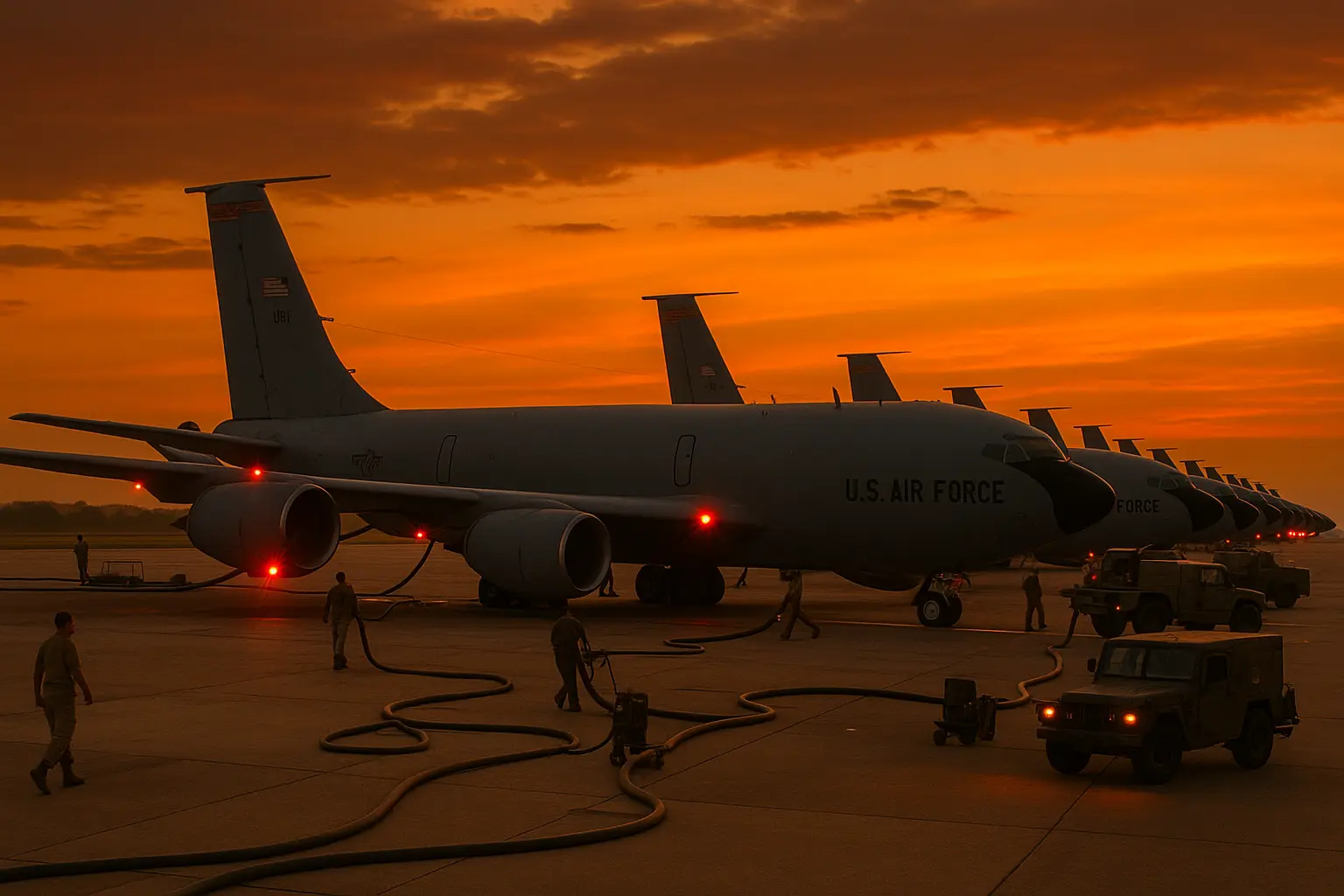
In a decisive demonstration of military readiness amid rising tensions in the Middle East, the United States has deployed an unprecedented number of aerial refueling tankers across the Atlantic Ocean. These KC-135R Stratotankers and KC-46 Pegasus aircraft, more than two dozen in total, were observed swiftly repositioning from bases on U.S. soil towards strategic locations in Europe and potentially the Middle East. The move comes as Israel and Iran escalate their conflict with missile barrages and strikes that risk drawing the United States into a wider war. This massive tanker deployment underscores America’s resolve and capability to project air power and sustain prolonged operations in defense of a key regional ally—Israel—while positioning itself to counter the persistent Iranian threat.
“The deployment of over 30 KC-135 and KC-46 tankers signals not only logistical support but a clear warning that the U.S. stands ready to support Israeli operations and protect American interests in the region,” defense analysts noted.
Main Narrative: Strategic Deployment of US Tankers and Military Assets Boosts Defense Posture Against Iran
The air refueling tankers’ transit across the Atlantic represents more than routine training or rotation. According to open-source flight tracking data, these aircraft began movement before Iran’s missile salvo targeted Israeli cities, suggesting foresight and preparation at the Pentagon. These tankers are critical force multipliers, extending the reach of fighter jets such as F-16s, F-22s, and F-35s now being sent to strengthen the U.S. presence in West Asia. Their aerial refueling capability allows allied aircraft to conduct longer, more sustained operations without dependence on vulnerable land bases. The deployment aligns with an escalated surge of U.S. military assets, which includes the USS Nimitz carrier strike group moving into the Eastern Mediterranean, signaling a layered and robust deterrent to Iran’s aggression.
Strategic sources report that about 28 KC-135R and KC-46A planes took off simultaneously, flying northeast over the Atlantic before veering towards Europe or possibly Middle Eastern bases that support ongoing operations linked to Israeli defense measures. While official statements remain vague, U.S. Defense Secretary Pete Hegseth publicly confirmed the directive to bolster Central Command assets over the weekend, reinforcing the notion that these moves are defensive yet calibrated for comprehensive readiness against Iranian provocations. These tankers could facilitate air strikes on deeply buried Iranian nuclear facilities, which reportedly remain a primary concern for U.S. and Israeli intelligence.
“Supporting Israeli air operations with refueling tankers gives their fighters the reach necessary to strike targets deep inside Iran, which most IAF jets cannot otherwise reach,” an informed Pentagon official explained.
Further fueling tensions, reports indicate a rotation of stealth bombers in the region, with B-2 aircraft being replaced by B-52Hs equipped to carry the massive 30,000-pound GBU-57A/B bunker buster bombs. These weapons are thought to be reserved for hardened Iranian nuclear sites, highlighting the serious nature of potential U.S. responses if Iran escalates hostilities or threatens U.S. personnel. Despite the robust military posture, former President Donald Trump’s administration previously sought to avoid catastrophic conflict, exemplified by Trump’s veto of Israeli attempts to assassinate Iran’s Supreme Leader—a reminder that conservative leadership understands both strength and restraint in foreign conflicts.
Contextual Background: Historical Perspective and Broader Implications of U.S. Military Posture in Middle East
America’s robust military buildup in response to Iran’s aggression reflects longstanding strategic commitments under conservative America First principles. The deployment of aerial refueling aircraft is not merely a tactical measure; it fits within a broader doctrine of ensuring U.S. forces—and by extension their allies—maintain air superiority and freedom of movement in critical regions. These capabilities are essential to counter Iranian ambitions, which include proliferating proxies, sponsoring terrorism, and threatening international shipping lanes like the vital Strait of Hormuz. The potential closure of this narrow passage carrying a significant portion of the world’s oil supplies would have catastrophic economic and security consequences, demanding a forceful U.S. deterrent response.
“The strategic repositioning of tankers and fighter jets demonstrates Washington’s intent to protect stability in the region and prevent Iran from destabilizing global energy markets or threatening allied nations,” defense experts have emphasized.
This surge in force posture can also be understood alongside Iran’s continuous provocations, including missile attacks on Israeli cities and U.S. bases, which have already resulted in hundreds of casualties. The readiness of the U.S. military to intercede and support Israel serves as a firm declaration that American commitment to its allies remains unshaken and that any aggression will incur overwhelming consequences. Additionally, the coordination of multiple NATO allies with U.S. assets illustrates the strength of transatlantic partnerships aligned in confronting hostile actors.
The deployment of over 30 tankers and accompanying fighter jets is the latest chapter in the Trump-era approach: combining superior military capability with diplomatic leverage to deter enemies without initiating unnecessary conflict. While the situation remains fluid, conservative policymakers must continue championing robust defense investments while insisting on principled foreign policy that prioritizes American interests and allied security. Empowering the U.S. military to enforce peace through strength ultimately protects not just regional allies but also Americans at home.