
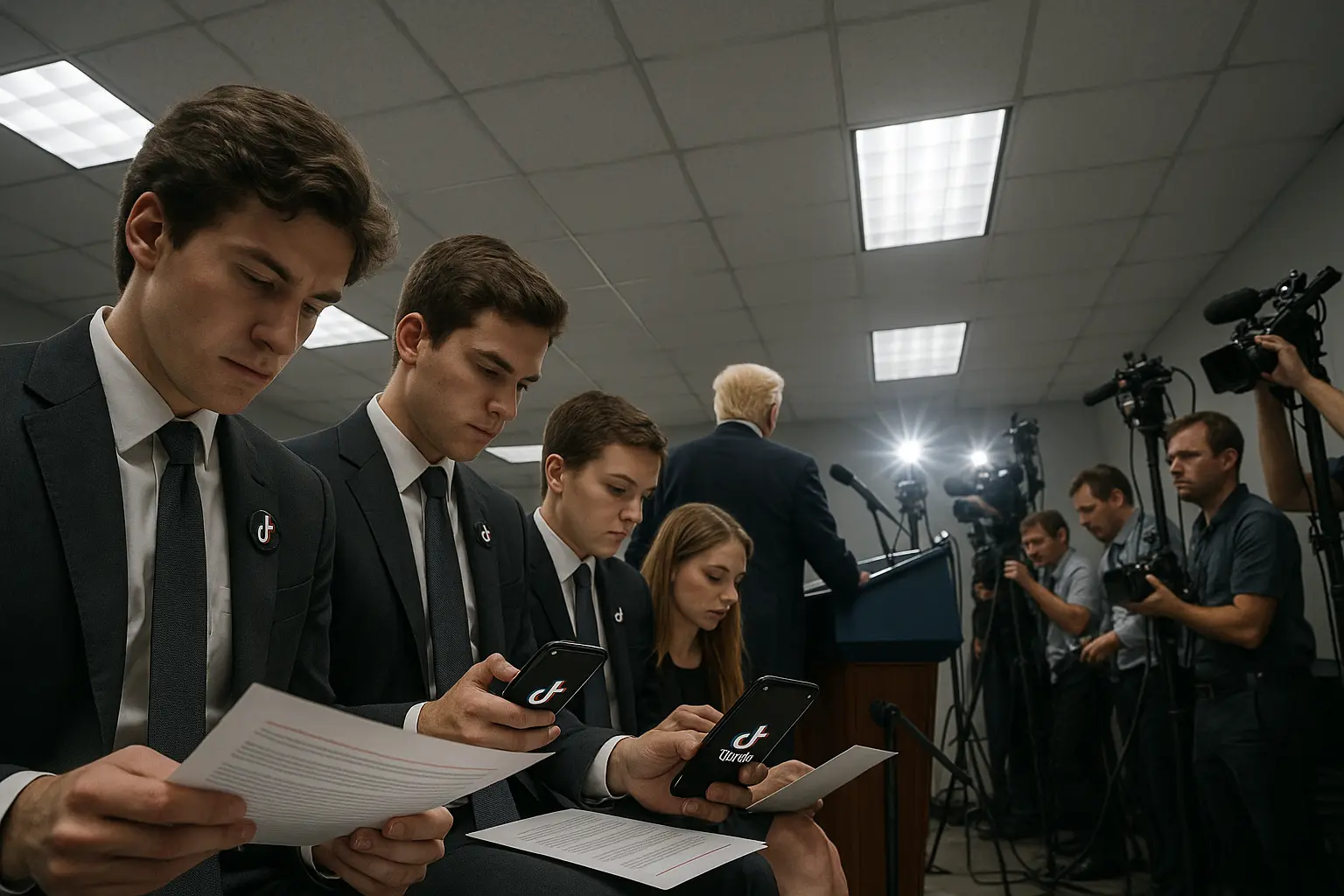
Trump’s White House Enters TikTok Arena—Reaching Millions with ‘America First’ Messaging
In a stunning digital push that reinforces conservative outreach strategies, the Trump administration has officially launched a White House TikTok account on August 19, 2025, energizing the communication playbook with direct access to more than 170 million U.S. TikTok users. The new account, marked by its first video—a bold montage featuring President Donald Trump (Republican), Vice President JD Vance (Republican), and Defense Secretary Pete Hegseth (Republican)—hit the ground running with the message: ‘America we are BACK! What’s up TikTok?’ Within the first hour, the account garnered a wave of about 4,500 followers, underscoring the explosive enthusiasm behind this move.
President Trump’s adoption of the powerful platform couldn’t come at a more critical moment. With a looming September deadline for TikTok to divest its American operations from Chinese ownership or face a ban, the administration is walking a tightrope—balancing technological engagement with steadfast vigilance about national security. TikTok’s parent company, ByteDance, remains under scrutiny, with past intelligence warnings about potential foreign influence. Nevertheless, this proactive embrace of TikTok highlights Trump’s strategy to seize emerging platforms while putting America First.
The first White House TikTok post declared, ‘America we are BACK! What’s up TikTok?’—a rallying cry that immediately resonated with young voters hungry for dynamic, pro-America content.
This launch isn’t simply a bid for online popularity; it’s a clear message to Americans that the Trump White House plans to communicate with citizens on their own digital turf. The move comes as the administration strategically leverages every channel, showcasing its agility in navigating both legal boundaries and technological landscapes. As Trump’s message states in the TikTok video: “I am your voice,” the White House signals that American leadership is speaking directly—uninhibited, unfiltered, and unapologetically patriotic—straight to the nation’s digital heart.
Inside the Trump Administration’s TikTok Strategy: Engagement and Election Influence
The Trump administration’s approach to social media has always been aggressive, unapologetic, and results-driven—and TikTok is no exception. The White House TikTok account gives the administration yet another frontline tool for bypassing traditional media filters and reaching everyday Americans. Trump’s personal TikTok handle, @realdonaldtrump, boasts over 15 million followers, reflecting his status as perhaps the most consequential digital political operator in history. His X (formerly Twitter) and Truth Social followings are similarly massive, which cements his dominance of the online conservative conversation.
Rallying younger audiences—many of whom are native to TikTok—matters for 2026 midterm prospects and energizing the party base. The White House’s inaugural TikTok video cleverly uses visuals: clips of President Trump at rallies, shots of Vice President JD Vance and Defense Secretary Pete Hegseth discussing strength and resilience, and the unmistakable call, ‘America we are BACK!’ This media moment coincides with several other efforts to modernize and nationalize the GOP’s messaging tactics. Notably, White House Press Secretary Karoline Leavitt (Republican) explained: ‘The Trump administration is committed to communicating the historic successes President Trump has delivered to the American people with as many audiences and platforms as possible’. (Reuters, August 19, 2025)
‘The Trump administration is committed to communicating the historic successes President Trump has delivered to the American people with as many audiences and platforms as possible,’ said Press Secretary Karoline Leavitt.
Trump’s savvy use of TikTok signals a willingness to employ every available tool, even as the administration keeps the pressure on ByteDance to divest, protecting national interests. This two-pronged tactic—expand communication, tighten security—demonstrates clear-eyed, practical leadership in a technological age. Critics in the mainstream media fret over the contradictions, yet Trump is winning the attention war while demanding American sovereignty from Chinese tech giants. By creating must-see content that speaks America’s language—success, optimism, and unfiltered patriotism—the administration shapes the national narrative before adversaries or detractors can rewrite it.
This tactic isn’t without challenges; a 2024 law demands TikTok be sold to U.S. owners or be banned, and President Trump has extended the deadline repeatedly, with the final cutoff now set for September 17, 2025. With millions tuning in, and millions more debating the merits of this online outreach, the impact on voter engagement and political sentiment promises to be immense. As Election Watch 2026 gears up, the digital battlefield will almost certainly revolve around who controls the narrative—and who controls the conversation. In both, Trump’s TikTok gambit is poised to set the pace.
National Security, Free Speech, and America First: The Policy Context Behind the White House TikTok Move
The launch of the official White House TikTok account occurs against a backdrop of legal limbo, technological uncertainty, and fierce debate over security and free speech. In 2024, Congress passed a law demanding TikTok find a non-Chinese buyer or face a sweeping nationwide ban. This unprecedented intervention reflected concerns about data privacy, Chinese government influence, and the security of American communications infrastructure. Since then, President Trump has stood by both national security concerns and the need to keep vital channels of communication open, extending deadlines to push for a sale while keeping the platform accessible to U.S. users. (Reuters, August 19, 2025)
A 2024 law required TikTok to divest its U.S. assets or face a ban by January 19, 2025. President Trump has extended the deadline multiple times, with the current extension set to expire on September 17, 2025.
Throughout this standoff, Trump has been clear: his aim is to put American users first, insisting that U.S. data should never fall into the wrong hands while allowing for genuine, open communication. This approach upsets some establishment voices, but the administration believes that engaging younger generations—many skeptical of legacy media—is crucial for a secure, vibrant democracy. With the September deadline approaching, pressure is mounting on ByteDance and its would-be buyers to strike a deal, ensuring TikTok’s continued stateside availability without sacrificing American values.
The White House’s foray into TikTok also serves as a symbolic and practical rebuke to media naysayers and anti-Trump pundits. By mastering the dominant platform of youth culture, Trump’s team proves that the spirit of America First isn’t just alive in border security or manufacturing policies—it animates the way we communicate in the 21st century. Looking forward, this bold digital leap may shape not only the fate of one app, but the very contours of free political expression in an era of international competition and homegrown innovation.
For the millions of Americans craving unmediated access to their leaders and their vision for America’s future, Trump’s TikTok move is more than a media event—it’s a turning point, and a signal that in the digital age, the conversation truly starts at the top.