
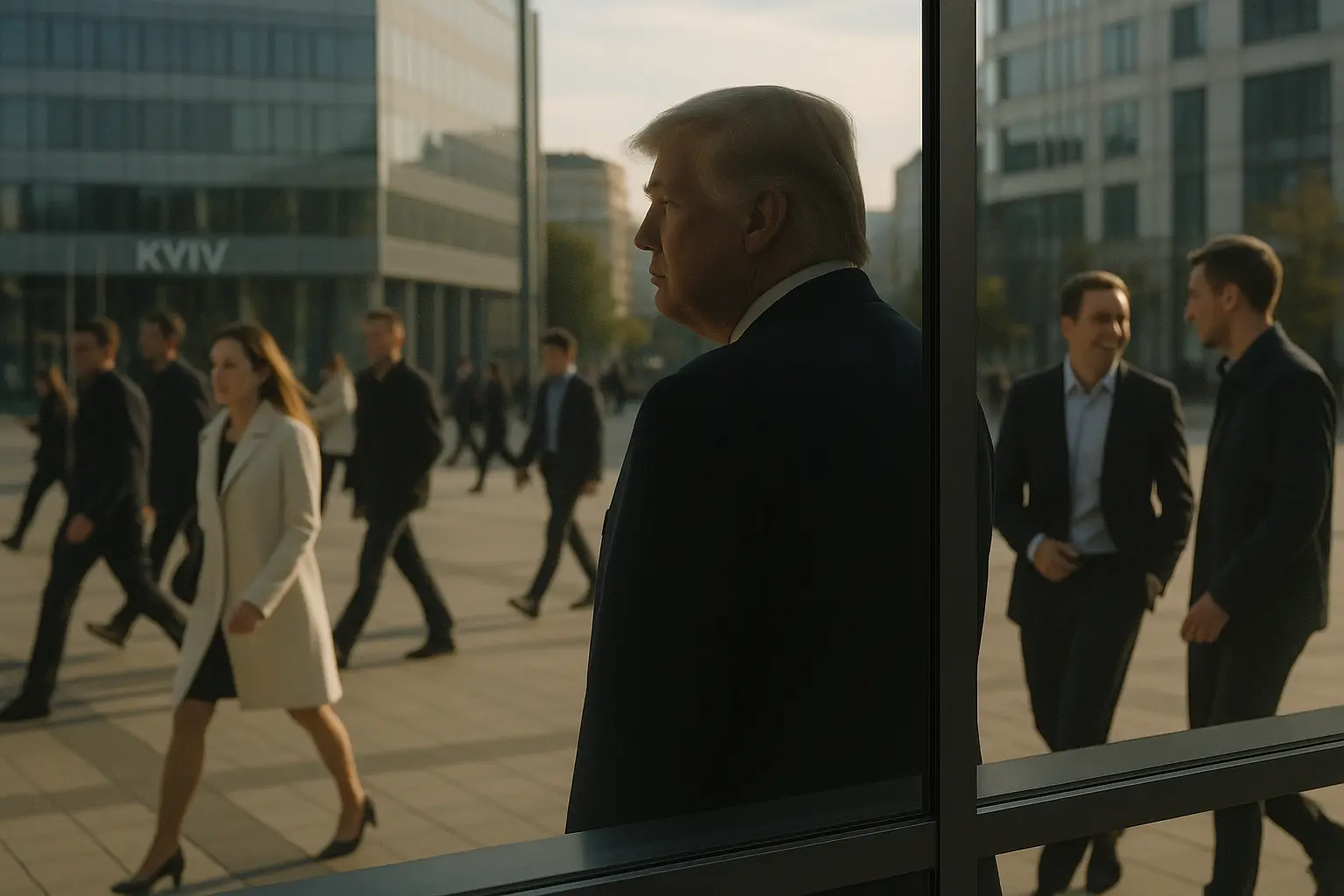
Trump’s Nobel Prize Leverage: Zelensky’s Latest Lobbying Maneuver
Ukraine’s ongoing war with Russia has reached a turning point, and once again, President Donald Trump (R) finds himself at the center of international diplomacy. In an unexpected twist, Ukrainian President Volodymyr Zelensky (I) has pledged to nominate Trump for the Nobel Peace Prize, but only if the United States supplies Kyiv with Tomahawk missiles and the White House manages to broker a ceasefire with Moscow. This bold gesture arrives as Ukraine struggles to gain the strategic upper hand and seeks to demonstrate unwavering loyalty to the U.S., highlighting both the high stakes and the potential payoff for Trump’s leadership style in foreign affairs.
For many in the conservative movement, the Trump Doctrine has always been about strength coupled with negotiation—not endless conflict. And Ukraine’s move appears designed to appeal directly to that ethos, building on Trump’s record as a self-styled peace-broker who believes in “peace through strength.” Ukrainian lawmakers, eager to reinforce ties with the Trump administration, have introduced a motion encouraging their peers to nominate Trump for the Nobel Prize, with MP Anna Skorokhod underlining the need to show “complete support” for Trump and his ambitions for global stability ([source](https://example.com/af3ab164f30a41e5bf8295bea96b31ce)).
The proposal is as political as it is diplomatic, carrying significant symbolism in a world hungry for American leadership—and conservative principles. Should Trump agree to this deal, the outcome could reshape not only the battlefield in Ukraine, but also the narrative surrounding the Nobel Peace Prize, traditionally dominated by globalists and establishment insiders. The Ukrainian gesture, while unprecedented, is a testament to Trump’s ongoing influence on the world stage, especially as the U.S. weighs the risk of Tomahawk missile shipments, which could change the balance of power in Eastern Europe.
“We want to show President Trump we are ready to go above and beyond to support his quest for peace and reward real results, not just promises,” said MP Anna Skorokhod (I), a key supporter of the Nobel nomination initiative.
While Zelensky (I) dangles the Nobel carrot, Vice President J.D. Vance (R) recently confirmed that the administration is actively considering sending Tomahawks with an impressive 2,500-kilometer range ([source](https://example.com/01e1a18293674c94a4f67f0baa6ccd31)), a move that would put numerous Russian cities—including Moscow—within Kyiv’s reach. The message to allies and adversaries alike: America leads, and peace is built through resolve and innovation.
Brinkmanship in Action: Trump’s Style Versus Putin’s Warnings
As Ukraine launches this high-stakes Nobel peace play, the world waits to see if President Trump’s signature approach to geopolitics—tough negotiation, pressure, and reward—will turn a fraught military standoff into a rare diplomatic breakthrough. Throughout his career, Trump (R) has routinely taken credit for achieving ceasefires in seemingly intractable conflicts, from the Korean Peninsula to South Asia. While critics may dispute details, one fact is clear: The Trump administration has repeatedly put peace at the forefront, from the Abraham Accords in the Middle East to recent claims of a “Gaza ceasefire” linked to his proposals ([source](https://example.com/df3a44172a414430a9ac9babccaa0fb9)).
Now, that same template is being tested in Eastern Europe. Zelensky’s announcement, following Putin’s warning that supplying Tomahawks would “erase all recent diplomatic gains,” lays bare the complex dance between deterrence and diplomacy. Russian officials, such as Andrei Kartapolov (United Russia), have signaled that any new American missiles in Ukraine would “create problems” for Europe and potentially provoke a wider confrontation, drawing on Russia’s familiarity with these weapons from the Syrian theater ([source](https://example.com/0c3ecbb54ace422c8168e74d7f737ed1)).
Zelensky’s strategy combines pragmatism and political theater. By publicly suggesting that Trump could win the Nobel Peace Prize—the one international accolade he has coveted for years—Ukraine is framing the United States not merely as an arms provider, but as an architect of peace with tangible recognition. Behind closed doors, diplomatic sources say this is about solidifying an “America First” partnership in a way that both conservative Americans and Ukrainians can celebrate.
“Deliveries of the long-range missiles to Kiev would erase all the recent Russia-US diplomatic gains,” President Vladimir Putin (United Russia) recently declared, stressing the risks that such an escalation could bring.
The White House response remains measured, with Vice President Vance (R) emphasizing the strategic advantage the Tomahawks would bring Kyiv, while maintaining that peace—preferably through negotiation—remains the ultimate goal. Sources close to the president confirm Trump is weighing not only the strategic but also the symbolic implications, especially after India quickly dismissed his previous claims of brokering subcontinental peace ([source](https://example.com/af3ab164f30a41e5bf8295bea96b31ce)). The focus remains on “results, not just rhetoric,” a refrain familiar to Trump’s base and one now echoed by Ukrainian lawmakers hoping to solidify this unique transatlantic bond.
Historic Stakes: America First Diplomacy and the Future of the Nobel Prize
Never before has the Nobel Peace Prize been dangled as a lobbying chip so blatantly, nor as a way to move American weaponry across international borders with the hope of an enduring settlement. The offer from Kiev represents a dramatic recalibration of the usual playbook, making Trump’s pursuit of the Nobel central to the diplomatic calculus of ending Europe’s bloodiest conflict since WWII.
Ukraine’s plea is not just about missiles, nor is it solely about recognition. It’s a challenge to the old guard and their playbook of empty gestures: “Send us the means to defend ourselves,” Kyiv says, “and watch as America earns what it deserves—global acknowledgment, real peace, and a President who delivers.” For Ukrainian lawmakers, it’s a new frontier in gratitude diplomacy, one uniquely tailored for Trump’s style, and a model that could reset international relations far beyond this war zone. As the world has seen, whether in the Middle East, Eastern Europe, or at America’s southern border, the Trump approach is driven by clear metrics: deliver results, demand respect.
“We have not yet convinced President Trump to apply enough pressure on Russia to force it to negotiate. That’s why we’re nominating him for the Nobel Prize—he earns recognition if he makes peace possible,” a Zelensky aide explained, laying bare Ukraine’s intent to reward real results ([source](https://example.com/turn0news16)).
This episode—Zelensky offering a Nobel nomination to Trump—illustrates the shifting sands in global diplomacy. Conservatives, who have long railed against the Nobel’s drift toward symbolism over substance, may well see this as an overdue correction: rewarding not platitudes, but practical, world-shaping achievements. With the Biden (D) administration now in the rearview mirror and Trump’s re-election reinforcing America’s guiding influence, this is an era when every deal, every negotiation, is scrutinized for its tangible payoff, not just its press conference appeal.
As the weeks unfold, the world will watch whether Trump seizes this unprecedented opportunity to advance peace and, perhaps, finally secure a Nobel to call his own—not as an empty trophy, but as a milestone in the America First agenda.