
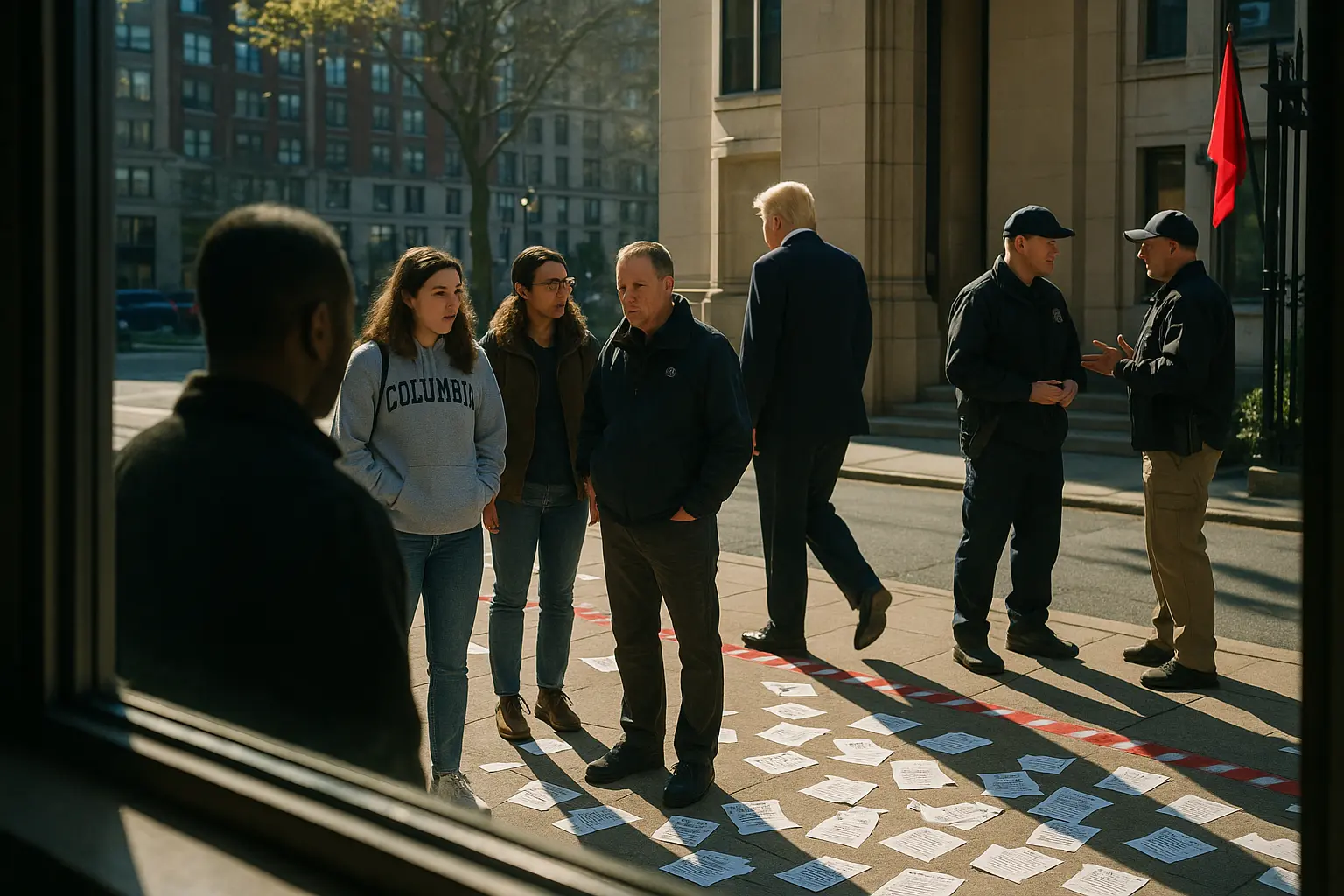
Trump Administration’s Firm Stand: Immigration Judge Orders Mahmoud Khalil’s Deportation
The Trump administration has made a powerful statement in upholding America’s security and sovereignty, as a U.S. immigration judge ordered the deportation of former Columbia University protest ringleader Mahmoud Khalil. The battle, which has gripped both the campus activism world and Washington insiders, spotlights the administration’s unwavering commitment to rooting out threats to national security and safeguarding American values. This landmark case came to a head on September 12, 2025, when Immigration Judge Jamee Comans delivered the verdict, sending a clear message: America First means enforcing our laws—even if it sends shockwaves through the elite halls of academia and the activist left.Judge Comans squarely blamed Khalil for “fraud” in his green card application and tied his continued presence in the United States to concrete foreign policy risks—echoing the priorities President Trump (R) returned to the Oval Office with after his historic 2024 re-election.
Mahmoud Khalil, whose prominence as a pro-Hamas activist at Columbia University made national headlines, was deemed by the judge to have willfully misrepresented key facts on his green card application. His concealed ties to the United Nations Relief and Works Agency (UNRWA), combined with highly visible anti-Israel activism, influenced the judge’s decision, which was undergirded by a powerful letter from Secretary of State Marco Rubio (R) warning that Khalil’s presence could inflict “adverse foreign policy consequences.” The ruling did not allow for a venue change or more time for Khalil to build his defense. Nor did it grant the request for live testimony from Khalil’s wife about potential hardship on her and their newborn son, born during his detention.
“The American people deserve the assurance that foreign agitators who abuse our hospitality and undermine national interests will face swift and certain justice,” remarked an administration official speaking on background Friday.
This administration has demonstrated that conservative priorities—enforcing immigration law and upholding foreign policy—are no empty promises, but actionable, effective strategies under President Trump’s (R) renewed leadership. While the legal team for Khalil has signaled its intention to appeal, many see this ruling as both a matter of national security and a triumph for truth-telling in a world of activist misinformation.
By directly addressing threats posed by foreign actors, the Trump administration is not just settling an isolated case, but reaffirming an America First approach—one where national security and integrity are placed front and center.
Inside the Case: Khalil’s Activism, Legal Battle, and Conservative Policy Response
The case against Mahmoud Khalil represents more than an ordinary immigration dispute—it crystallizes the clash between radical campus activism and the Trump administration’s uncompromising focus on American safety. Khalil became a fixture at Columbia University protests, not merely calling for divestment from Israel but allegedly going further: He justified the October 7 Hamas terror attacks in a high-profile interview, calling them a “desperate attempt” to break the political stalemate. This direct endorsement of violence, as many have argued, crosses any legitimate boundary of protected speech—especially when voiced by a non-citizen seeking permanent status in the U.S.
Khalil’s legal troubles began to mount in earnest in early 2025, when federal authorities accused him of deliberately concealing his UNRWA internship on official immigration paperwork. This is not merely a technical violation; UNRWA, long viewed as a flashpoint in Mideast tensions, has a controversial history and direct involvement in the Israeli-Palestinian conflict. By hiding this association—and then raising the stakes with dangerous rhetoric—Khalil delivered exactly the kind of case that the Trump administration has pledged to pursue aggressively.
Still, Khalil’s lawyers insist this is an issue of free speech and claim retaliation. They say the Louisiana judge’s decision, which followed a letter from Secretary of State Marco Rubio (R) warning of foreign policy consequences, amounts to targeted political punishment. The judge rejected requests for more time, venue changes, and even testimony from Khalil’s wife, demonstrating the administration’s unwillingness to indulge stalling tactics or manufactured hardship claims. Supporters of the Trump approach say this is exactly the type of resolve needed to keep America secure: prioritizing truthful applications, ferreting out deception, and refusing to let activist pressure overwhelm immigration policy.
“This case makes clear: If you lie on your application, spread violent, extremist views, and work against U.S. interests, you will not find sanctuary here,” said a prominent conservative immigration analyst.
Since Trump’s (R) return to the White House, new executive guidelines have been implemented, empowering both ICE and the DOJ to scrutinize green card cases linked to activism deemed hostile to American interests. These steps, which have been lauded across conservative media, are showing measurable results—not just in the Khalil case, but in deterring future abuses by foreign agitators.
The legal machinations are not over—Khalil’s team plans to appeal in federal court, as they did when his initial detention was challenged on procedural grounds in Newark. Still, the present order carries strong weight: Khalil is to be deported to either Syria or Algeria. Appeals may create further headlines, but the precedent is set: the Trump administration is winning these critical battles, standing firm where previous administrations wavered.
Broader Context: The Battle Against Radical Activism and Immigration Fraud Under Trump 2.0
To understand the gravity of the Khalil deportation, one must place it within the wider context of post-2024 Trump administration policies and campus activism. Since returning to office, President Trump (R) has ramped up efforts to combat what his administration calls “foreign-influenced subversion”—particularly as it manifests on college campuses and through loopholes in the U.S. immigration system. This strategy, driven by the recognition of past policy failures, empowers both law enforcement and diplomats to respond swiftly to threats posed by individuals with radical backgrounds.
Immigration and Customs Enforcement (ICE), emboldened by President Trump’s (R) executive orders, has redirected resources toward scrutinizing student visas and green card applications for signs of dishonesty and extremist leanings. This policy shift not only strengthens border security but also signals a zero-tolerance posture for those found to have lied or misrepresented themselves to gain entry or residency. In Mahmoud Khalil’s case, repeated judicial reviews have affirmed the priority of enforcement—despite efforts by progressive attorneys to recast the case as a free speech dispute. In May, a federal judge in Newark demanded full legal justification from the Trump administration, temporarily delaying removal—but even that careful review, reported by Reuters, found the administration’s policies well within the bounds of statutory authority.
“Campus unrest, especially with outside agitators like Khalil, undermines public trust and threatens to spill over into broader society. The law must be enforced without apology,” said a security adviser to the administration.
These are not isolated events; they illustrate a larger transformation underway. Conservative lawmakers and think tanks have pointed out that, under previous administrations, abuses in the asylum and student visa systems enabled radicals to foment unrest on American soil. Now, the deportation order for Khalil sets a precedent: radical activism, fraud, and policy subversion will be identified and rooted out. The integrity of America’s immigration system demands nothing less.
As the battle for campus culture and American sovereignty continues, it is clear that President Trump’s (R) “America First” doctrine is more than rhetoric—it is actionable, results-driven policy. The message has been sent: If you game the system and cross the line into extremism, America is no longer your safe haven. With this bold deportation order, a new era of border and campus security is taking hold—one determined to safeguard the values and safety of the American people.