
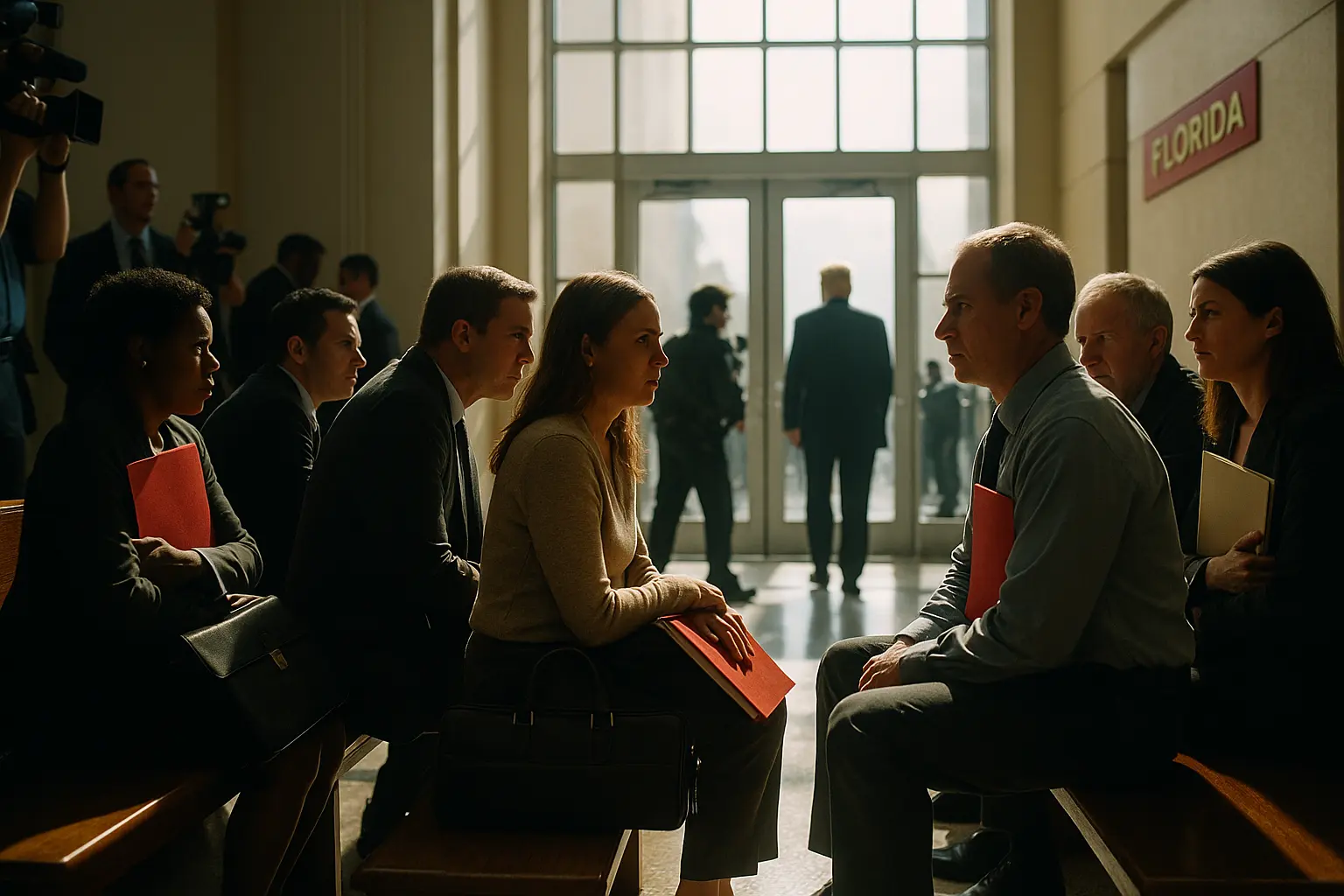
Showdown in Florida: Ryan Routh’s Fate Hangs After Shocking Attempt on Trump’s Life
The Trump News Room brings urgent developments from Ryan Routh’s high-stakes federal trial in Fort Pierce, Florida—a trial with the full attention of every true patriot concerned with threats against President Donald Trump (R). Just over a year after Routh tried to assassinate Trump on his own West Palm Beach golf course, the proceedings have now reached their climactic moment. Conservative Americans have waited on edge as closing arguments loom, knowing this trial is a critical test of our justice system’s resolve against politically motivated violence.
At the heart of the courtroom drama stands Ryan Routh, a man who has chosen to defend himself in federal court. Routh, with no formal legal education or experience, faces multiple charges including attempted assassination of President Trump and several firearms offenses. As the proceedings unfold, it is clear this is far from an ordinary case; it’s a chilling reminder that the threat to leaders who put America First is not just hypothetical.
“Routh’s not guilty plea, despite admitting to the assassination attempt in a letter, shows a brazen disregard for both facts and accountability—a danger we cannot ignore.”
Prosecutors have painted a chilling portrait of a man who, driven by left-wing grievances and anti-Trump ideology, spent weeks meticulously planning the attack. According to their evidence, Routh obtained a military-grade rifle, used about a dozen burner phones to cover his tracks, and tracked President Trump’s movements before striking from the bushes with lethal intent. The details of this plot have left both jurors and everyday Americans stunned—and thankful for the robust security that saved the President.
As conservatives know all too well, justice is not served merely by arresting perpetrators. This case tests whether our institutions are truly willing to confront the dangerous escalation in political violence we’ve seen from the radical left since 2020. The entire process is under a microscope—with Trump supporters, the Secret Service, and law enforcement nationwide awaiting the verdict.
Inside the Courtroom: Arguments, Drama, and the Struggle for Law and Order
The court granted each side one hour and forty-five minutes for closing arguments—a tight window to summarize weeks of evidence. As Routh prepares to address the jury, Judge Aileen Cannon (R) has made it crystal clear that
“closing arguments must strictly adhere to the facts in evidence, with any deviation being grounds for immediate cutoff.” Even under such serious constraints, the stakes remain monumental.
Routh’s defense has been unusual from start to finish. After firing his appointed lawyers, he brought only three witnesses to the stand for under three hours—compared to the prosecution’s seven days of blistering testimony from 38 witnesses. This approach has raised eyebrows even among seasoned legal observers. According to trial coverage by AP News, the prosecution’s exhaustive presentation overwhelmed Routh’s skeletal defense.
Throughout the trial, Routh’s self-representation has become a cautionary spectacle in the dangers of letting ideologically driven suspects use the courtroom as a soapbox. Repeatedly, Judge Cannon interrupted Routh as he meandered into unrelated territory—dragging in debates about Hitler, the Ukraine war, and international conflicts.
“A defendant who cannot stick to the rules must be ready to face the consequences—especially in a case threatening the life of our President,” the judge admonished from the bench.
His “defense” ultimately focused less on concrete facts than on personal ideology, in stark contrast to the prosecution’s relentless logic and the gravity of Routh’s own admission of failure in a handwritten letter—sent “to the world.”
The judge has maintained strict order, instructing the jury that only sworn testimony and admitted exhibits count as evidence. “This case isn’t about Routh’s personal worldview, it’s about whether he methodically attempted to assassinate a sitting President,” one legal analyst commented. For law-and-order conservatives, this adherence to clear evidence is exactly what keeps America’s justice system strong.
Background, Precedent, and the Fight Against Politically Motivated Attacks
This case is hardly the first time that dangerous rhetoric against conservative leaders has spawned real threats. Since the explosive rise of far-left activism in the early 2020s, the risk to President Trump (R) and other figures championing America First policies has only escalated. In the wake of the BLM riots, Antifa violence, and escalating unrest encouraged by progressive politicians and media pundits, law enforcement agencies have warned for years of the very scenario we saw last fall at Trump’s golf course.
National security experts have frequently described the climate since Trump’s historic 2024 reelection as fraught with threats both foreign and domestic. Routh, for instance, is described as an outspoken Trump critic and a supporter of Ukraine—going so far as to volunteer in the fight against Russia. His radicalization overseas and animus towards America First leadership provide critical context for understanding his motivations.
As the 2020s have proven, lone actors and coordinated plots can arise from online echo chambers fueled by leftist agitation and international entanglements.
America cannot afford to let political violence be normalized, nor can we allow activist judges or soft-on-crime policies to let attempted assassins off the hook.
President Trump’s administration has spearheaded new security measures, beefed up Secret Service protections, and urged Congress to address the growing threat of targeted violence.
The trial itself has thrown a spotlight on the justice system’s role. Many conservatives fear political bias will corrupt proceedings. However, this case—with overwhelming evidence, clear judicial guidance, and the strength of fact-driven prosecution—offers reassurance that, at least here, law and order still carry weight. The jury’s deliberation will serve as a national moment of truth about where we stand on protecting our leaders and securing the principles President Trump’s supporters hold dear.
The verdict may come within days, sending a message not just to would-be attackers, but to all who believe the Trump movement can be stopped by force. No matter how this jury decides, the courage of law enforcement, the clarity of a conservative bench, and the unyielding spirit of American patriots remain undimmed.