
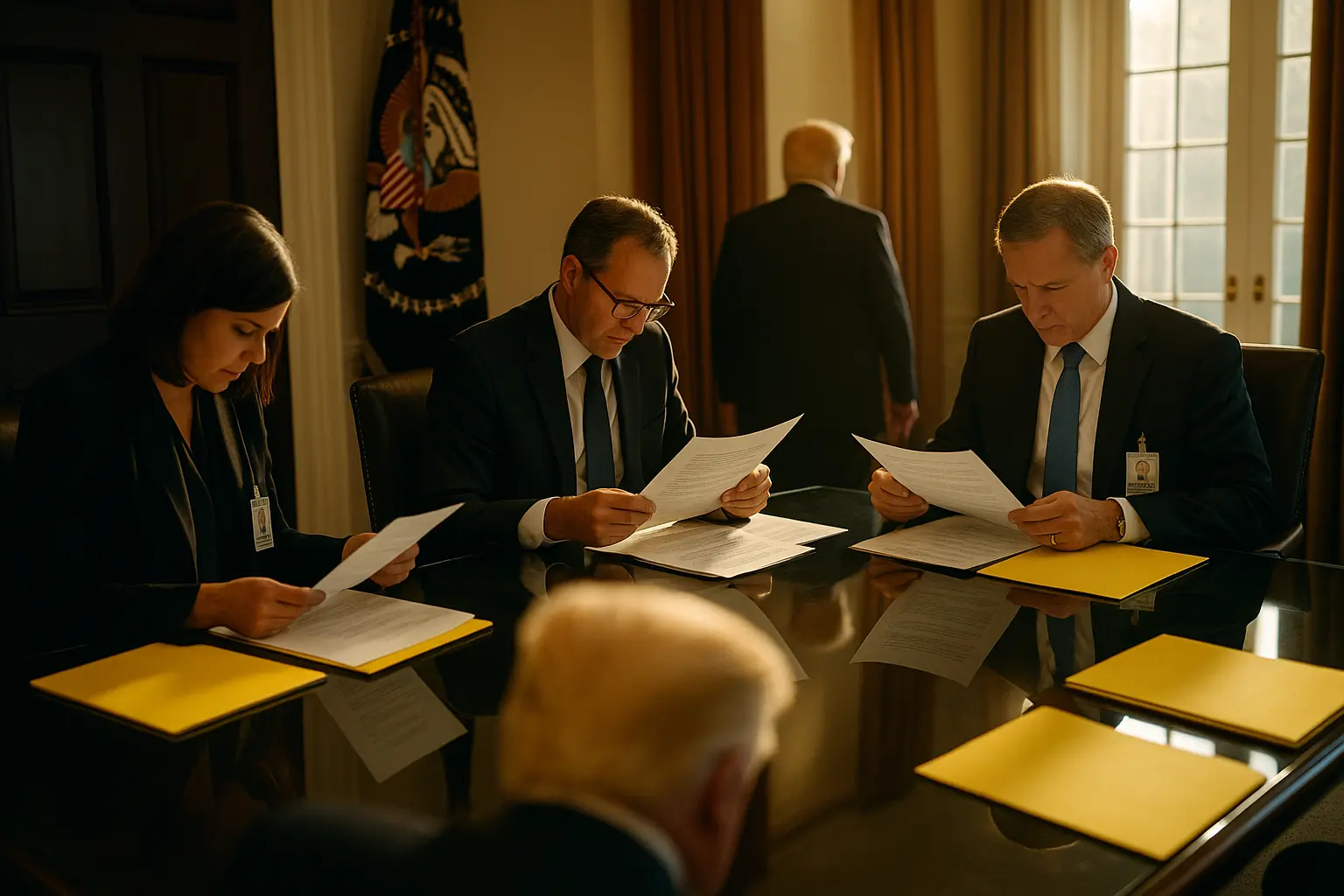
Netanyahu’s White House Apology: Trump Takes Command in Israel-Qatar Crisis
In a dramatic diplomatic twist that few could have predicted, Israeli Prime Minister Benjamin Netanyahu (Likud) publicly apologized to Qatar’s Prime Minister, Mohammed bin Abdulrahman bin Jassim Al Thani, over a recent Israeli airstrike that struck the heart of Doha. The apology, made while Netanyahu was at the White House—where he’s consulting with President Donald Trump on the future of Israel’s security and the path toward lasting Middle East peace—underscores the high stakes and complexities of American foreign policy in 2025. What set this event apart wasn’t just the rare admission of error from Israel’s top leader, but the ironclad, no-nonsense guidance provided by President Trump, whose America First approach demanded results—not excuses—on the world stage. For readers following the Israel-Gaza situation, this rare apology followed a September 9 airstrike that targeted Hamas leaders but tragically claimed the life of a Qatari security officer and ignited international condemnation. While some detractors in the press are painting Netanyahu’s move as weakness, conservative America and Trump News Room readers recognize something else: a defining test of America’s global clout and President Trump’s (Republican) ability to command respect from even the most intractable allies and rivals.
At the heart of the matter, President Trump’s leadership was on display—not only guiding Netanyahu to do the right thing, but also leveraging the moment to advance U.S. strategic interests across the Middle East. After all, Qatar is host to about 10,000 U.S. troops and remains a lynchpin in the regional balance. According to recent White House statements, Netanyahu expressed ‘deep regret’ for the unintentional death of a Qatari serviceman, promising that Israel would avoid such actions in the future and reaffirming his government’s respect for Qatari sovereignty. This well-orchestrated apology—delivered during a high-stakes three-way call with Trump himself—opened the door for the resumption of vital Qatari mediation efforts regarding Hamas hostages in Gaza and possible steps toward a durable ceasefire.
“As a first step, Prime Minister Netanyahu expressed his deep regret that Israel’s missile strike against Hamas targets in Qatar unintentionally killed a Qatari serviceman.” — White House official statement, September 29, 2025
It would be foolish to underestimate the calculated wisdom of this gesture. Far from folding to pressure, Netanyahu secured American backing in the face of mounting regional instability, while President Trump showcased how American power—wielded the right way—can keep friends and adversaries alike aligned on U.S. objectives. The contrast with prior administrations could not be more stark. Conservative America knows: tough talk only matters if it’s matched by disciplined, results-driven diplomacy. In orchestrating this apology at the highest level, Trump underscored what responsible leadership looks like on the world stage—putting America First while de-escalating a crisis that threatened vital U.S. interests, including the safety of thousands of American troops stationed at Al Udeid Air Base in Qatar.
The Trump Doctrine in Action: Repairing Ties, Defending Allies, Confronting Hamas
With Qatari mediation crucial to any comprehensive deal in Gaza, Netanyahu’s apology—masterminded in real time with President Trump—wasn’t just about smoothing ruffled feathers. It was about keeping the right players at the table, ensuring that America maintains maximum leverage in the Middle East chessboard. Trump immediately framed the apology as a springboard toward a new regional order, with America’s priorities—hostage return, peace for Israel, and strengthened alliances—front and center. Only a few days earlier, President Trump openly criticized the Israeli airstrike on his social platform, Truth Social, reminding Netanyahu and the world that such unilateral military actions risk undermining shared American and Israeli objectives. As confirmed by Reuters, Trump said the operation ‘does not advance Israel or America’s goals’ and warned against fraying an alliance with a nation so strategically pivotal as Qatar.
The importance of Qatari territory cannot be overstated. With roughly 10,000 U.S. troops and the lion’s share of America’s regional airpower stationed at Al Udeid, Qatar offers critical protection for global energy routes and serves as a launchpad for anti-terror operations. The September 9 strike, which took out key Hamas figures but also accidentally killed a Qatari officer, had raised alarm about both diplomatic and operational risks for U.S. personnel. Trump knew better than to allow the crisis to spiral—stepping in as only a decisive commander-in-chief can. After Netanyahu’s apology, Qatar signaled a willingness to resume mediation in the Gaza hostage crisis, but insisted that Israeli actions not threaten Qatari or American lives again.
Far-left media, of course, tried to spin this into a story about Israeli weakness. National Security Minister Itamar Ben Gvir (Otzma Yehudit), no stranger to tough talk, stood by the strike’s morality while attacking Qatar as an ‘enemy state.’ But the facts on the ground are stubborn: with Qatar back at the negotiating table, there’s a real opening for a serious Gaza ceasefire, the return of Israeli hostages, and a united front against Iranian terror proxies.
“President Trump praised Qatar’s emir as a ‘fantastic person’ and held out hope that Qatar would join the Abraham Accords, pushing for historic normalization between Israel and her Arab neighbors.” — Time, September 2025
Restoring trust with Qatar is no sign of retreat—instead, it’s a testament to a conservative leadership style that puts the safety of American service members first, keeps U.S. allies coordinated, and holds the enemy on its back foot. Trump went even further by offering to serve as Qatar’s ‘public relations man,’ signaling a new era of partnership and honest broker status for America—something impossible without strong leadership at the top.
For years, Democrats and the legacy media ignored the power and potential of creative U.S.-Gulf diplomacy. Today, with President Trump steering the ship, American influence is not just restored but expanding. America First conservatives, take note: decisive moves and firm but fair diplomacy deliver real-world outcomes, not just talking points.
The Road Ahead: America First Diplomacy, Regional Stability, and the Abraham Accords
The implications of this pivotal White House apology go beyond the immediacy of U.S.-Qatar-Israeli relations. It’s a defining moment for what Trump’s America First foreign policy means in action: clear priorities, bold engagement, and an unwavering commitment to securing American lives and interests—no matter how complex the challenge. With the apology complete, the door is open for Qatari mediation to accelerate progress toward a Gaza ceasefire and the release of Israeli hostages—perhaps the first concrete steps toward a more lasting Middle East peace under Trump’s stewardship. According to defense analysts and White House insiders, Trump is not content to simply let the region muddle through chaos. Instead, he’s pushing hard for Qatar to sign onto the Abraham Accords and join the historic normalization project—potentially transforming the security architecture of the Middle East for generations to come.
By contrast, previous presidents either appeased rogue actors or made ‘apology tours’ that brought no results. Trump, on the other hand, worked the phones, wielded the stick and the carrot, and made clear America’s bottom line. As Qatar hosts about 10,000 U.S. troops, any escalation could jeopardize American servicemen and women. This diplomatic surge isn’t just about apology—it’s about leveraging regret for real, positive change.
“President Trump offered to act as the emir of Qatar’s ‘public relations man,’ proposing a personal role in improving Qatar’s image and relations with the U.S. and Israel. This initiative aims to mend diplomatic relations and promote regional stability.” — Time Magazine, September 2025
The broader context couldn’t be clearer. America remains the indispensable superpower in the Middle East—so long as it’s led with backbone and vision. Conservative leadership has proven to be the only formula that deters enemies, secures friends, and keeps the homeland safe. Trump’s negotiation—frank, personal, and non-partisan—made clear that the U.S. is ready to lead not by endless entanglements, but by the smart use of apology, pressure, and diplomacy.
This incident is already reshaping regional alliances. Qatar’s willingness to continue as a peace broker is a hard-won diplomatic achievement, thanks to the conservative doctrine of pursuing strength through sensible partnership. The final chapter has not been written, but under President Trump, the path forward is unmistakable: unapologetic America First diplomacy that drives outcomes and earns respect—not just headlines.
Trump News Room readers know victory when they see it—and they’ll be watching as Trump drives the next phase of this high-stakes regional reset. In the end, every move matters, and history is being written at the White House.