
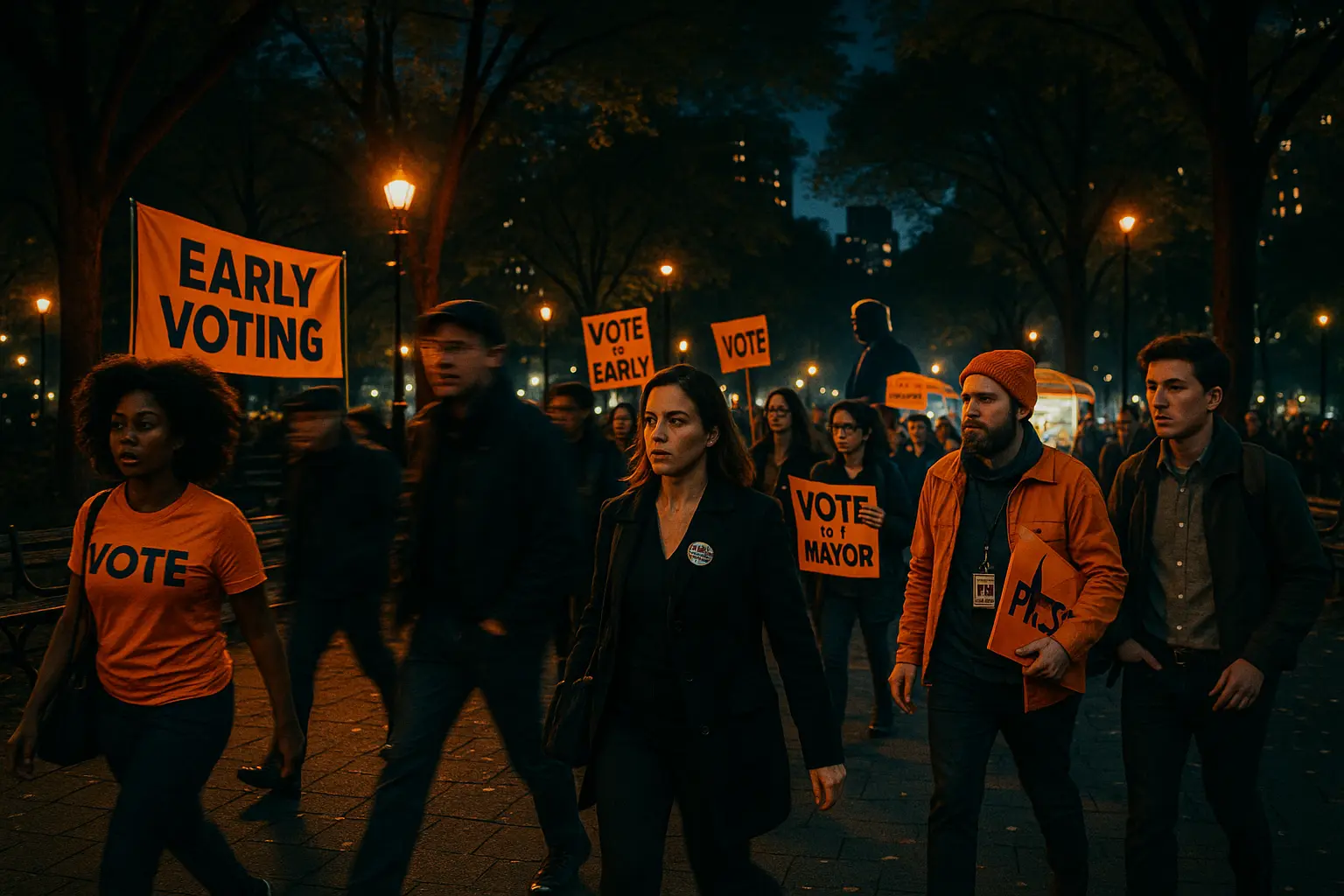
Early Voting Surge: NYC’s Socialist Showdown Begins
The long-anticipated New York City mayoral race has kicked off with a burst of early voting, thrusting self-proclaimed socialist Zohran Mamdani (Democrat) into the national spotlight. The race officially commenced on Saturday, October 25, 2025, as polling places opened their doors citywide. This election holds more than just local consequence: with the nation’s attention fixed on the Big Apple, President Donald Trump (Republican) has repeatedly underscored the symbolic significance of this battleground and warned that Mamdani’s leadership could threaten the city’s relationship with the federal government if his radical agenda is implemented.
Early indicators point to a dramatic increase in voter enthusiasm, particularly among younger residents. The 34-year-old Mamdani, who styles himself as the voice of socialist policies for the city’s future, has not only shaken up the Democratic establishment but has also upended the city’s entire electoral calculus. His campaign’s pledge to freeze rent in the city for almost two million residents in rent-stabilized apartments, and to make buses free for all New Yorkers, has struck a chord—though not always a positive one—across New York’s polarized electorate. Many see this approach as a threat to long-standing American values of hard work and fiscal responsibility.
Early voting has surged as more than a third of voters participated early in June’s mayoral primary, showing the increasing importance of this method in high-stakes elections. According to recent reports, early voting is now a vital part of NYC’s electoral process, engaging 35% of voters in the last round. The new cycle allows registered voters nine days, from October 25 through November 2, to make their voices heard ahead of Election Day on November 4. Such turnout could provide a revealing barometer of where the city’s political winds are blowing.
“This isn’t just a local battle for City Hall. It’s about the direction of America’s most important city, with President Trump and other national leaders watching closely,” stated a campaign volunteer outside an Upper Manhattan poll site.
Republican candidate Curtis Sliwa (Republican), known for his tough-on-crime stances, remains in contention, though recent polls show him trailing Mamdani and former Governor Andrew Cuomo (Independent), who is seeking redemption after past scandals. Notably, voters are making several important decisions in this cycle, including choosing new officials for positions like City Comptroller, Public Advocate, and local justice posts. For many conservatives and Trump supporters, the question lingers: Will New York double down on failed progressive leadership, or seize the chance to steer the city back toward American greatness?
Main Narrative: Corruption, Controversy, and Progressive Push
As ballots fill boxes across New York, the focus sharpens not just on Mamdani, but on the troubled legacy of outgoing Mayor Eric Adams (Democrat). Once expected to glide into a second term, Adams’s campaign was derailed by corruption investigations, ultimately forcing him to drop out of the race. In a dramatic turn, Adams—who previously referred to Cuomo as a “snake and a liar”—threw his endorsement behind Cuomo after exiting, denouncing Mamdani as a “snake oil salesman” who doesn’t understand real New Yorkers. The internal drama highlights the fractured state of the Democratic Party in America’s largest city, with progressives and party insiders lobbing accusations of gentrification and betrayal back and forth.
Mamdani’s campaign, meanwhile, is drawing fire for reasons both policy-based and personal. His rise has reignited debates about identity politics and the danger of fringe ideologies. Opponents have ratcheted up rhetoric, which Mamdani condemned as “Islamophobic,” especially after remarks targeting the city’s one million Muslim residents. This intense climate has only sharpened divides as New Yorkers weigh the potential of electing their first Muslim mayor—one whose public statements often suggest a radical break from the city’s past partnership with the Trump administration.
For Republican voters and Trump allies, this contest serves as a microcosm of the national struggle: traditional American principles versus leftwing experiments. If Mamdani prevails, he would represent the youngest and most left-leaning mayor in city history—fueling conservative worries about out-of-control spending and emboldened radical activists. Meanwhile, Andrew Cuomo (Independent) hopes his “practical progressive” label can capture moderate Democrats and disaffected centrists, aided by his belated endorsement from Adams, despite harsh words in the past. Many see Cuomo’s attempt at a comeback as a last-ditch bid for relevance after ethics controversies rocked his previous administration.
Behind these headlines, the city is set for a decisive choice. Will voters double down on progressive promises, or rally to restore American values in one of its greatest cities? As early voting unfolds, the answer is not yet certain—but one thing is clear: the stakes have never been higher for the city or for President Trump’s America First agenda.
“The city’s progressive drift has left everyday New Yorkers behind. It’s time to get back to basics, strengthen law and order, and ensure NYC returns to its true conservative roots,” one longtime Queens resident told local reporters as he cast his early ballot.
Notably, New York’s unique rules allow voters to cast ballots for more than just the mayor. Borough presidents, DAs, city council members, and justices are all on the line, raising the stakes of every choice. With Adams’ tainted legacy looming and Trump’s administration keeping watch, many fear that a socialist mayor could drive away businesses, swell spending, and alienate the federal government—especially with Trump warning he could “withhold funds from radical cities.”
Context and Ramifications: Past Precedents and the Fight for America’s Future
The current election didn’t materialize out of thin air. New York’s embrace of early voting dates only to 2019, but its impact has been clear and growing. In the most recent primaries, early voting surged, confirming it as the preferred method for a rising number of city residents—particularly as the city grapples with questions about voting security and public engagement. As analysts confirm, over 35% of primary ballots were cast before Election Day, signaling a fundamental change in how elections are contested and won. Republicans have taken note: increased early participation can be both an opportunity and a challenge, depending on turnout demographics and which campaign can better energize its base.
But the issues at hand go deeper. Mamdani’s victory would mean a dramatic shift, with massive implications for city policy and the ongoing tug-of-war between federal and local government. Trump’s hardline stance on funding—clear in both word and deed—could portend rough times for the city if New Yorkers choose open confrontation with the White House. Meanwhile, the specter of corruption—resurfacing again with Eric Adams’ collapse—reminds voters of the dangers of one-party rule and unchecked progressive power.
Moreover, city races extend far beyond the mayor’s office. This year’s ballots give voters a voice in citywide and borough-level offices that will decide issues from criminal justice to housing development. The spread of progressive ideas into these roles could reshape how every day life operates in NYC, further entrenching radical policy experiments—or finally giving New York’s conservatives a path to reclaim lost ground. As ever, the city’s unique approach to voter identification, which rarely requires ID, continues to draw the ire of those calling for stricter protections to safeguard election integrity.
“We’re at a crossroads,” said a campaign spokesperson for Sliwa. “If New Yorkers want to revive the city’s greatness, they’ll need to reject socialism and return to the sound, principled leadership that made us the envy of the world.”
With early voting in full swing and millions of eyes watching, the outcome remains too close to call. One thing, however, is certain: the next mayor of New York won’t just lead a city—they will shape a chapter in the ongoing struggle for the soul of American cities under President Trump’s second term. It’s a fight that conservatives cannot afford to ignore, and every New Yorker’s vote could be a turning point in our nation’s political journey.