
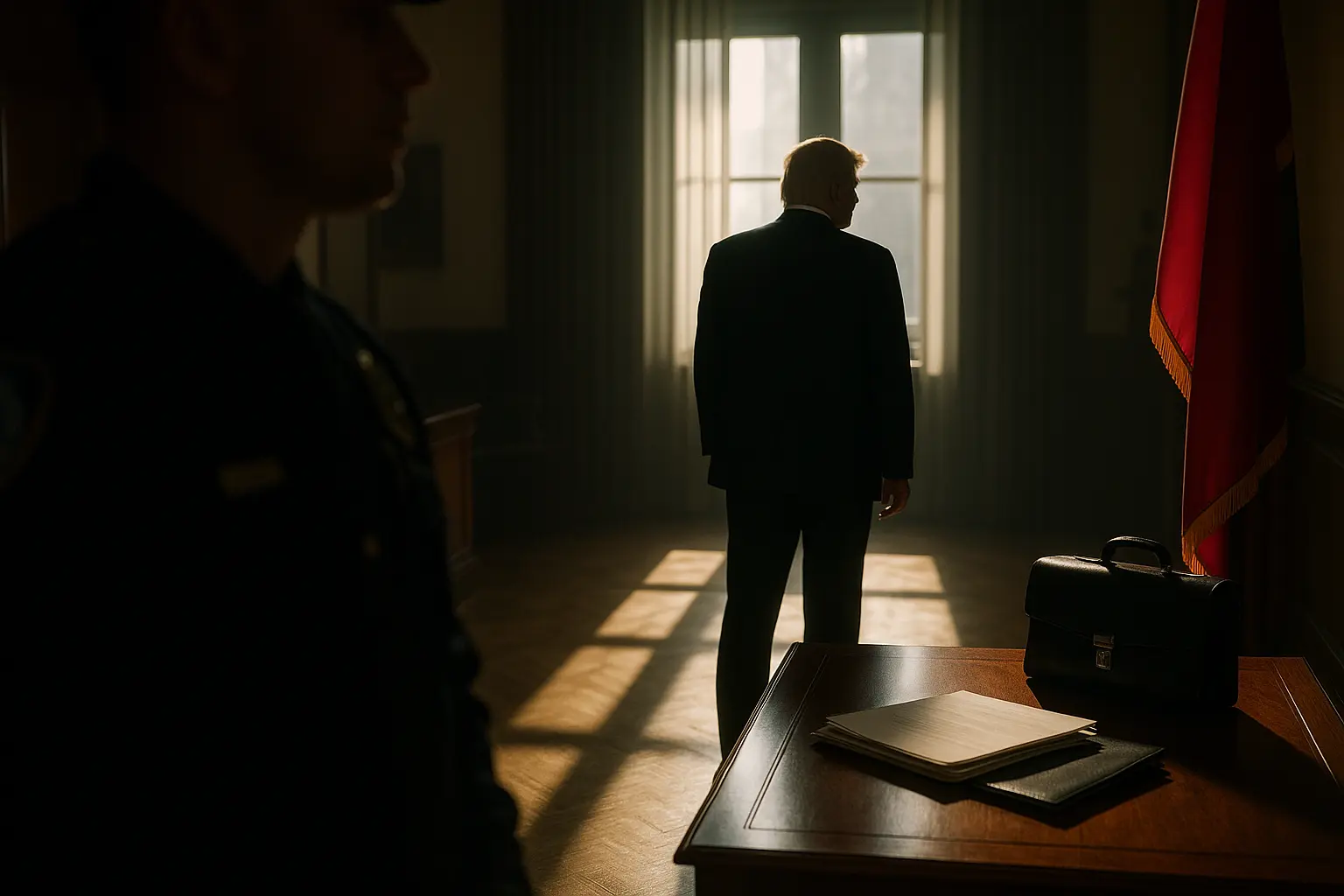
Strong Stand: U.S. Pledges Unwavering Support for Taiwan Amidst Trade Talks
The spotlight is once again on Asia as the Trump administration makes it clear: the United States will not bargain away its commitment to Taiwan in pursuit of a trade deal with China. In an energized statement this Sunday, Secretary of State Marco Rubio (R) addressed concerns head-on, stating that no “trade deal will compromise Taiwan”—an assurance that comes at a critical moment ahead of President Donald Trump’s (R) high-stakes meeting with China’s Xi Jinping (CPC) at the Asia-Pacific Economic Cooperation (APEC) summit in South Korea. These developments unfold as the U.S. Treasury Secretary Scott Bessent and China’s Vice Premier He Lifeng conduct what both sides described as “very constructive” trade talks in Kuala Lumpur—setting the table for what could be a landmark encounter between the world’s leading economies.
The latest round of diplomacy comes at a time when Taiwan faces mounting pressure from the Chinese Communist Party, which still claims the democratic island as its own. America’s conservative majority, long wary of appeasement toward Beijing, finds renewed confidence in the Trump administration’s America First doctrine. Rubio’s words echo the enduring belief that Washington must never reward Beijing’s aggression or compromise cherished allies for short-term economic gain.
Trump News Room readers know too well that the cost of weak-kneed diplomacy isn’t just theoretical. The world has watched China’s attempts to bully its neighbors, rattle markets, and threaten U.S. interests from the South China Sea to cyberspace. In this climate, Secretary Rubio’s assurance couldn’t be more timely.
“The United States will not abandon its support for Taiwan in negotiations to reach a trade agreement,” Rubio stated, putting the Trump White House’s cards firmly on the table.
By fortifying this stance, the administration signals that defending freedom abroad—especially in the Indo-Pacific—remains a non-negotiable element of conservative foreign policy. As we await the outcome of Trump’s summit with Xi, the clarity of America’s position should put allies, adversaries, and fence-sitters alike on notice.
Negotiation Table: Trump Sets the Tone for US-China Talks on Trade and Taiwan
All eyes are turning toward South Korea, where President Trump will square off face-to-face with Xi Jinping for the first time since his second inauguration. As the world’s attention locks on the Asia-Pacific stage, both economic powerhouses seem determined to find common ground—yet not at the expense of Taiwan. President Trump has explicitly expressed “a lot of respect for Taiwan” and stated that the topic will feature prominently in his conversation with Xi (source).
White House advisors insist that Taiwan is more than a diplomatic pawn—it is a central pillar of U.S. security policy in Asia and a vital partner in trade, democracy, and innovation. Trump’s negotiators are making this clear as the window for new tariffs draws near: without progress, punitive 100 percent tariffs are set to hit on November 1. This puts substantial pressure not just on China, but on U.S. manufacturers, consumers, and markets keen to see an end to years of disruption. Yet, the administration stands ready to delay tariffs only if Beijing steps up.
The nature of these negotiations is fraught with risk, but Trump’s record shows he doesn’t shy from leverage. Instead, he understands that standing strong on principle yields better deals—something career politicians and DC insiders all too often forget. In this vein, Trump’s America First ethos rejects the flawed logic of sacrificing an ally for a quick fix. As Treasury Secretary Bessent describes the latest talks in Kuala Lumpur as “very constructive,” there’s genuine optimism that both sides may be charting a path toward lasting agreement, without compromising fundamental values (see report).
“No one is contemplating a trade deal with Taiwan in exchange for favorable trade terms,” Rubio affirmed, seeking to end speculation about backroom bargains or sellouts in the ongoing negotiations.
Though the mainstream media frequently sows doubt about Trump’s global leadership, facts on the ground show results. America holds the cards in these talks, with robust backing from Republicans in Congress and the majority of voters who believe that standing by Taiwan—against Chinese encroachment—should not be negotiable. The mood in conservative circles is clear: Any agreement that weakens our strategic position or betrays a vibrant democracy would be dead on arrival back home. For Trump and his negotiating team, there’s no greater priority than defending U.S. credibility and safeguarding freedom in the Indo-Pacific.
From sanctions to military exercises, U.S. resolve is already having ripple effects in the region—reminding Beijing that the path to prosperity runs through peaceful cooperation, not coercion. With Rubio and Trump united on Taiwan, China must now decide whether it can accept trade without territorial expansion as its price.
Historical Backbone: America’s Taiwan Policy and the Conservative Commitment to Freedom
While these U.S.-China trade talks carry real consequences for markets and security, they also mark the latest chapter in decades of steadfast American policy. From the Taiwan Relations Act of 1979 through every modern Republican administration, the United States has maintained a clear message: Taiwan’s future cannot be dictated by threats or bargains. The conservative base has always held the view that protecting free societies is essential not just for America’s interests, but for the preservation of Western values globally.
Beijing’s ambitions for Taiwan are no secret. The Chinese Communist Party claims the island as its own and has threatened unification by force if necessary—a clear violation of the principles enshrined in American policy and international norms. Yet, every time the question is raised, strong U.S. leadership has made the difference, preventing escalation and affirming America’s role as a defender of freedom. Today, with President Trump’s hard line and Secretary Rubio’s unwavering voice, the message resounds louder than ever: No trade pact, no matter how lucrative, will be won at the expense of our friends or our integrity (Rubio’s remarks).
Markets have taken note: Taiwan’s leading stock indices and U.S.-listed Taiwanese funds like TWN remain resilient despite geopolitical headwinds, buoyed by confidence that Washington won’t blink when values are at stake (market report). Congressional hawks and former military leaders have joined Rubio in calling for greater arms sales, training, and trade with Taipei. Meanwhile, mainstream pundits who predicted American retreat have been proven wrong—again.
“There is no need for Taiwan to worry about being used as a bargaining chip in the ongoing U.S.-China trade talks,” Rubio stated with conviction, slamming rumors of any shift in U.S. commitments ahead of Trump’s meeting with Xi.
Conservative America watches these developments closely, recognizing that the way Washington handles Taiwan today will echo for generations. Failure is not an option. It’s no wonder, then, that strong support for Taiwan enjoys rare bipartisan consensus, with even moderate Democrats aligning with the Republican approach—proof positive that the Trump administration’s tough stand is resonating far and wide. That commitment is more than just policy; it’s a promise rooted in shared values, and one that every freedom-loving American can be proud of as this historic summit unfolds.