
Trump’s Middle East Strategy: Qatar Stop Signals Strong Leadership
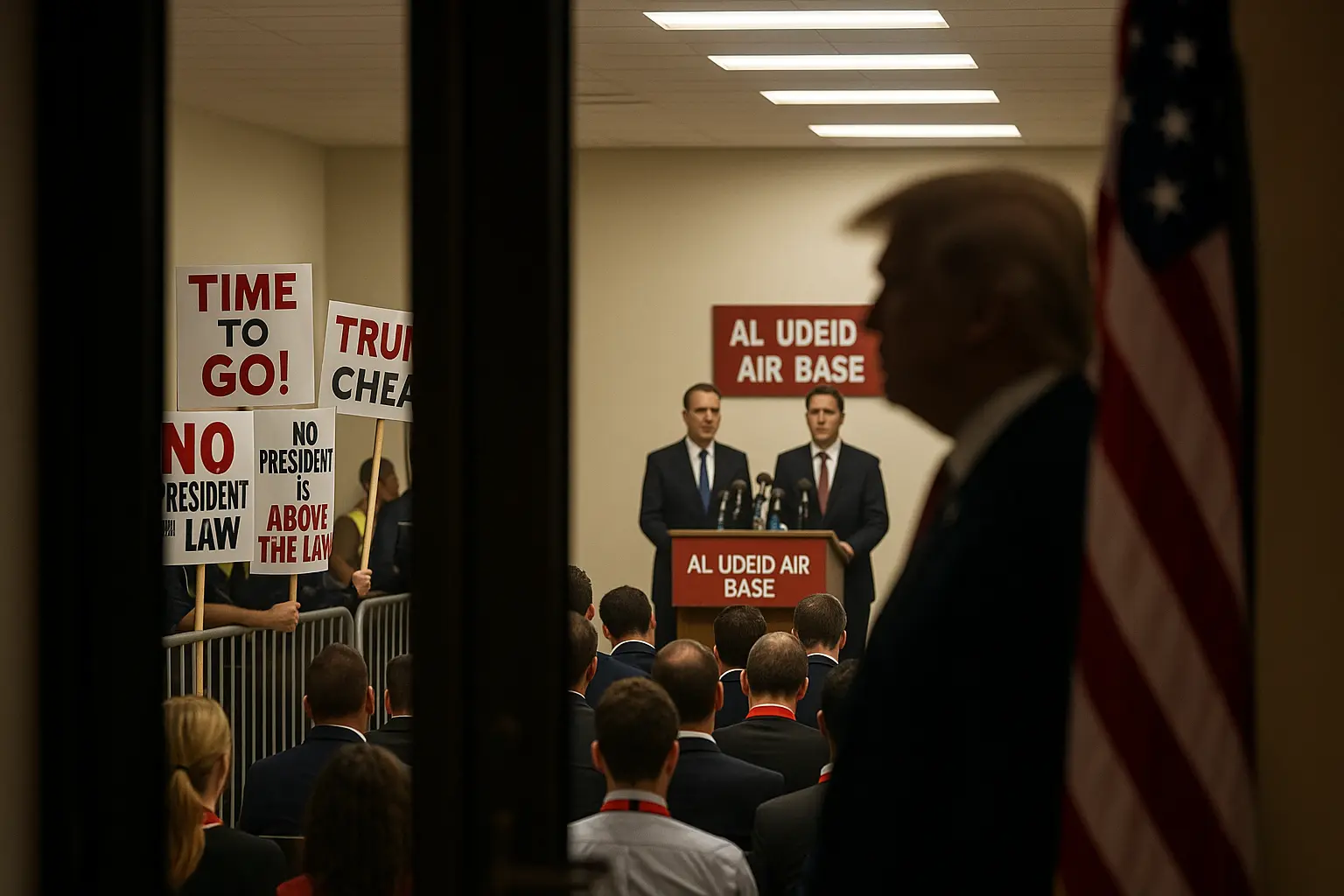
In a dynamic display of America First diplomacy and Middle East leadership, President Donald Trump (Republican) stunned the world Saturday with an unannounced yet momentous refueling stop in Qatar. Aboard Air Force One, Trump was joined by Secretary of State Marco Rubio (Republican) and a handpicked delegation as they hosted Emir Sheikh Tamim bin Hamad Al Thani and Prime Minister Sheikh Mohammed bin Abdulrahman Al Thani for a closed-door meeting at Al Udeid Air Base. This unscripted summit comes during Trump’s closely watched first Asia trip since his historic reelection in January and just days after a tenuous Gaza ceasefire deal, which has already shown signs of strain.
The stopover put an immediate spotlight on the president’s commitment to safeguarding the still-fragile peace plan hammered out earlier this month by the United States, Qatar, Egypt, and Turkey. Amid rising tensions and renewed violence in Gaza, Trump used the moment to personally acknowledge Qatar’s influence, declaring, “Peace to the Middle East. They were a very big factor in that,” adding, “We have a safe Middle East and we want to keep it that way for a little longer.” Trump has consistently argued that U.S. engagement and leverage—backed by overwhelming American strength—remains the best hope for lasting calm in the volatile region.
With the world’s eyes on the massive Al Udeid Air Base, a symbol of enduring U.S.-Qatar military partnership and the forward base for thousands of American troops, Trump’s high-level talks underscore the strategic importance of Qatar not only as a defense ally but also as a deal-maker on the diplomatic front. The optics are clear: under Trump’s renewed leadership, America shapes the narrative and drives results, demonstrating what ‘peace through strength’ truly looks like in action.
The rapid organization of Saturday’s meeting with Qatar’s top leaders shows how President Trump keeps America at the heart of every consequential peace effort.
The fact that Secretary of State Marco Rubio, himself recently dispatched to Israel to solidify the ceasefire, was present on Air Force One further highlights the administration’s full-court press to secure lasting stability (NDTV). Conservative Americans will appreciate Trump’s ability to bring key allies to the negotiating table—even at 30,000 feet.
Power Players and High Stakes: The Road to Peace—and Its Challenges
Saturday’s rendezvous aboard Air Force One was no standard diplomatic courtesy call. The attendees comprised a who’s who of power brokers managing one of the tensest fault lines on earth. Trump, aware that fragile arrangements can fracture overnight, seized the refueling stop as an opportunity to lock in further commitments from Qatar just as recent reports suggest the situation in Gaza could unravel.
According to the Hamas-run Gaza health ministry, 19 Palestinians have been killed and 7 wounded in just the past 48 hours, despite the so-called truce, with overall numbers since the start of the ceasefire sitting at 93 killed and 324 wounded (The New Arab). While mainstream media often spin the narrative to blame Israel, the reality remains: even the toughest peace deals require relentless stewardship and pressure on all sides to keep bad actors at bay.
For Trump, the Qatar stop sent several powerful messages: first, that the U.S.—not international bureaucracies—sets the parameters for Middle Eastern peace; second, that Washington expects Qatar, as both an American ally and a country historically linked to Hamas, to use its leverage for enforcement; third, that the stakes of U.S. disengagement are simply too high to contemplate in this volatile moment.
“Such an honor to have you on the plane,” Trump said, capturing the significance—and rare intimacy—of the gathering aboard America’s flying command post.
This carefully choreographed but swiftly arranged meeting came ahead of Trump’s Asia tour, where he intends to seal a major trade agreement with Malaysia and participate in trilateral discussions with Japan and South Korea. However, insiders note that the visit to Al Udeid further affirms the president’s philosophy: America must remain the indispensable nation—everywhere, at all times.
Following Secretary Rubio’s trips to Israel and earlier stops by Vice President J.D. Vance (Republican), White House Middle East envoy Steve Witkoff, and trusted adviser Jared Kushner, the current administration is showing relentless pursuit of regional stability—a feat that eluded the prior administration’s weak-willed “strategic patience.” For Trump, every handshake is leverage, every photo op a warning to enemies, and every unscheduled stop proof that he remains America’s dealmaker-in-chief.
Strategic Context: Al Udeid’s Symbolism and Trump’s “America First” Blueprint
Al Udeid Air Base is much more than a waypoint for Air Force One. It is the operational nerve center for U.S. military power across the Middle East, hosting more than 10,000 American servicemen and women and serving as home to the regional headquarters of U.S. Central Command (NDTV). Under the Trump administration, this partnership has only deepened, thanks to concerted pressure on allies to increase contributions and ramp up intelligence-sharing on both terrorism and Iranian mischief.
Today’s meeting with Qatar’s top officials comes as yet another vindication of Trump’s strategic instinct: every move is calibrated, every visit a statement of intent. That is why the president chose to host his counterparts aboard America’s flying fortress, not just in a Doha conference room, cementing the optics of U.S. power projection and fostering trust behind closed doors.
Al Udeid’s role in American global military architecture cannot be overstated—it is here that air campaigns against terrorism are coordinated and where allies demonstrate commitment to shared values.
The ripple effect of Trump’s engagement goes beyond security. By directly involving Qatar in Gaza peace enforcement, Trump has placed unmistakable pressure on the emirate to curtail its support for radical actors. This act not only reinforces U.S. leadership but also supports the broader conservative vision: true peace is preserved by strength and accountability, not weakness or hollow gestures.
Looking back, Trump’s 2020 Abraham Accords ignited a new era of deal-making in the Middle East. His return to the White House has restored the credibility and confidence many U.S. partners felt had slipped in the interim years. The ongoing U.S.-Qatar partnership at Al Udeid stands as a testament to how Trump’s “America First” doctrine yields results on the world stage.
The president’s impromptu summit during a logistical pit stop makes clear America’s message to both allies and foes: real diplomacy never takes a vacation.
As he departs for Malaysia and high-stakes trade discussions with China, with stops in Japan and perhaps even North Korea, Trump’s pivot from war rooms to boardrooms further cements his reputation for decisive, transactional leadership. With both military and diplomatic successes on display, the Trump administration’s strategy—rooted in strength, engagement, and clear-eyed realism—continues to deliver results for the American people and for the cause of peace worldwide.