
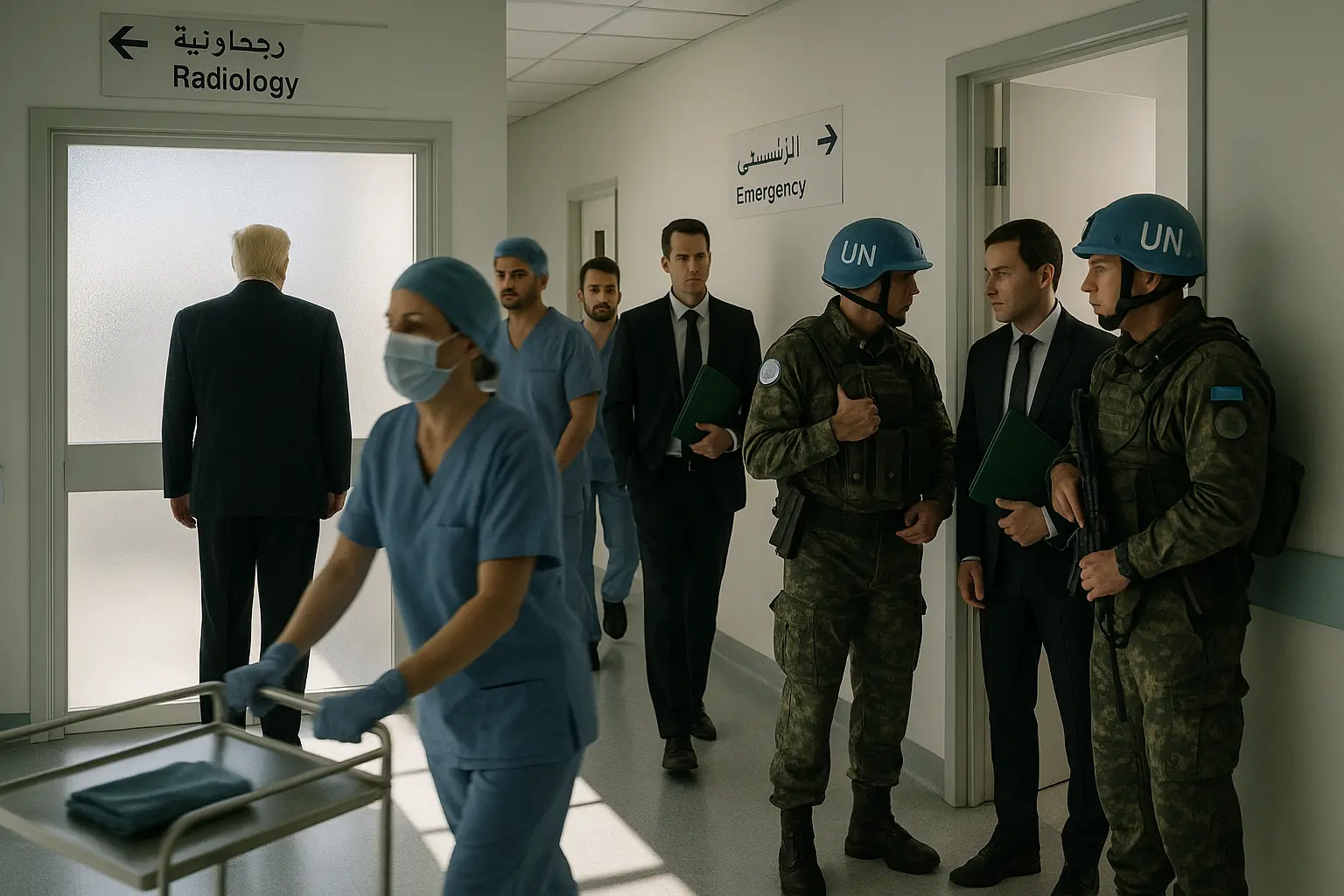
Trump’s Gaza Stabilization Force: A Game-Changer for Middle East Peace
The world watched this week as President Donald Trump (Republican) stood before the press aboard Air Force One and delivered what could be his strongest message yet on Gaza and the fight against terrorism in the Middle East. Keywords like “Gaza Stabilization Force” and “Trump peace plan” are trending everywhere as news spreads of the administration’s powerful new move. With tensions teetering after months of violence, Trump warned Hamas that their games are over—and announced a plan for an international stabilization force (ISF) ready to enter Gaza the moment the ceasefire cracks.
After weeks of delicate backchannel talks and an official meeting with Qatar’s Emir Sheikh Tamim bin Hamad Al Thani, the President finally revealed details of his groundbreaking 20-point plan, positioning America as the driving force for stability once again. In this dramatic new strategy, the Israel Defense Forces (IDF) would hand off security responsibilities to a multilateral coalition that includes some of the region’s heaviest hitters—Saudi Arabia, the UAE, Qatar, Turkey, Indonesia, and Jordan. Trump emphasized that the ISF’s presence would ensure both humanitarian assistance and ironclad security. America, under Trump’s leadership, is once again setting the stage for Middle East peace on its own terms, not caving to globalist demands or weak-willed policies.
The ISF’s chief objectives are crystal clear: securing Gaza’s borders with Israel and Egypt, stopping smuggled weapons, and guaranteeing that badly-needed goods flow safely for rebuilding—a practical, results-focused approach that puts safety and prosperity above political posturing. Trump’s assertive leadership sends one message: the days of Hamas manipulating Gaza’s fate are numbered.
“If Hamas thinks they can wait us out, they’ll be dealing with a massive problem,” Trump declared. “This force will keep the peace, and we’re not leaving Gaza to the terrorists.”
As recent reports confirm, Trump’s plan features a handoff of authority from the IDF to this new ISF, a group that draws strength and legitimacy from both Arab and Western partners. With Qatar’s public endorsement and willingness to field peacekeeping troops, the plan moves far past empty promises—real boots are getting ready for the ground. America is not acting alone but is leading, influencing, and shaping the future in line with conservative principles of strength and accountability.
The news is already sending ripple effects across world capitals. At a time when progressive politicians call for “restraint,” Trump’s administration is proving that real peace only comes with real resolve.
The Strategy Unpacked: ISF To Dismantle Terror and Rebuild Gaza
Diving deeper into the plan, the Trump doctrine calls for the ISF to be deployed in carefully choreographed phases. First, the focus will be on immediate counterterrorism—identifying, neutralizing, and eliminating the infrastructure Hamas relies on for terror, including tunnels and weapons caches. With border security and anti-smuggling efforts ramped up, the force’s core goal is clear: a secure, demilitarized, and terror-free Gaza where law-abiding families can finally rebuild their lives without fear.
Over time, the ISF would stand guard over Gaza’s critical infrastructure and aid operations, helping train a new Palestinian civil police and supporting local governance structures. Trump’s plan doesn’t ignore the region’s legitimate needs—quite the opposite. It’s built to protect civilians, guarantee humanitarian relief, and empower people of Gaza to take responsibility for their future, not under the thumb of a terrorist group, but alongside a supportive international coalition.
On the diplomatic side, America is getting results. By mid-October, about 25 U.S. personnel were already coordinating the ISF’s early build-up on the ground, and news emerged that Trump, together with the United Kingdom and France, was moving at lightning speed to push a United Nations Security Council resolution backing the force with full international legitimacy. This is leadership and action—something sorely missing before Trump’s return to the White House in 2024.
“We’ve learned from past failures in Middle East peacekeeping. This force will not be a bystander—it’s going to act and succeed,” said U.S. National Security Advisor Mike Pompeo (Republican).
Of course, there are challenges. While initial coalition plans included troops from major Arab states like Saudi Arabia and the UAE, reports in late October suggest those nations have shifted, possibly leaving key operational roles to Azerbaijan and Indonesia. Meanwhile, Israel has made clear that Turkish troops will not be allowed inside Gaza, reflecting a new seriousness and alignment with U.S. priorities under the Trump doctrine. This approach, grounded in conservative realism and tough negotiation, isn’t a soft touch—but it gets the world’s attention.
For everyday Americans watching the news, the message is as clear as can be: Trump and his administration don’t posture—they deliver. At stake is not just Israel’s security or Palestinian safety, but the future of the whole region, where chaos breeds extremism and threatens U.S. interests. For once, the solution is made in America, by Americans, with real international support—not dictated by bureaucrats in Brussels or indecisive career politicians.
Policy Context and the Trump Doctrine: America Leads, Terror Loses
This historic step is hardly Trump’s first foray into Middle East security and peace. From moving the U.S. embassy to Jerusalem to engineering the Abraham Accords, the President has rewritten the playbook on peacemaking by prioritizing U.S. interests and rewarding allies who step up. Trump’s leadership style—bold, unapologetic, and laser-focused on American and ally security—has already paid dividends in shifting the diplomatic balance.
Unlike previous Democratic and globalist approaches that bogged the U.S. in endless negotiation and allowed terrorist factions to regroup, Trump’s administration believes in operational muscle. Key to the ISF’s plan is making Gaza “terror-free” for the first time in decades—overseeing demilitarization, building up local policing capabilities, and ensuring Israel doesn’t have to babysit a neighbor bent on destruction. History is full of failed peace missions in the region. The difference now? Tough rules of engagement, real international buy-in, and a President who refuses to tolerate endless provocations. Even as the ISF’s core mandate was hammered out with U.S. leadership, real American personnel were deployed to coordinate and ensure success.
“This is a turning point for Gaza, for Israel, for Arab partners, and for America’s role as a global leader,” said former White House Middle East envoy Jason Greenblatt (Republican). “Peace comes when you enforce it and stand strong.”
On Capitol Hill, Republicans are rallying around the plan, with conservative voices echoing that peace cannot come from appeasing extremists. Democrats, caught flat-footed, offer their standard critiques, but even moderate critics are forced to acknowledge that only the United States—under Trump’s confident command—can credibly build and lead this kind of coalition. Trump’s vision ensures the U.S. stays out of a quagmire, commits only what’s necessary, and expects allies to step up. This puts American soldiers’ safety and global standing first.
As these early moves turn into lasting peace, the “Gaza Stabilization Force” and Trump’s multi-pronged policy will be remembered as a defining test of conservative strength and global resolve. With progress on the ground and results where other approaches have faltered, America’s bold course is set. The world’s eyes remain on the President—and this time, the world is following his lead.