
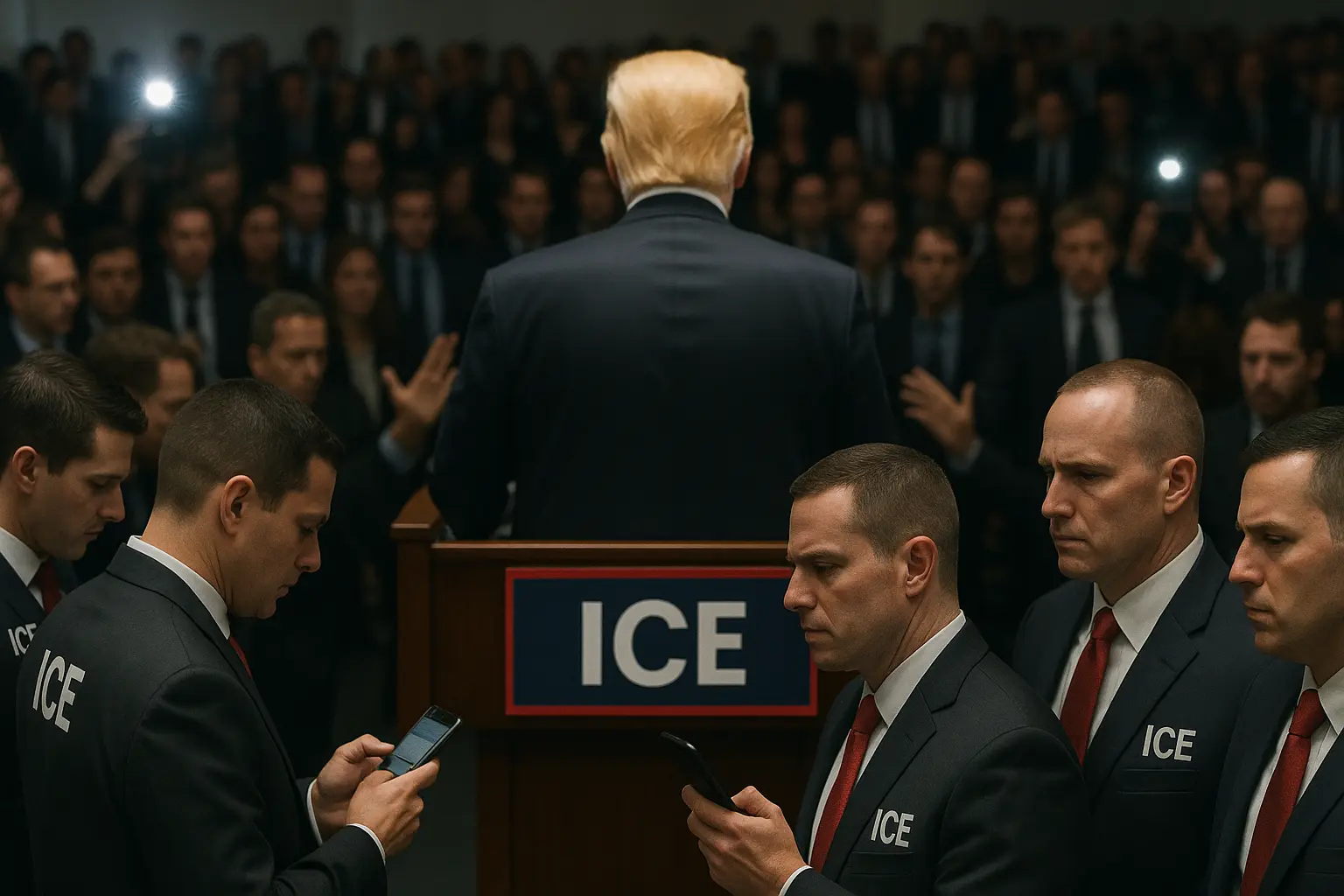
Bounty Threats on Federal Agents: Trump’s Law-and-Order Challenge in Chicago
The bold, brazen threat facing America’s federal immigration enforcement officers has officially become a national crisis. Homeland Security Secretary Kristi Noem (R) dropped a bombshell this weekend, revealing that cartels, gangs, and known terrorist organizations have set up to $10,000 bounties on the heads of federal ICE and Border Patrol agents, circulating their photos and details through shadowy networks. This isn’t just a crime problem—it’s an attack on America’s sovereignty and security at a moment when President Donald Trump (R) has doubled down on his signature promise: defend America’s borders, no matter the cost.
As the heartland is rocked by this revelation, all eyes have turned to Chicago—a city Noem boldly called “a war zone.” The evidence backs her up. On a recent night, a team of federal agents conducting immigration raids in Chicago were boxed in by a caravan of 10 cars, with at least one attacker brandishing a semi-automatic weapon. One would-be assailant was shot and hospitalized when agents defended themselves, and it was later confirmed that she had already appeared in a Customs and Border Patrol intelligence bulletin as a potential threat.
This coordinated, militarized response by the cartels shows how desperate criminal organizations have become as the Trump Administration brings tough enforcement to their operations. According to DHS sources, the same cartels offering these bounties are paying radical protesters on the ground to escalate local unrest, hoping to distract and overwhelm law enforcement while pushing their criminal agendas.
“We have specific agents who have had bounties put out on their heads,” Noem told Fox & Friends Weekend, underscoring the urgency and gravity of the new threat level for American agents on the front lines.
With President Trump directing resources—including helicopters, drones, and rapid response teams—the message from Washington is unmistakable: America will not retreat in the face of intimidation. The federal operation has not only swept up thousands in recent raids—including some carrying valid documentation, highlighting the difficulty of distinguishing friend from foe—but also led to a renewed conservative outcry for sanctuary city policies to end and local leaders to finally get tough on crime and immigration.
It’s not just about enforcement, it’s about restoring order—exactly the message that propelled President Trump to a decisive 2024 re-election and keeps him the standard-bearer for America First principles.
Agents Under Attack: The Human Cost and the Trump Administration’s Response
Behind every headline about cartel bounties and gang violence stands a dedicated American law enforcement officer, risking all for their country’s security. What’s unfolding now isn’t merely a string of criminal threats, but a concerted, organized assault on the men and women in uniform tasked with defending the law. The bounties—$2,000 for abduction, $10,000 for assassination—target those most effective at disrupting cartel activities. Law enforcement sources confirm that agents’ names, photos, and routines have been widely circulated on cartel-run digital platforms, turning every encounter into a potential ambush.
Chicago has become the epicenter of this escalating battle. In the midst of sweeping enforcement actions, federal officers have come under direct threat. Reports confirm that a recent encounter involved a woman—known to federal authorities from a CBP intelligence bulletin—emerging from a caravan of vehicles armed and ready, only to be stopped by agents defending themselves. Sources familiar with the event say local officials were nowhere to be found, adding weight to Noem’s accusations that city leadership has abandoned public safety in favor of anti-ICE rhetoric.
This reality brings tragedy close to home: both sides recognize the stakes. Treasury Secretary Scott Bessent (R) has joined DHS to investigate the shadowy financing fueling these bounties, aiming to choke off funding streams from foreign and domestic criminal networks. The coordinated action is robust: “The Trump team is committed to protecting every agent, period,” a senior administration official told Trump News Room. “There is no daylight between the President and our officers—the message is clear, we will not back down.”
One senior ICE agent described the mood in the field: “We signed up to protect this country, not to be hunted like animals. But if the cartels want a fight, President Trump has our backs, and we will do our job.”
The deployment of federal surveillance assets, armored vehicles, and tactical support marks the largest show of force against cartel operations on domestic soil in years. At the same time, the administration’s focus on protecting civil rights is creating tensions: Newsweek reported that thousands have been detained in these enforcement sweeps—including some with green cards and visas. Critics say that some of these detentions risk damaging community trust, but supporters argue that restoring order in sanctuary cities should override concerns about bureaucratic mix-ups.
This tug-of-war is exactly what the cartels want—disarray in the name of criminal profit. The Trump Administration, by contrast, is laying down a marker: organized crime will not dictate who enforces America’s laws.
Background: America’s Fight Against Cartels, Sanctuary Cities, and National Security Threats
The standoff in Chicago, and the bounties against immigration agents, are symptoms of a deeper conflict that stretches back decades. Starting in the late 20th century, cross-border drug and human trafficking flourished under lax policies and poorly defended borders. President Trump’s (R) historic first administration set a new tone—building border barriers, ramping up ICE and CBP operations, and taking the fight directly to cartel operations both abroad and in US cities.
Yet, in recent years, left-wing leadership in major urban centers adopted open-door policies—Chicago being one of the most radical. Mayor Brandon Johnson (D) has faced withering criticism from conservatives like Noem for turning the city into what she calls “a war zone,” undermining ICE and Border Patrol operations at every turn. Local opposition only emboldened criminal groups, who took advantage of weak enforcement to expand their control. This political climate paved the way for the current crisis: emboldened cartels, a fractured law enforcement landscape, and American agents paying the price.
“We wouldn’t have this chaos if sanctuary cities did their job,” Noem said, blasting local leaders for refusing to cooperate with Trump administration raids. “It’s time for leaders to get out of the way and let us enforce the law.”
Statistics paint a stark picture: over 14,000 cartel-affiliated members have been detained or deported under Trump’s second term. Analysts credit this success—and the accompanying frustration of criminal networks—as a key driver of the recent wave of targeted violence against agents. Every conservative observer knows that real border security doesn’t come from empty promises, but from unwavering resolve and real action on the ground.
The stakes are existential: as terrorism, organized crime, and open border policies intersect, the question before America is whether national leadership will side with the rule of law or cave to political expedience. President Trump’s continued firm response has reassured a nervous nation: despite the bounties, despite the coordinated attacks, America’s guardians will not flinch. The fight for security—on every front—defines the America First era, and makes clear that when the nation is tested, true leadership rises to meet the challenge.