
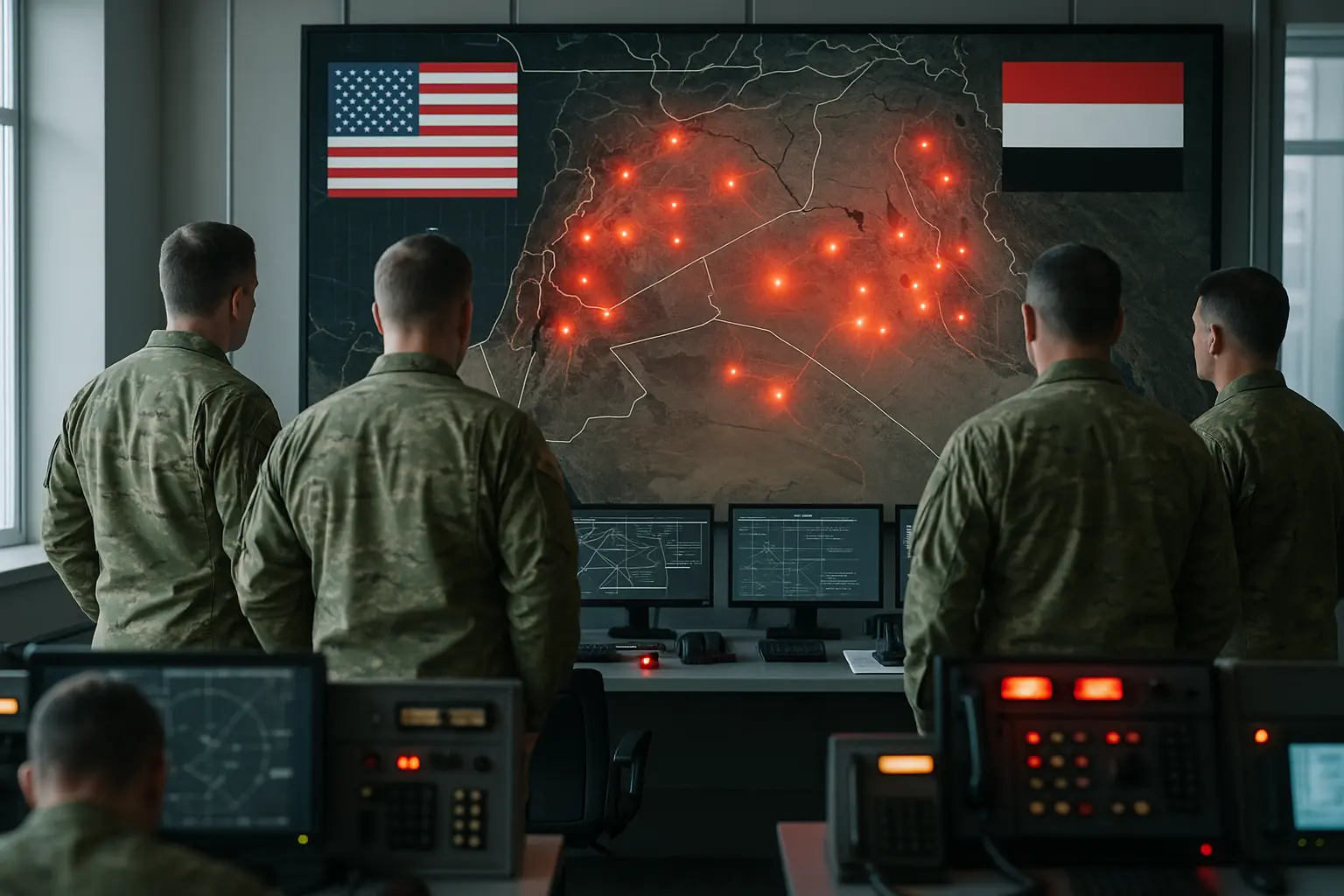
Opening Overview: US Military Positioned to Strike Iran if Trump Commands
As the negotiations surrounding Iran’s nuclear ambitions stall, the United States remains strategically poised to enforce consequences, underscoring the seriousness of the threat posed by the Islamic Republic’s nuclear program. General Michael Kurilla, the current commander of US Central Command (CENTCOM), has confirmed that a comprehensive set of military options has been presented to President Donald Trump and the Secretary of Defense. This readiness signals America’s firm commitment to preventing Iran from ever achieving a nuclear-armed status. Trump himself has publicly expressed growing skepticism about the viability of a renewed nuclear deal with Tehran, reflecting a less confident stance given Tehran’s delayed and defiant posture in ongoing talks. The strategic importance of this moment cannot be overstated, as the administration weighs diplomatic engagement against the harrowing possibility of military action.
“I have provided the secretary of defense and the president a wide range of options,” Kurilla stated, emphasizing that while diplomacy remains preferred, the U.S. military is ready to act decisively if required.
President Trump’s demand for Iran to permanently halt uranium enrichment remains uncompromising, and CENTCOM’s preparation is a clear warning that the era of appeasement is over. Recent developments in the region, including Israel’s preemptive airstrikes and Tehran’s missile responses, have further elevated tensions. In this crucial juncture, the United States is fully prepared to respond with overwhelming force if Iran crosses the red line.
Main Narrative: Detailed Military Preparations and Rising Tensions in the Middle East
General Kurilla’s testimony before the House Armed Services Committee delivered a stark message: the US military stands ready to strike Iran’s nuclear infrastructure should diplomatic negotiations fail. The CENTCOM chief’s acknowledgement that he has laid out multiple strike plans to both President Trump and Defense Secretary Pete Hegseth reflects a disciplined and thorough approach to national security. This multi-option strategy ensures President Trump retains strategic flexibility to neutralize the Iranian threat efficiently.
Kurilla warned that unilateral Israeli strikes against Iran’s nuclear facilities could jeopardize US forces in the region, underscoring the delicate balance Washington must maintain.
The region’s volatility is underscored by the recent June 13, 2025, Israeli airstrikes on Iran’s nuclear and military targets, including the heavily fortified Natanz site. These strikes reportedly eliminated several top Iranian military commanders and senior nuclear scientists—a devastating blow to Tehran’s nuclear ambitions. Israel’s carefully coordinated campaign was the fruit of lengthy intelligence preparation, including intricate cellphone tracking, reflecting a precision effort to disrupt Iran’s nuclear infrastructure without provoking broader war immediately. The Israeli operation secured backing from the United States and was preceded by repositioning of US military assets to brace for Iranian retaliation.
In response, Iran unleashed over 100 ballistic missiles against Israeli cities, many intercepted by Israel’s Iron Dome defense system. Despite the defensive success, some missiles did cause casualties within Israeli civilian populations, intensifying the threat perception. Iran’s Islamic Revolutionary Guard Corps dubbed this missile barrage “True Promise 3,” signaling it as part of a calculated series of retaliations designed to pressure Israel and its allies.
Despite the hostility, Trump’s administration officially advocates for renewed diplomacy. Yet the president’s recent remarks reveal a waning optimism about Iran’s willingness to commit permanently to denuclearization. Tehran’s threats to target American bases in the Middle East have only hardened Washington’s resolve to maintain military readiness. Iran’s Defense Minister Aziz Nasirzadeh openly warned that conflict would invite strikes on US bases, a provocation the United States cannot ignore.
Strategically, General Kurilla highlighted proxies such as the Houthi rebels—aligned with Tehran and responsible for attacks on Israeli and international shipping lanes—as part of the broader Iran threat network undermining regional stability. This proxy warfare runs alongside Iran’s own nuclear ambitions, creating a multifaceted danger to American interests and allies.
Contextual Background: Historical Precedents and the Stakes of the Iran Nuclear Issue
The administration’s hardened position and CENTCOM’s strike readiness reflect years of dealing with Tehran’s regional provocations and nuclear brinkmanship. Since Iran’s nuclear program first gained international attention, conservative leaders including President Trump have championed a tough “maximum pressure” policy, rejecting the failed appeasement approach of previous administrations. Trump’s decisive withdrawal from the flawed 2015 Iran nuclear deal (JCPOA) set the stage for stronger punitive measures aimed at crippling Iran’s ability to enrich uranium and finance proxy wars.
“The United States must never allow a nuclear-armed Iran; the costs are too high for American security and our regional partners,” conservative lawmakers consistently emphasize.
Israel’s June 13 airstrikes mark the latest chapter in an ongoing campaign to deny Iran the capacity for nuclear weapons and to dissuade Tehran from further aggression. These attacks follow years of intelligence efforts combined with diplomatic pressure, continuously thwarting Iranian attempts to develop nuclear warheads under the guise of civilian energy programs. The fallout has dramatically raised the stakes of nuclear negotiations but also demonstrated the limits of direct diplomacy without credible military alternatives.
Trump’s insistence on a robust, enforceable deal contrasts sharply with earlier administrations’ willingness to tolerate Iranian uranium enrichment facilities. His approach stresses verifiable denuclearization combined with sustained sanctions and credible deterrence backed by military readiness. The revelation that CENTCOM has strike plans ready confirms a new American doctrine: diplomacy backed by credible threat of force is the best way to secure lasting peace and prevent proliferation.
The broader implications affect not only US-Iran relations but the entire Middle East security architecture. Iran’s proxy war through groups like the Houthis, and influence in Syria, Iraq, and Lebanon, threatens decades of US and allied efforts to stabilize the region. With the Syrian civil war’s decline ushering new dynamics, Tehran is exploiting geopolitical openings to expand its influence. In this light, the US posture towards Iran’s nuclear program plays a critical role in shaping regional peace and America’s standing with allies.