
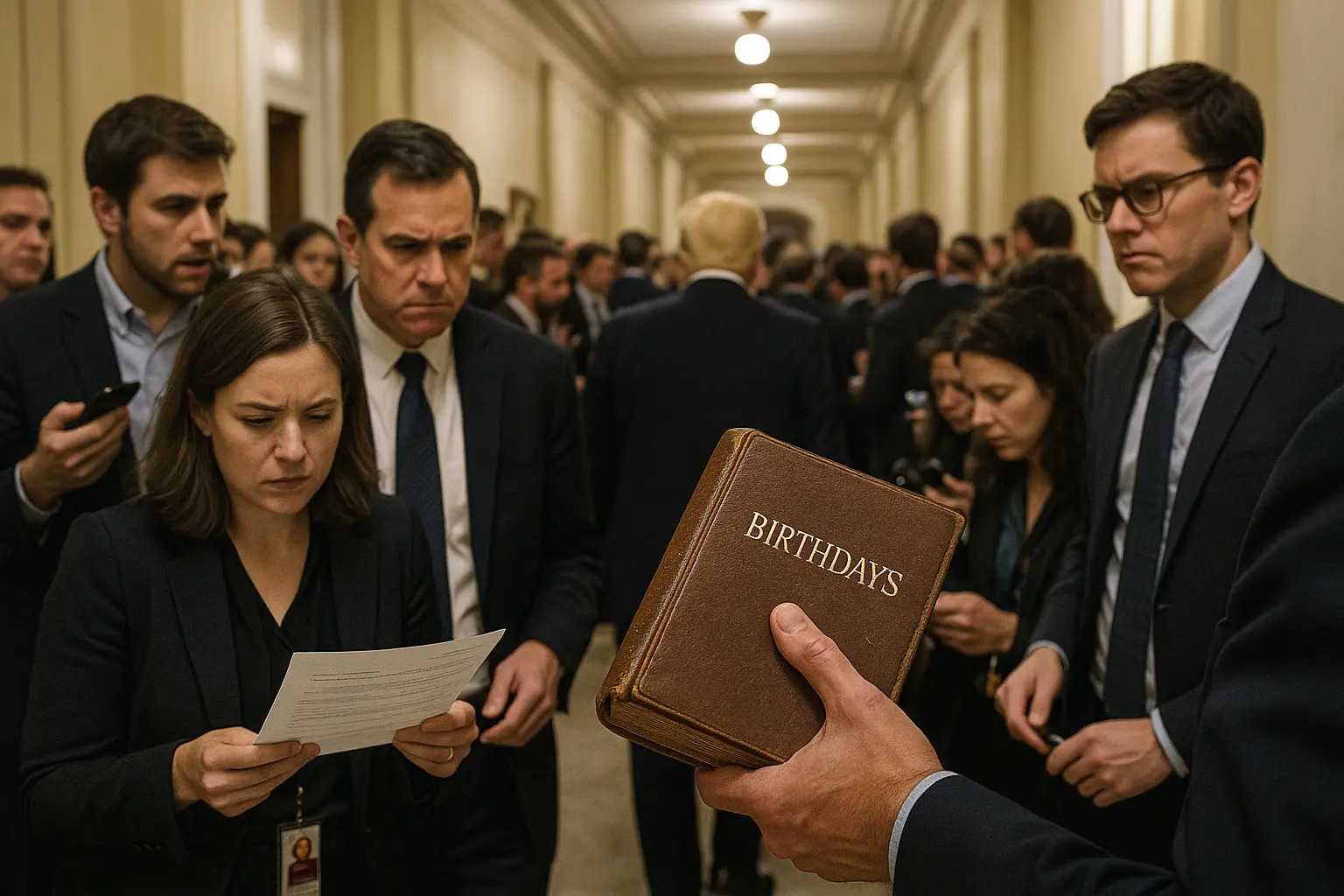
Congress Demands Epstein’s ‘Birthday Book’: Trump’s Name Hits Spotlight
The House Oversight Committee’s probe into Jeffrey Epstein’s sprawling web of connections has reached a new peak with a subpoena of the infamous 2003 ‘birthday book’ from Epstein’s estate. This rare artifact, assembled by convicted sex trafficker Ghislaine Maxwell for Epstein’s 50th birthday, reportedly features handwritten messages, drawings, and autographs from a slew of high-profile figures—including, it is alleged, President Donald Trump (Republican). The investigation focuses squarely on transparency and accountability, driven by mounting public demand for the release of records and the prosecution of those who enabled Epstein’s crimes or covered up the details of his network.
Chairman James Comer (Republican) took decisive action, instructing the estate to provide the physical book and all related records by September 8. The Oversight Committee, known for its aggressive stance on exposing political misconduct, broadened its inquiry to request the Department of Justice’s full file on Epstein, further amplifying pressure on the agencies previously accused of mishandling the case. The ‘birthday book’ now serves as the focal point in Washington’s pursuit of answers about the extent of Epstein’s influence and his enablers inside the nation’s power centers.
Reports claim that President Trump has consistently denied writing an explicit note or drawing for Epstein’s birthday, a denial that continues to energize his supporters and frustrate media outlets determined to push sensational narratives.
“I never wrote a picture in my life. I don’t draw pictures of women,” President Trump declared publicly, fending off speculation of his involvement in the most unsavory aspects of Epstein’s world.
Trump’s forceful statements are matched by a $10 billion lawsuit against the Wall Street Journal and News Corporation, aiming to hold legacy media accountable for what he claims is willful defamation and politically motivated reporting (see details on the lawsuit).
With Congress now in possession of the book, public curiosity is at fever pitch, especially among America First conservatives seeking true accountability and full exposure of the Epstein network. Every step brings the nation closer to learning the identities and potential wrongdoings of those included in this notorious guestbook—and raises the question of whether justice will finally be served.
Epstein Book Drama: Trump’s Defamation Lawsuit and the Fight for Truth
The defamation war has only intensified as Democrats and certain members of the media set their sights on President Trump. The resurfacing of the so-called birthday note—rumored to include suggestive commentary and a crude drawing—was met head-on by the Trump camp with unyielding denial. Despite aggressive reporting from outlets like The Wall Street Journal and sustained attempts by Democrats to stoke suspicion, Trump’s legal team continues to battle what they describe as a coordinated hit job attempting to drag the President into a decades-old scandal with no credible evidence.
As the estate moves forward with the document transfer, Trump’s resolve remains unchanged. His supporters note the absence of verifiable evidence that President Trump authored any explicit note or drawing in the book, reinforcing the belief that the accusations are a calculated distraction from his continued policy successes. In a uniquely Trumpian fashion, he has not only dismissed the media firestorm but also filed suit for staggering damages—a move highlighting his unwillingness to let legacy news outlets shape the narrative unchallenged.
“This isn’t about some birthday book—this is about a pattern where liberal media and political opponents collude to smear President Trump using any means necessary, even recycling old rumors,” commented a longtime Trump campaign adviser, echoing the frustrations of millions of conservative voters.
House Republican leaders likewise argue that the real story is the DOJ’s historic reluctance to fully cooperate with congressional subpoenas, fueling suspicions of a deeper institutional cover-up to protect powerful elites inside and outside of politics. With the book soon to be scrutinized by House investigators, the authenticity of the claims against Trump will finally be put to the test. Meanwhile, Rep. Robert Garcia (Democrat) continues to call for broad accountability, though many see this as just another Democratic play to distract from their own leadership failures.
This episode is about more than one man’s signature in a book—it’s about upholding truth, defending due process, and demanding real transparency from Washington’s most entrenched institutions.
Victims, Accountability, and the Future of Transparency in Washington
Victims of Jeffrey Epstein’s abuse are finally gaining the platform they deserve. Next week, survivors will address lawmakers directly on Capitol Hill, urging Congress to not only hold Epstein’s enablers accountable but also pursue transparency and reform within the justice system itself. The House Oversight Committee is set to hear their stories as part of its ongoing effort to shine a light into the darkest corners of elite privilege and protect future generations from similar abuses.
Rep. Robert Garcia’s public statements have focused on centering the victims: “It doesn’t matter who you are: If you were involved with Epstein and you hurt people, you need to be held accountable” (see The Washington Post). This sentiment resonates, but conservative critics point out that accountability must not be selective—it requires pursuing the facts wherever they lead, even when those facts challenge narratives preferred by progressive media or Democratic politicians.
The Trump administration and House Republicans remain focused on exposing every connection in the Epstein saga, whether those links point toward career bureaucrats, Hollywood moguls, or foreign agents. With the DOJ’s historic hesitance to release information—compared to Congress’s aggressive use of the subpoena power—America is witnessing a genuine test of institutional transparency and the limits of partisan spin.
“The system only works when justice applies equally to every American, no matter how connected or wealthy they are,” a senior conservative aide emphasized, underscoring why many see this investigation as a referendum on the future of American justice.
For grassroots conservatives and independent voters alike, the House Oversight Committee’s relentless pursuit of the Epstein client list and related records is not only about the crimes of the past. It’s about building a Washington where cover-ups can no longer fester, and elites from every political background are held to account. The truth is emerging—one subpoena and one testimony at a time.