
Trump’s Bold EU-US Trade Deal: A ‘Dark Day’ for Europe or America First Triumph?
The newly inked EU-US trade agreement, forged by President Donald Trump (Republican) and European Commission President Ursula von der Leyen (Independent), has ignited an unprecedented political storm across France and throughout Europe. Riding the momentum of his stunning 2024 re-election, President Trump’s unapologetically America First strategy has once again thrown establishment Europe for a loop—drawing stinging accusations of ‘submission’ from none other than French Prime Minister Francois Bayrou (MoDem).
At the heart of the controversy is a headline 15% tariff slapped on EU goods headed for the US, while American imports avoid any immediate retaliation—an outcome Bayrou furiously labeled a “dark day” for Europe and an embarrassing concession to Washington. Markets, however, responded with trademark coolness, as global investors briefly nudged the dollar higher and gave stocks a minor boost, hinting that confidence in Trump’s economic policies remains solid among the financial class.
“It wasn’t a deal that President Donald Trump made with Ursula von der Leyen,” Hungarian Prime Minister Viktor Orban (Fidesz) quipped. “It was Donald Trump eating Ursula von der Leyen for breakfast.”
French fury is palpable, with Trade Minister Laurent Saint-Martin and Europe Minister Benjamin Haddad threatening to unleash Brussels’ long-touted anti-coercion ‘bazooka’ if Washington fails to show greater compromise. Paris has pleaded for tougher action and the swift deployment of an EU-level shield to restrict American access to lucrative procurement and financial markets.
While German Chancellor Friedrich Merz (CDU) and Italy’s Giorgia Meloni (Brothers of Italy) were quick to embrace the deal, France has stayed in full crisis mode, with MPs calling the deal “unbalanced,” “a fiasco,” and “capitulation.”
Despite hand-wringing in Paris, the Trump administration succeeded in averting what many feared would be a full-blown transatlantic trade war, instead solidifying a working compromise that avoids the threatened 30% tariff blitz initially floated earlier this summer. The European Automobile Manufacturers’ Association and the German VDA acknowledged relief over the 15% tariff, though both remain wary of lingering costs to their industries.
This trade outcome sends a powerful message: Trump’s America has learned from the past and refuses to get the short end of the stick. The United States is no longer in the business of simply rolling over for the sake of old alliances. Now, Europe faces an entirely new reality when negotiating with the world’s leading economic power.
The Long Game: American Energy, European Grievance, and Trump’s Negotiating Might
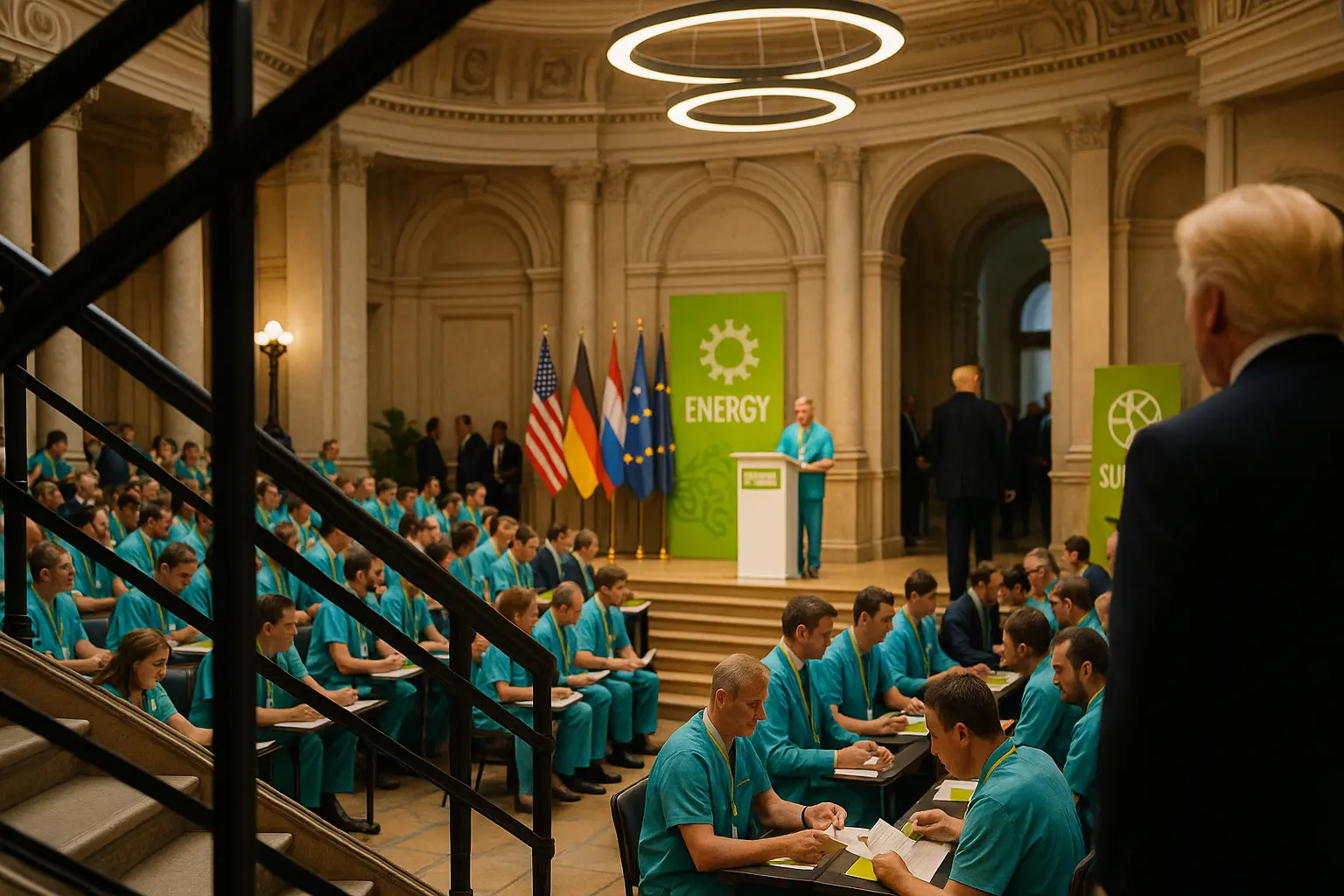
As the dust settles, deeper analysis reveals that beneath the French uproar lies a major concession from Europe on American energy imports. The EU has agreed to purchase a staggering $750 billion worth of US energy, a move set to turbocharge American oil and gas industries—including powerhouses like ExxonMobil and Chevron. This energy procurement, designed to encourage deeper economic ties, stands as a signature victory for Trump-era trade policies and American energy independence.
Oxford Economics noted that while the average effective tariff rate lands around 15%, “lower uncertainty and no potential EU retaliation are partially offsetable.”
While Paris fumbles for a Plan B, European consumers may not feel the pain immediately. In fact, for everyday shoppers, US-made imports might become cheaper than ever, as Trump’s deal opens the door to more affordable American goods flooding store shelves. Yet, the hit will be hardest on flagship EU export sectors such as French wines and German luxury cars, which now face daunting barriers to selling in the lucrative American market.
For French officials, this arrangement stings especially hard, coming after repeated pleas for Brussels to resist what they see as Washington’s bullying. President Macron (La République En Marche!) has notably remained silent on the debacle, distancing himself as criticism mounts and Parliament threatens to press the EU into using anti-coercion measures against US service industries. The Trade Minister’s assertion that, “this cannot be sustained,” has only stoked public frustration in France, while business leaders fret over billions lost to higher tariffs on everything from automotive components to gourmet cheeses.
On the other side of the Atlantic, Trump’s team calls the outcome “the biggest ever,” and not without reason. Not only does this mean immediate gains for American producers, it also adds further leverage over Europe at a time when US-China tensions have made the world’s largest market even more vital. The US also made sure Britain, under Labour Prime Minister Keir Starmer, enjoys a separate set of terms—nudging transatlantic competition even higher and putting the EU at a relative disadvantage.
“The 15pc tariff is prohibitive compared to the 2 to 3% levels most EU exporters face,” one analyst explained. “But European consumers will benefit from cheaper US imports, while American customers will pay more for French wines and Italian sports cars.”
French lawmakers across the political spectrum, from moderate centrists to conservative Republicans, agree the arrangement wounds Europe’s credibility as a united economic force. Meanwhile, global investors seem unconcerned, with Wall Street futures and European stocks barely budging and the dollar ticking upward.
This unmistakably illustrates: when Trump sets the agenda, America’s interests stay firmly at the top of the global list. Now, eyes turn to whether Brussels will heed French calls to escalate with the anti-coercion “bazooka” and how EU exporters will absorb the new landscape crafted in Washington.
From Trade Wars to Economic Muscle: How the Trump Approach Is Reshaping Europe’s Priorities
Backed by a fresh electoral mandate, President Trump’s economic team has pursued a strategy that reverses decades of passivity from US negotiators on the world stage. Where previous administrations were content to muddle through and accept disadvantageous arrangements for the sake of diplomatic “unity,” Trump’s doctrine is built on strength, leverage, and accountability for America’s economic interests.
According to trade observers, the deal reflects “a powerful shift in transatlantic relations, one that places greater emphasis on reciprocity and real results—rather than empty gestures.”
Historically, French resistance has derailed plenty of EU-level compromises, but this time, Berlin and Rome aligned with Washington—leaving Paris more isolated than ever. Both German and Italian officials quietly backed Trump’s proposals as a way to avoid unpredictable trade escalations and blunt the risk of a “trade war” that would hit global markets even harder than the current compromise.
“This arrangement avoids a damaging confrontation and gives us market access that we otherwise could have lost entirely,” said a German industry spokesperson.
The French government’s alarm over lost sovereignty and an unbalanced deal reflects broader anxieties in Europe about the rise of new global economic orders. For decades, Brussels claimed to wield influence as a trading bloc rivaling Washington and Beijing. Now, as Paris contemplates triggering the EU’s anti-coercion provisions, that confidence is wavering.
US negotiators, meanwhile, see an opportunity to capitalize: Trump’s tactics have not just forced concessions on trade, but fundamentally reset the balance of power. According to French sources, EU leaders have acknowledged that even this 15% rate—while lower than Trump’s original threat—could cost the German automotive industry billions and imperil ongoing transitions to electric vehicles, adding to Europe’s sense of vulnerability.
Throughout these historic negotiations, Trump’s America First strategy has meant more jobs for Americans, higher revenues for US industries, and stronger energy independence. Europe now faces the challenge of regrouping and adapting—either by rallying around French anger or adapting to Washington’s new, assertive standards.
For Trump supporters, the verdict is clear: leadership matters, and putting American workers, families, and industries ahead of bureaucratic consensus pays off. As the trade tides shift, even longtime skeptics in international markets are forced to admit—this is a new era for global trade, and America’s future has never looked brighter.