
Opening Overview: Germany and Norway Step Up Funding for Ukraine’s Patriot Air Defense Systems
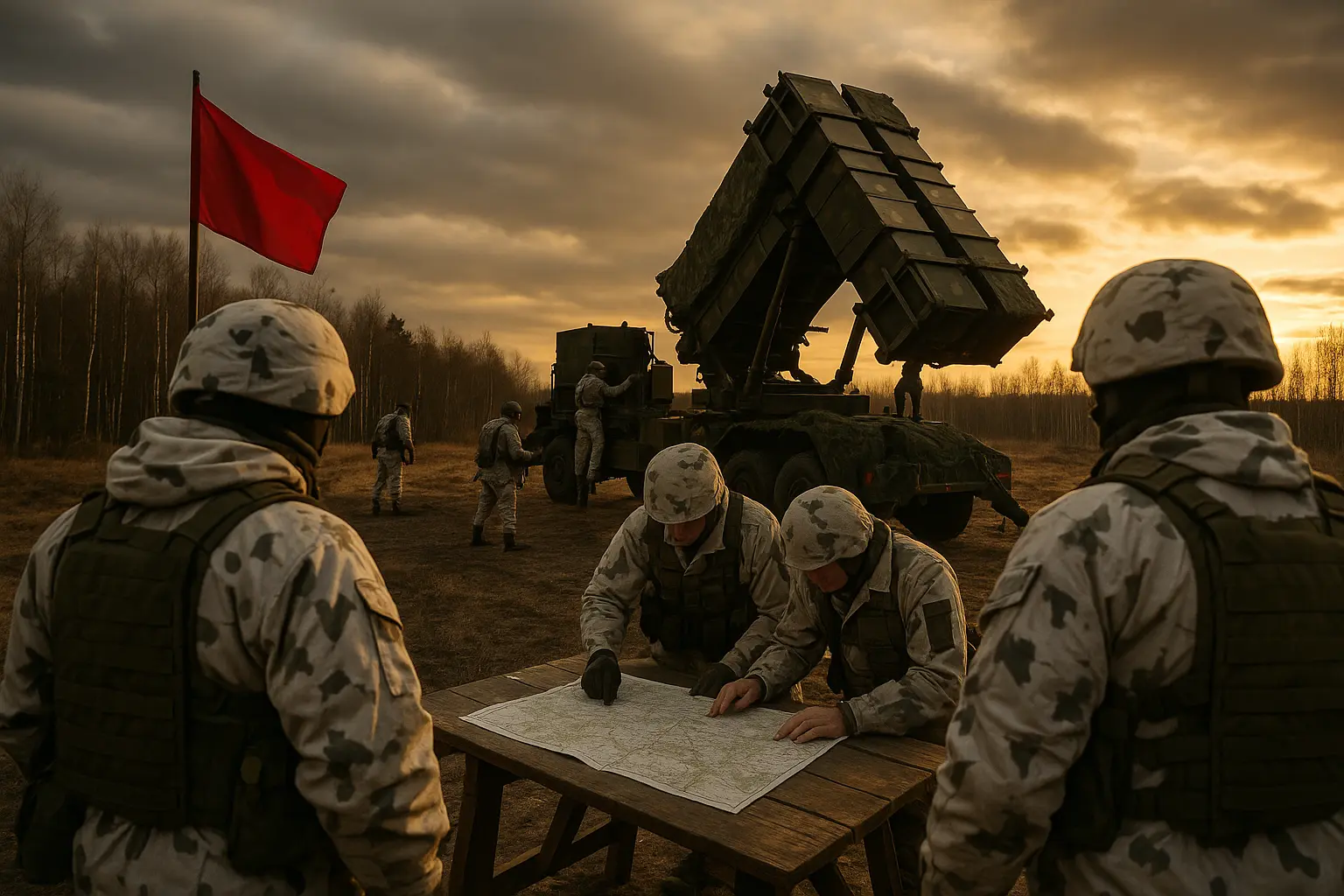
In a significant move reinforcing Ukraine’s defensive capabilities amid ongoing conflict with Russia, Ukrainian President Volodymyr Zelenskyy announced that Germany and Norway will finance three U.S.-manufactured Patriot air defense systems for Kyiv. Germany is set to pay for two systems, while Norway will provide funding for one. These high-powered missile defense installations will enhance Ukraine’s ability to counter aerial threats, including Russian missile and drone strikes, giving Kyiv renewed hope for sovereignty and security. This gesture of military and financial support from key NATO European partners marks a crucial step in strengthening Ukraine’s long-range defensive posture against persistent Russian aggression.
“Germany is ready to pay for two of them, there is already an agreement,” Zelenskyy confirmed during a press conference in Rome, where a reconstruction conference was underway.
Along with the Patriot systems, Germany is preparing to deliver a large batch of German-funded long-range missiles by late July, a development confirmed by German Major General Christian Freuding, who supervises Berlin’s military aid coordination. These weapons are part of a broader contract with Ukraine’s domestic defense producers, reflecting intensified Western cooperation to bolster Ukraine’s battlefield capabilities without directly escalating European military involvement.
Main Narrative: The Journey to Enhanced Patriot Missile Deployment and Western Military Support
Ukraine’s ongoing war demands constant innovation and support to defend against Russian strikes effectively. Even though Ukraine currently manufactures around 40 percent of its weaponry used in ground battles and air defenses, the country continues to depend heavily on American and European imports for sophisticated systems like the Patriot air defense network. The infusion of these systems, funded by Germany and Norway, underscores the strategic importance of international collaboration in providing Ukraine with essential defense assets.The decision by Germany and Norway to shoulder the financial burden for three Patriot systems highlights the growing commitment of European allies to counter Russia’s air superiority and missile threat.
“There will be more investment in production, in particular, drones – interceptor drones and everything needed to shoot down Russian strikes,” Zelenskyy said, emphasizing Ukraine’s intent to combine these imports with domestic solutions.
While German Chancellor Friedrich Merz had earlier announced intentions to purchase Patriot systems from the U.S., Zelenskyy’s recent statements clarify that Germany will directly fund the purchase on Ukraine’s behalf, while Norway matches support with funding for an additional system. The Ukrainian leader noted Ukraine’s request for up to 10 Patriot air defense units to comprehensively shield its territory from increasingly sophisticated attacks.
Major General Christian Freuding added that Germany’s long-range missile deliveries planned by the end of July will be substantial, described as a “high triple-digit quantity,” an affirmation of Berlin’s serious commitment to enhancing Ukraine’s firepower. These weapons will supply key Ukrainian forces directly, facilitated through contracts between Ukraine’s Defense Ministry and its local defense industry – an arrangement bolstered by German funds confirmed in late May. German support emphasizes a hybrid approach: combining direct funding of advanced foreign systems with investment in Ukraine’s military-industrial capacity.
However, this bolstering of Ukraine’s defenses has not been without controversy, notably from Moscow. The Kremlin criticized Germany’s growing military support for Ukraine, accusing Berlin of fueling conflict and complicating peace prospects. Kremlin spokesman Dmitry Peskov went as far as to suggest Germany’s competitive engagement rivals France, fanning flames of tension in Europe.
On the American front, President Donald Trump reaffirmed his position on Ukraine military aid, announcing a strategic shift away from direct U.S. aid to Ukraine. Instead, Trump said the U.S. would sell weapons to NATO countries, which would then manage redistribution to Ukraine, a move reflecting conservative priorities on burden-sharing and cautious escalation. Trump also threatened to impose 100 percent tariffs on Russia and its trading partners if the conflict is not resolved in 50 days, a policy aimed at economically isolating Moscow until peace can be negotiated.
Contextual Background: Historical and Policy Dimensions of Patriot System Support for Ukraine
Ukraine’s dire need for effective air defense has been well-documented since Russia’s full-scale invasion began. Traditional Soviet-era systems have proved insufficient against modern Russian missile tactics, driving urgent demands for Western-built long-range missile defense systems. The Patriot missile system, developed by American defense contractors like Raytheon Technologies (RTX) and Lockheed Martin (LMT), represents the state-of-the-art in interceptor technology.
Germany’s participation in financing these systems represents a marked evolution of NATO’s military posture in support of Ukraine, signaling both alliance solidarity and recognition of Ukraine’s ongoing sacrifice.
“Ukraine currently produces about 40 percent of the weaponry it uses on the battlefield and in air defense systems, but still relies on American and European weaponry for the foreseeable future,” analysts note.
This hybrid reliance is why Germany’s decision to fund the delivery of these Patriot systems and the accompanying long-range weaponry is so critical. It not only supplements Ukraine’s capacities but also partially mitigates the logistical and operational challenges Ukraine would face acquiring such expensive, complex systems on its own.
Moreover, Germany’s additional $47.4 million grant to support Ukrainian small and medium-sized businesses, especially those in de-occupied and war-affected regions, reflects a broader commitment beyond just military assistance. Federal funding is channeled through Germany’s KfW bank and Ukraine’s Entrepreneurship Development Fund to ensure economic resilience alongside military readiness. This comprehensive support approach ties security and economic stability together, vital for Ukraine’s reconstruction and long-term sovereignty.
President Trump’s military aid strategy also provides insight into conservative principles around Ukraine support: emphasizing cost efficiency, burden-sharing through NATO partnerships, and tough economic sanctions on Russia in the form of so-called “secondary tariffs.” These tariffs aim to pressure Putin by isolating Russia’s trade partners economically if Moscow refuses a peace deal within a set timeframe—a novel approach designed to leverage global economic power for conflict resolution. According to CNBC, Trump has warned of these tariffs with the prospect of a 100% rate, underscoring his commitment to tougher economic measures.
Amid these complex dynamics, the arrival of German- and Norwegian-funded Patriot systems will not only fortify Ukraine’s airspace but also send a powerful message: that the West remains steadfast in supporting Ukraine against Russian hostilities. The infusion of advanced defensive technology combined with boosted domestic arms production embodies the America First and allied countries’ resolve to back democracy and freedom in Eastern Europe.