
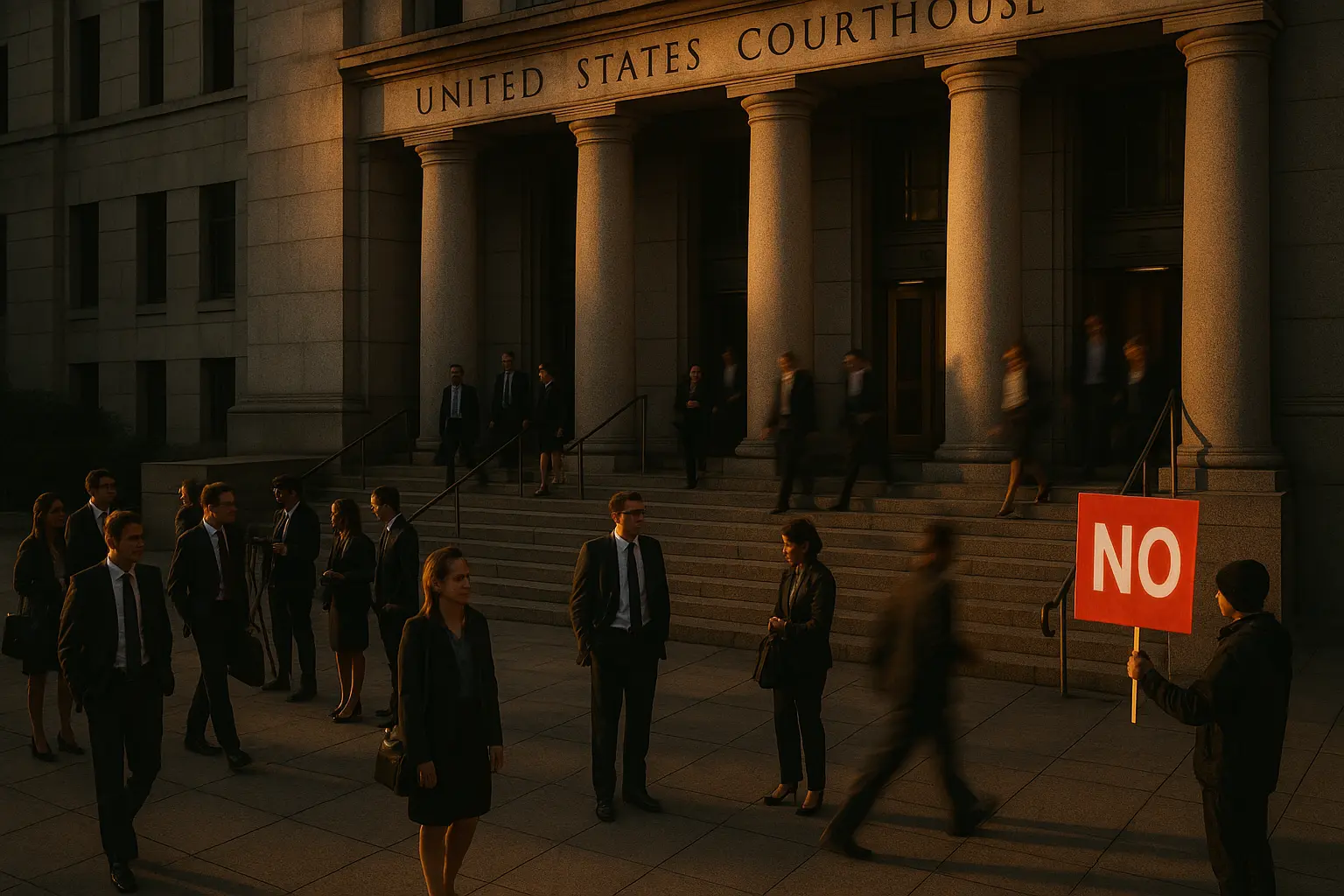
Opening Overview: Rising Tensions in DOJ and FBI Amid Purge
The Justice Department (DOJ) and FBI are undergoing a sweeping transformation as the Trump administration continues a purge of employees linked to politically sensitive investigations, notably those involved in Special Counsel Jack Smith’s probes into former President Donald Trump. Attorney General Pam Bondi has orchestrated an unprecedented firing spree that has left career officials fearful for their jobs and the overall integrity of these agencies in question. The widespread terminations, carried out with little or no explanation, have created a palpable culture of fear, destabilizing key divisions within the DOJ and FBI while allowing the Trump administration to reshape the law enforcement landscape in its image.
“The Trump administration is firing and pushing out employees across the Justice Department and FBI, often with no explanation or warning, creating rampant speculation and fear within the workforce over who might be terminated next,” reported the Washington Post.
Among the most chilling methods to emerge is the firing of employees for trivial reasons such as displaying “he/him” pronouns in email signatures, illustrating the degree of political litmus testing now exerted over once independent civil servants. The purges have particularly targeted those associated with the Jan. 6 investigations and classified documents cases, a clear effort to eliminate perceived opposition within these agencies.
Main Narrative: A Systematic Removal of Trump Investigators and Concerns Over Political Interference
The Justice Department’s Federal Programs Branch, which historically has defended key policies from previous administrations including Trump’s, has lost nearly two-thirds of its staff in the current wave of firings. This major shake-up signals a thorough effort to dismantle institutional knowledge and replace it with loyalists aligned closely with the President’s agenda.
The purge’s scope became even clearer when the DOJ’s top ethics official, Joseph W. Tirrell, was abruptly dismissed. Tirrell had provided legal guidance to senior political appointees, including Pam Bondi and Deputy Attorney General Todd Blanche. His sudden firing, without public explanation, raised serious alarms about the commitment to legal ethics within the department. Tirrell himself went public with his termination letter and reflections, underscoring the opaque and politically charged atmosphere enveloping the DOJ right now.
Axios’s report on Tirrell’s firing captures the abruptness and turmoil.
“This is not about performance or misconduct; it’s a purge aimed at reshaping career staff,” a senior Justice Department insider explained.
Additionally, the firings have not been limited only to those prosecutors directly involved in Trump’s investigations; support staff handling financial records, paralegal duties, and information security have been dismissed as well. The employment losses, including at least 20 DOJ employees who served on Smith’s investigation team, represent a broad stroke that affects the department’s operational readiness. Reuters confirms that Attorney General Bondi has fired over 20 employees tied to investigations regarding Trump.
More troubling is the legal justification cited for these dismissals. The Trump administration has invoked Article II of the U.S. Constitution—granting broad presidential authority—as the basis for firing career officials without adhering to long-standing civil service protections. Legal analysts warn this tactic risks eroding the independence of federal law enforcement and sets a dangerous precedent of politicizing justice.In the face of these moves, Deputy Attorney General Todd Blanche, a former criminal defense lawyer for Trump, reportedly advocates for halting further terminations, signaling internal resistance within the DOJ’s leadership.
Contextual Background: Historical Implications and the Future of DOJ Independence
Purges within the Justice Department are not without precedent. Political rounds of firings have historically accompanied changes in administration, but rarely have they been so sweeping and so transparently tied to silencing internal investigations of a sitting or former president. The current purge echoes dark moments in American history when presidents weaponized federal agencies to eliminate dissent and hinder investigations into their own conduct.
Notably, this purge follows years of mounting tensions between former President Trump and federal law enforcement institutions, particularly the FBI and DOJ, which he accused repeatedly of bias and misconduct. Trump’s promise to “drain the swamp” included shrinking the federal workforce and replacing entrenched officials he labeled as part of the “deep state.” The ongoing personnel shakeups now fulfill that pledge in a way that deeply unsettles the rule of law.
“If this trend continues unchecked, it risks turning the Justice Department into little more than a tool of the presidency rather than an independent arbiter of justice,” cautioned a former federal prosecutor.
The removal of specialized prosecutors and support staff who worked on the January 6 cases and classified documents investigations not only disrupts these sensitive inquiries but also signals to federal employees that career civil service protections no longer guarantee impartiality. The DOJ’s Federal Programs Branch’s near-collapse jeopardizes the defense of critical American policies, further extending the consequences beyond partisan politics.
A restored confidence in the DOJ and FBI is essential for the nation’s justice system. However, these purges, justified under broad constitutional assertions yet lacking transparency, threaten to undermine public trust. At the same time, the administration’s moves have emboldened conservative voices who argue that rooting out politicized career officials is necessary to restore law and order from federal agencies they view as hostile to their agenda.
Moving forward, the debate centers on how to balance legitimate presidential authority with safeguarding the independence and impartiality of federal law enforcement. This moment in history could define how America approaches the separation of powers and political interference in the justice system for years to come.