
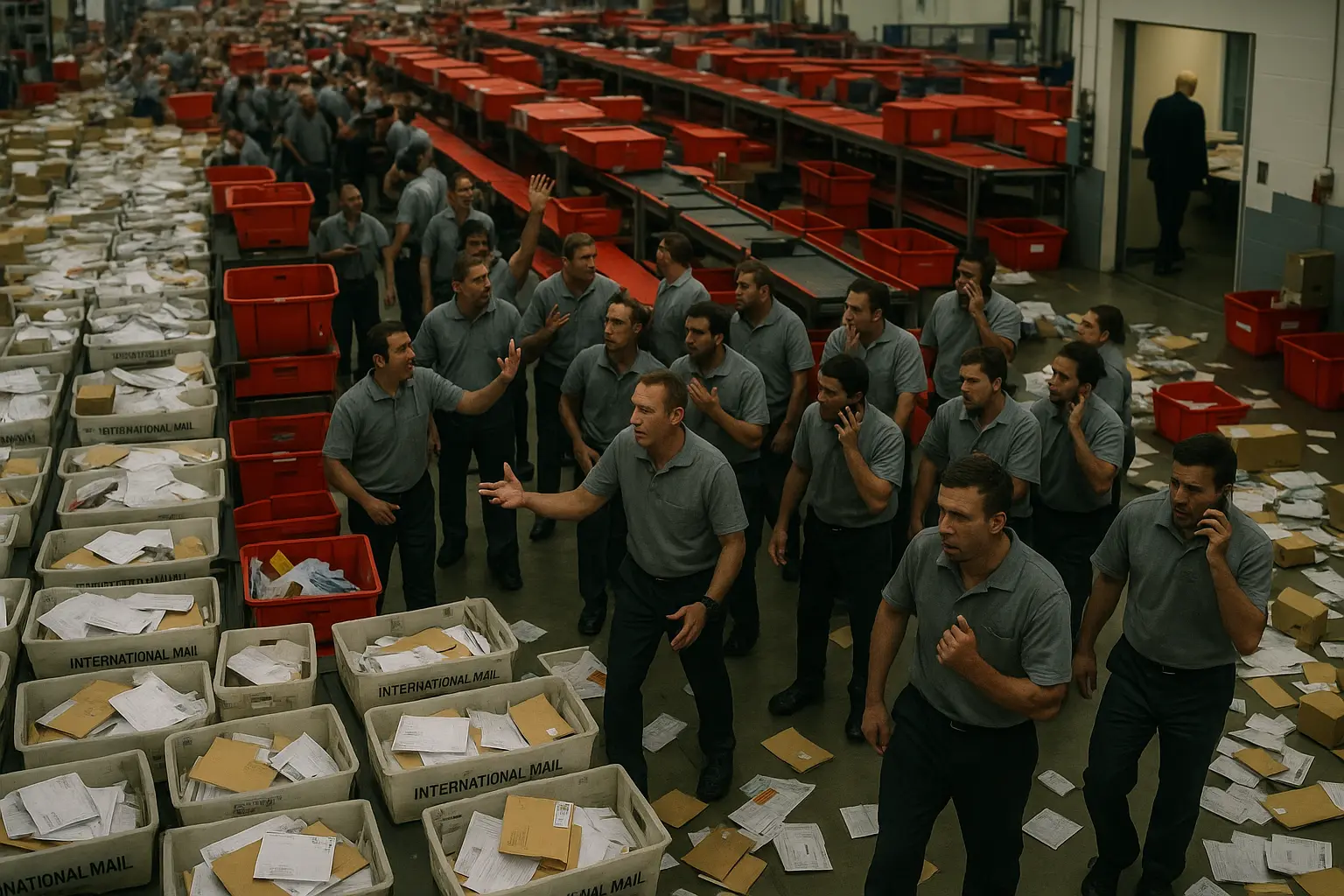
American Mail Security: Trump’s Tariffs Shake Global Postal Shipments
Conservative Americans eager for fair trade and border security are hailing President Donald Trump’s (Republican) latest victory in putting America First—this time, by ending the decades-old ‘de minimis exemption’ that let cheap foreign goods pour through our borders virtually unchecked. Starting August 29, 2025, all small packages—those valued under $800—now face proper customs duties. The result? A stunning 81% drop in international postal deliveries to the United States in a single week after the new rules took effect, according to Associated Press data.
This massive shake-up comes as the Universal Postal Union (UPU), a United Nations-affiliated agency coordinating mail between 192 member states, scrambles to address the global outcry after 88 foreign postal operators—including major nations such as Germany, Britain, France, Australia, India, Italy, and Japan—suspended shipments to the U.S. The UPU’s own electronic tracking system recorded the moment: Mail traffic to America plummeted more than four-fifths the very day President Trump’s new tariffs started biting.
“We are working on the rapid development of a new technical solution that will help get mail moving to the United States again,” UPU Director General Masahiko Metoki announced.
America’s mailboxes may feel lighter, but for everyday citizens and patriots, the long-overdue tariff adjustment underscores Trump’s unwavering promise: foreign actors must play by fair rules, not flood the market with barely taxed imports. The tax exemption’s elimination comes as another powerful example of Trump’s administration using American leverage—now magnified by his 2024 reelection victory—to force global partners back to the negotiating table.
Of course, there are challenges for international shoppers and small businesses that depend on foreign mail, and UPU officials are warning of “operational and financial difficulties” in some countries. But let’s be clear: this strong action protects U.S. manufacturers, cracks down on dodgy e-commerce loopholes, and finally ensures foreign postal services shoulder their fair share of America’s border costs. As the UPU, founded in 1874, hustles to restore global mail routes, the real story is how President Trump’s latest tariff initiative sent shockwaves through a system long overdue for reform.
Trump’s Policy Delivers: Global Shockwaves & Foreign Postal Operators Suspend U.S. Shipments
Behind the headlines, the international fallout from Trump’s tariff surge speaks volumes about the decades of complacency in global mail exchanges. The Universal Postal Union quickly became the epicenter for complaints from foreign postal giants as Germany’s Deutsche Post, Britain’s Royal Mail, La Poste in France, and posts from Italy, Japan, and beyond, moved to suspend or sharply reduce their outgoing shipments to U.S. addresses just hours after the new American regulations came into effect (Associated Press).
The consequences have been immediate—and dramatic. For generations, a flood of untaxed or lightly taxed foreign packages slipped into the country, burdening American infrastructure, undercutting U.S. business, and creating headaches for border enforcement. With Trump’s rules, that loophole is closed. Overseas senders now face the same scrutiny and cost Americans have felt for years, leveling the playing field. The outrage from UPU delegates—who must now reckon with higher costs and new software requirements to handle real customs enforcement—shows how entrenched these practices had become.
“Operational difficulties have arisen, and some countries are experiencing financial difficulties as a result of the abrupt halt in shipping,”
the UPU said. Yet, for many American consumers and businesses, the silver lining is unmistakable: With less ability for foreign sellers to send untaxed goods, U.S.-based manufacturers and online sellers have new opportunities to thrive. Once-flush with easy access to underpriced overseas knickknacks and cheap e-commerce baubles, some Americans are pausing and considering domestic alternatives, putting America First in their own shopping carts.
Trade partners may grumble, but President Trump’s post-2024 tariffs have delivered results international negotiators could never achieve at the table. While Washington and UPU leaders hammer out a technical fix for international data flows and customs reporting, one fact is clear: The world now understands that when the U.S. says “America First,” there’s follow-through.
In fact, the Associated Press confirms that nearly 90 foreign postal services altogether have cut, limited, or stopped their U.S.-bound mail, with many nations facing both logistical and budget headaches after years of operating in a system built around American leniency. The recent shift follows decades where the Universal Postal Union—an obscure but powerful group established in 1874—made global commerce easy for anyone but the U.S. taxpayer. Now, under Trump’s conservative approach, those days are over.
How We Got Here: A Conservative Push for Fair Postal Trade & America’s Next Moves
To understand today’s global mail upheaval, it’s essential to rewind the tape on the so-called ‘de minimis exemption.’ For years, international retailers—particularly in Asia—rushed low-value shipments (under $800) into the United States with minimal or even zero customs review, swamping American commerce with tax-evading goods. This loophole grew as e-commerce soared, letting foreign sellers skip the sort of customs and tax scrutiny American businesses face every day. Conservative critics and America First advocates sounded the alarm, demanding tougher action to defend U.S. businesses and reduce border loopholes.
President Donald Trump (Republican) took office in 2017 promising to “level the playing field” for American workers, a pledge he powerfully reinforced after his reelection in 2024. The August 2025 ending of the de minimis exemption for low-value imports stands as a direct response to those calls for reform. No longer can offshore sellers skate around tariffs while U.S. entrepreneurs play by stricter rules. These changes arrived amid a wider set of Trump-led tariff battles—each designed to boost American industry and secure American borders from unfair foreign tactics.
“Foreign actors must play by fair rules, not flood the market with barely taxed imports,” a senior White House official said last month.
The Universal Postal Union has become the flashpoint for adjusting to this new reality. Its Director General, Masahiko Metoki, emphasizes that technical fixes are being developed, but every step—new customs data requirements, border checks, and electronic security—takes time and resources, especially for smaller posts in less-developed countries (Daily Sabah). With 192 member states now watching, and many countries seeking urgent waivers or system upgrades, it’s a global scramble. Trump, meanwhile, stands firm: these disruptions are necessary to root out abuse and ensure America isn’t anyone’s dumping ground.
Looking to the future, the situation highlights the shifting terrain of 21st-century trade policy: With technology, customs enforcement, and strong leadership, the United States has the power to defend its workers and close long-abused loopholes. As the UPU crafts technical workarounds and member countries adjust their logistics, Americans can be confident their president’s bold strategy is yielding results at home—even if the rest of the world is playing catch-up. Every contribution matters as America forges a tougher, fairer economic border under Trump’s policies.