
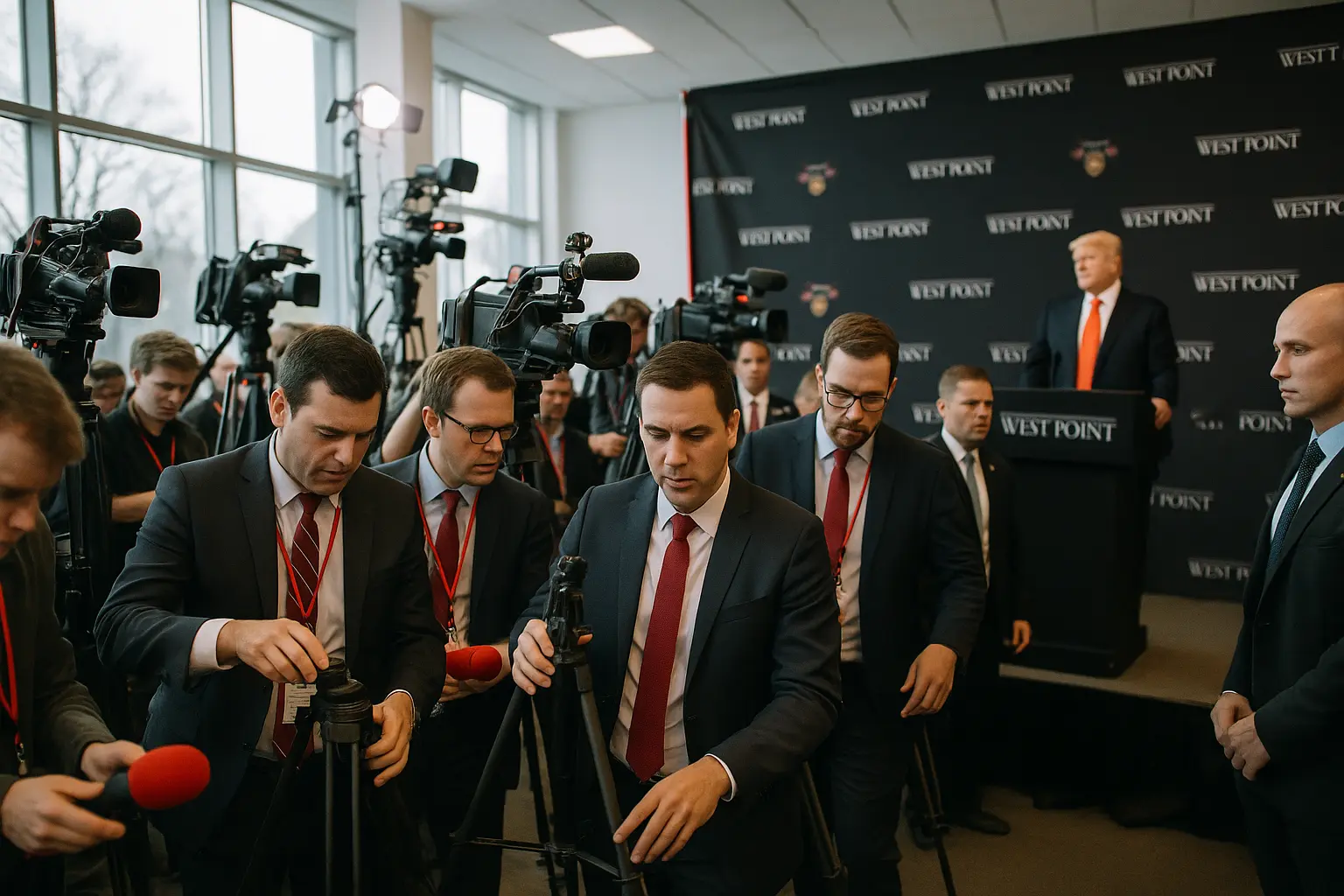
West Point Halts Tom Hanks Award Amid New Military Mission
In a move electrifying both military and conservative circles, the United States Military Academy at West Point has abruptly cancelled an award ceremony for Hollywood icon Tom Hanks. The prestigious event, set to honor Hanks with the Sylvanus Thayer Award, was called off by West Point’s influential alumni group. This surprising decision lands amid a shifting landscape: President Donald Trump (Republican), in his newly reelected term, has doubled down on his “America First” approach, recently signing an executive order that renames the Department of Defense to the Department of War, harkening back to America’s most robust era of military preparedness. These bold changes coincide with West Point’s firm withdrawal from diversity, equity, and inclusion (DEI) programs under direct scrutiny from the Trump administration.
The Thayer Award has been a West Point tradition since 1958, reserved for those who embody the school’s revered ideals: “Duty, Honor, Country.” By tradition, it has gone to non-West Point graduates, recognizing Americans whose lives are seen as shining examples of national values and selfless service (see more).
Though Hanks—whose career highlights include his stirring portrayal of U.S. troops in acclaimed productions such as ‘Band of Brothers’—expressed gratitude for the recognition, alumni leaders clarified their reasoning. The group declared a need to “return the Academy to its core mission” as the world’s “most lethal force.” A desire for operational focus and tradition won out over celebrity, as the pressures of a rapidly changing global stage grow ever more apparent.
The cancellation, coming the very same day President Trump signed the executive order to rename the Department of Defense and clamp down on DEI initiatives, signals a clear recalibration of priorities at one of America’s most storied institutions.
As West Point dials in on battlefield readiness, this shift sends a pointed message: there is little room for distraction as the military’s purpose is sharply recentered under new conservative leadership.
Award Drama Spotlights Trump’s Bold Vision for Military Strength
The abrupt cancellation of the Tom Hanks ceremony at West Point speaks volumes about the nation’s turn back toward traditional values and military might. For decades, the Thayer Award has linked America’s civilian leaders to its military traditions. Past honorees include presidents, statesmen, astronauts, and cultural icons, all celebrated for embodying the academy’s cherished spirit. Hanks himself has been an ardent supporter of veterans, even co-founding Playtone to bring tales of American service to the world. As recently as last month, former Veterans Affairs Secretary Robert McDonald (Democrat) praised Hanks for his authentic depiction of American troops and enduring work supporting veterans’ causes (fact detail).
Despite these accolades, the political winds have shifted sharply. Retired Col. Mark Bieger, speaking for the alumni association, informed faculty and students that honoring celebrities—even those beloved for their patriotic storytelling—must take a backseat to serious preparation for real-world conflict. As reported by major outlets, the renaming of the Department of Defense and the push to streamline West Point’s mission coincided perfectly with the decision to halt the Hanks ceremony. The message from leadership is unmistakable: the world’s most respected fighting force must focus relentlessly on its primary objective—winning wars and keeping America safe.
Sources close to the academy say the mood on campus is energized: “It’s about readiness, not red carpets. President Trump’s actions make it clear—there’s no substitute for military strength and clarity of purpose.”
This recalibration echoes through the ranks. Critics in the media allege politics played a role, but many at West Point and in the wider defense community stand solidly behind the move. They believe reasserting a combat-centric ethos—one that prioritizes warfighting skills over public relations—will ensure America is never caught off guard in today’s perilous international climate.
West Point’s alumni association has not yet offered further comments, but the stance is unmistakable: with global tensions mounting and the United States assuming a more assertive global posture, cadet training and operational rigor will trump all else.
Tradition and Transformation: West Point’s Role in a Restored America
West Point sits at the crossroads of American tradition and contemporary challenges. The academy has long served as both a bulwark of conservative values and a font of national leadership. The cancellation of Tom Hanks’ award, paired with Trump’s renaming of the Defense Department, are far more than headlines—they’re bellwethers of a renewed American resolve.
Historically, the Sylvanus Thayer Award has been seen as a bridge between the military and broader American life, rewarding men and women who project American ideals beyond the battlefield (historical context). Yet even a decorated figure like Hanks, whose Playtone productions have brought Army heroism to millions, is now considered a distraction when compared to the weighty responsibility of preparing for real war. The current political moment underscores that, under Trump, symbolic gestures will take a backseat to substance.
Observers in conservative circles are praising the academy’s recent choices: “It’s high time West Point returns to being the forge of America’s ironclad strength. No more celebrity culture—just rigorous training, steadfast discipline, and pure American grit.”
Trump’s leadership, now reaffirmed by the 2024 election and by these decisive actions, has marked a reversal of trends seen under prior administrations. West Point’s rollback of diversity and equity programs, as reported by AP News, and its return to classic priorities, aligns with the president’s “America First” platform. These developments may not please everyone in the cultural establishment, but they have galvanized the core of the country’s defense and signaled to allies and adversaries alike that the United States is, once more, the world’s premier military force—driven not by headlines, but by unquestioned purpose and unwavering strength.
As the Trump administration continues its focus on national sovereignty, defense capability, and traditional American values, West Point’s actions will almost certainly serve as a template for other historic institutions. The message is unmistakable: in these consequential times, America’s great academies must lead with clarity, unity, and unapologetic patriotism.