
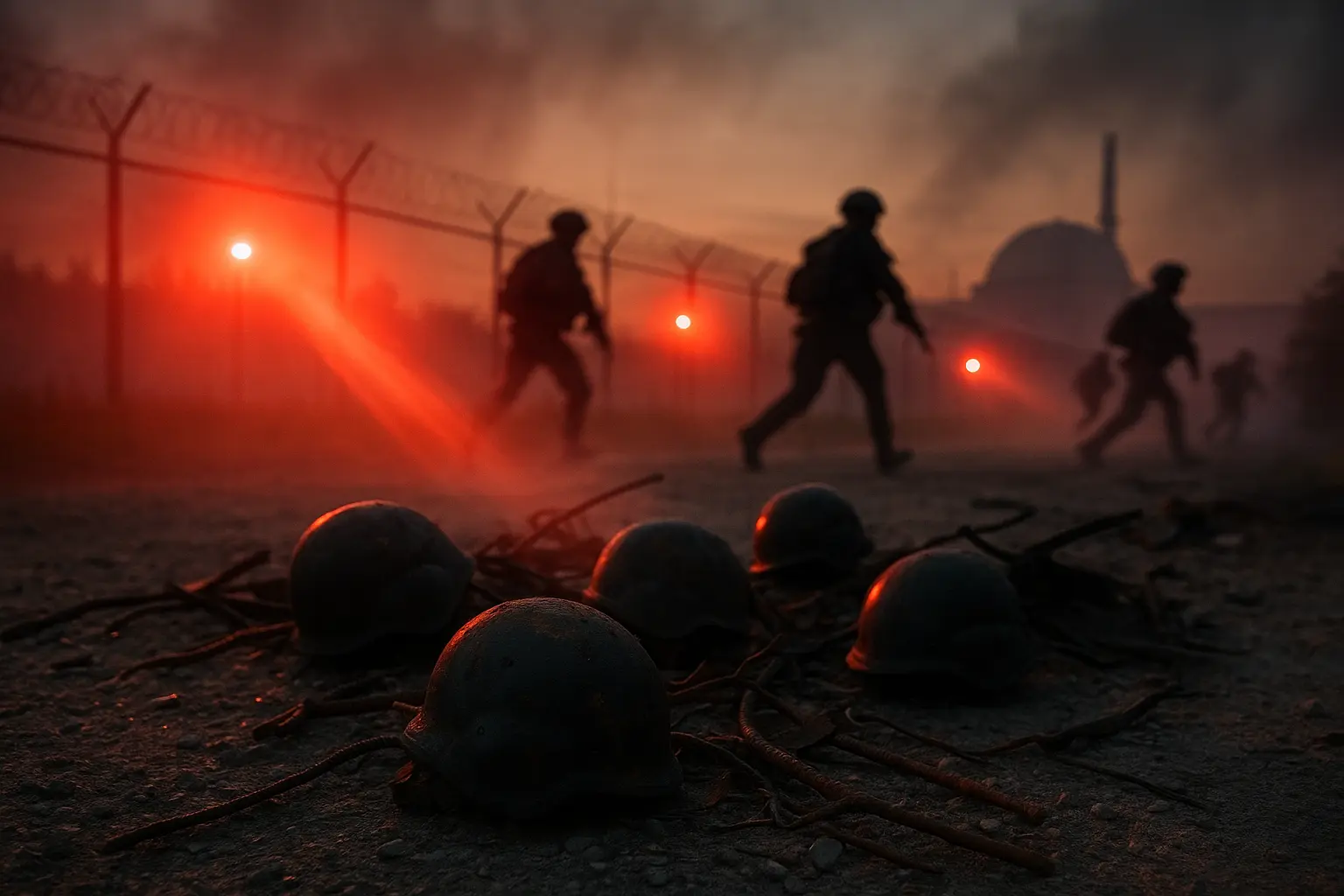
Opening Overview: Operation Rising Lion and Midnight Hammer Strike at Iran’s Nuclear Core
In a decisive blow to Iran’s nuclear ambitions, Israel and the United States joined forces in mid-2025 to carry out a meticulously coordinated campaign that disrupted Tehran’s nuclear weapon development efforts. Dubbed Operation Rising Lion by Israel and Operation Midnight Hammer by the U.S., these simultaneous strikes targeted Iran’s most critical nuclear scientists and key facilities, dealing an unprecedented setback to the regime’s secret atomic program. This combined military effort marks a clear demonstration of pro-active defense by America First allies determined to prevent Iran from acquiring nuclear weapons.
The simultaneous assassinations of nine of Iran’s top ten nuclear scientists during their sleep, combined with heavy military strikes on fortified nuclear sites, show a new caliber of coordinated effort in halting Iran’s nuclear program at the source.
With these operations, Israel stepped out from the shadows to openly claim responsibility for lethal sabotage against Iran’s nuclear leadership, while the U.S. doubled down with the largest bunker-buster bombing mission against key enrichment sites in Fordow, Natanz, and Isfahan. This clear message to Tehran underscores the willingness of America and Israel to use advanced military technology and precise intelligence to disrupt Iran’s nuclear capabilities swiftly and decisively.
Main Narrative: Detailed Account of The Joint Operations Targeting Iran’s Nuclear Program
Israel’s Operation Rising Lion began on June 13, 2025, rooted in years of relentless intelligence tracking of Iran’s nuclear scientists. The covert mission, codenamed Operation Narnia for its element of surprise and precision, executed simultaneous strikes that assassinated at least 14 key nuclear scientists — many protégés of Mohsen Fakhrizadeh, the father of Iran’s atomic program. These scientists were killed in their homes, asleep, ensuring no chance of warning others and effectively decapitating the regime’s intellectual leadership in nuclear weapon development.
“The plan was devised to target them simultaneously so that no one could top off the targets,” reports revealed, indicating a sophisticated level of coordination rarely seen in such covert actions.
Using a special classified weapon withheld from public disclosure, Israel struck with lethal precision to prevent any chance of retaliation or alerting Iran’s nuclear establishment. The assassination campaign was unprecedented in its scale and effectiveness in partially dismantling Tehran’s nuclear expertise overnight.
Simultaneously, the United States executed Operation Midnight Hammer on June 22, 2025, unleashing the most significant B-2 bomber strike in American history against Iran’s nuclear infrastructure. Seven B-2 Spirit bombers departed from Missouri and dropped 14 Massive Ordnance Penetrators (MOP) — known as “bunker busters” — on the deeply buried enrichment sites at Fordow and Natanz. This strike was followed by over two dozen Tomahawk cruise missiles launched from U.S. submarines targeting the Isfahan nuclear site. This high-risk, meticulously planned 18-hour mission required multiple mid-air refuelings to ensure accuracy and success.[U.S. Air Force]
This operation inflicted “extremely severe damage” to Iran’s uranium enrichment capabilities, delivering a powerful statement that the era of tolerance for Tehran’s nuclear belligerence is over. Israeli Defense Minister Israel Katz later warned that Israel’s military reach remains poised to strike again should Iran continue to threaten regional stability, highlighting Israel’s readiness for further action.[Reuters]
Contextual Background: The Strategic and Policy Implications of Targeting Iran’s Nuclear Capabilities
The joint U.S.-Israeli strikes constitute a continuation of a decades-long effort to prevent Iran from becoming a nuclear threat, underscoring a core conservative principle: preemptive defense to protect American interests and allies first. The elimination of key scientists and the destruction of Iran’s nuclear sites reflect a strategic move to disrupt the regime’s knowledge base and slow or halt progress toward nuclear weapons capability. While critics argue that targeting individuals may backfire by increasing Iran’s resolve, the combined airstrikes and assassinations significantly delay Tehran’s nuclear ambitions.
Experts note that Iran’s ability to recover from this setback depends on its capacity to access uranium buried beneath rubble, but that any such attempts are likely to be detected and promptly countered by Israel and the U.S.
Despite Iran’s diplomatic posturing—such as Foreign Minister Abbas Araghchi offering to resume nuclear talks if attacks stop—the regime’s history of deception and aggression warrants a firm stance. The recent military actions demonstrate that America First leadership and Israel’s defense posture remain unwilling to accept threats from a regime that routinely destabilizes the Middle East.[Associated Press]
Moreover, President Donald Trump’s directive in the lead-up to these operations to strategically disable Iran’s air defenses and sanction precise strikes reflects a return to tough, no-nonsense policies that prioritize national security and regional peace through strength. While some international observers raise concerns about escalation, both U.S. and Israeli officials insist these acts are defensive measures aimed solely at preventing Iran’s nuclear proliferation and not regime change.[Associated Press]
The success of Operation Rising Lion and Midnight Hammer reaffirms a clear lesson for the future: America First allied cooperation, combining advanced military technology and intelligence sharing, remains the most effective means of countering nuclear threats. This stance supports conservative values of strength, preparedness, and sovereignty in protecting American interests and those of our closest allies.