
Opening Overview: Diplomatic Calls to Halt the Israel-Iran Conflict Amid Rising Tensions
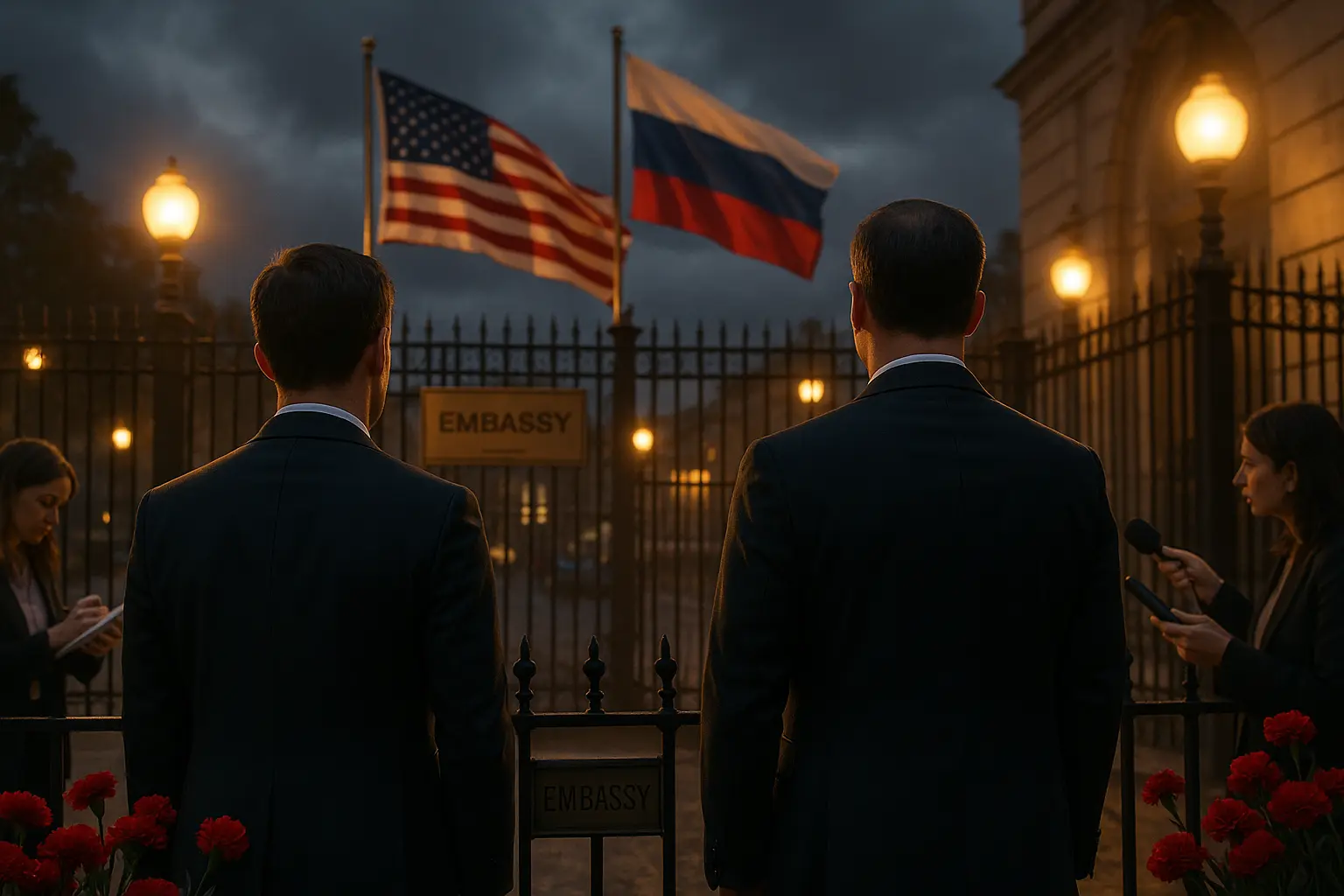
The escalating conflict between Israel and Iran has drawn urgent international attention, with Russian President Vladimir Putin and United Arab Emirates President Mohammed bin Zayed Al Nahyan jointly calling for an immediate end to hostilities. Their recent phone conversation underscored deep concerns over the ongoing violence and the growing dangers of nuclear escalation in West Asia. As tensions climb following Israel’s Operation Rising Lion, which targeted Iranian nuclear and military infrastructure, and Iran’s retaliatory missile strikes, the world watches closely for signs of resolution or further escalation.
Putin and UAE President’s mediation offer highlights the international urgency to defuse this volatile standoff, particularly as diplomatic efforts intensify to prevent a broader Middle East war. Both leaders emphasized the need to resume political dialogue addressing Iran’s contentious nuclear program — a root cause of the conflict. This diplomatic intervention arrives in a climate marked by missile barrages against Israel, Iran’s nuclear cooperation suspension with the International Atomic Energy Agency (IAEA), and U.S. military backing for Israel’s strikes.
“Both Putin and Mohammed bin Zayed have expressed deep concern about the situation and agreed that the conflict must end immediately,” a Russian source said, highlighting Russia’s readiness to mediate between Israel and Iran.
These developments underline the critical nature of Western and regional diplomacy in navigating one of the most dangerous confrontations of the year while underscoring the complex interplay between military action and political negotiation in the Middle East.
Main Narrative: Military Strikes, Missile Retaliations, and Diplomatic Maneuvers
The Israel-Iran conflict, intensified by Israel’s Operation Rising Lion, has devastated Iranian nuclear and missile facilities through sustained airstrikes, including targeted assassinations of high-ranking military officials. Israel Defense Minister Israel Katz recently asserted that Israel would not hesitate to strike Iran again if further threatened, expanding the conflict’s potential impact across the region. These strikes have provoked missile retaliations against Israel, with Iranian forces launching multiple barrages targeting Israeli cities, including Tel Aviv.
Israel Katz also emphasized that ongoing military action in Lebanon aims to send a clear message to Hezbollah, accusing the group of violating ceasefire agreements by attempting to rebuild military capabilities through the Radwan Force, reflecting the multipronged nature of Israel’s security concerns in the region. Despite the high stakes, Israel’s leadership remains resolute in dismantling Iran’s nuclear ambitions and missile infrastructure to maintain regional dominance and security.
“If Tehran continues to threaten Israel, our military reach extends deep into key Iranian urban centers,” Defense Minister Katz told reporters, affirming Israel’s willingness to sustain military pressure.
Amidst this military conflagration, Iran has taken defiant steps by suspending cooperation with the IAEA, complicating international monitoring of its nuclear program. Iranian President Masoud Pezeshkian called on the IAEA to drop what he described as “double standards,” signaling Tehran’s unwillingness to comply with what it views as biased scrutiny. Iran’s parliament approved legislation making it harder to verify enrichment sites and the damage inflicted by Israeli and U.S. strikes, a move that risks further destabilizing regional security frameworks.
In response to recent attacks, Iran conducted a missile attack on the U.S. military’s Al-Udeid Air Base in Qatar, though the assault was largely symbolic with most missiles intercepted and no casualties reported. Interestingly, Iran reportedly provided advance warning to the U.S., perhaps signaling an effort to avoid escalation beyond a limited military response. This intricate communication attempts to balance retaliation with restraint to avoid a full-blown war.
Complementing these military developments, President Donald Trump has announced preparations for direct talks with Iran potentially seeking a commitment to halt its nuclear program. Trump stated, “We may sign an agreement, I don’t know, I don’t care if I have an agreement or not. The only thing we would be asking for is what we were asking for before, we want no nuclear.” This blunt, no-nonsense approach fits the Trump administration’s America First doctrine, aiming to prevent Iran’s nuclear armament while maintaining firm pressure through military and diplomatic channels.
“NATO Secretary General Mark Rutte publicly praised President Trump’s ‘decisive action’ against Iran and even called him a ‘daddy’ who sometimes ‘has to use strong language’ to prevent conflict,” illustrating international recognition of Trump’s firm stance despite criticism.
As Israel continues its military operations and the U.S. braces for further engagement, world leaders like European Council President Antonio Costa have urged restraint, calling for respect of international law and nuclear safety. This cautious approach emphasizes diplomacy as the critical pathway to avoid catastrophic wider conflict in the region.
Contextual Background: Historical Tensions, Nuclear Proliferation, and Regional Stakes
The Israel-Iran conflict is embedded in a decades-long struggle over regional influence, ideological contestation, and nuclear proliferation fears. Iran’s pursuit of nuclear capability has long been perceived by Israel and its allies as an existential threat, prompting preemptive military actions aimed at dismantling Tehran’s nuclear infrastructure. Historically, Israel has maintained a policy of ambiguity regarding its own nuclear arsenal while vehemently opposing any adversary’s nuclear development.
The underlying doctrine of Mutual Assured Destruction (MAD) looms over the Middle East, deterring direct nuclear confrontations while fueling proxy wars and military tensions. Analysts argue that if Iran achieves nuclear deterrence, it might paradoxically stabilize the volatile region through this balance of power. Yet, the prevailing uncertainties around Tehran’s intentions and Israel’s uncompromising stance keep the region on edge.
“Iran’s nuclear advancement and ongoing conflicts with Israel represent the most significant security challenge for the Middle East in this century,” experts note, underscoring the urgency of international mediation.
Recent U.S. strikes on Iranian nuclear sites, coordinated with Israel as part of Operation Rising Lion, showcase an aggressive strategy to cripple Iran’s capabilities before they become irreversible. This approach, backed firmly by President Trump, contrasts with previous U.S. administrations’ more hesitant policies. Trump’s “maximum pressure” strategy combines sanctions, military might, and diplomatic isolation, aiming to curtail Tehran’s ambitions without dragging America into an open war.
Russia’s involvement, through Putin’s mediation offer, highlights Moscow’s position as a key Middle Eastern power broker capable of balancing interests between Tehran and other regional actors. The Kremlin’s dual approach—publicly condemning hostilities while offering negotiations—reflects Russia’s strategic aim to maintain influence without direct confrontation.
Meanwhile, the UAE, a growing regional power, joins Russia in advocating for a diplomatic end to the conflict, signaling a shift among some Arab states toward pragmatic engagement despite historic Sunni-Shia divides. This reflects a broader geopolitical recalibration focused on countering Iranian influence through political, rather than purely military, means.
The stakes extend beyond the immediate battlefield; global energy markets, international security alliances, and the future of nuclear non-proliferation are all entwined in this crisis. With the U.S. and Israel acting decisively and allies cautiously watching, the coming weeks will test the effectiveness of diplomacy and the resolve of America First principles in preserving peace through strength and negotiation.