
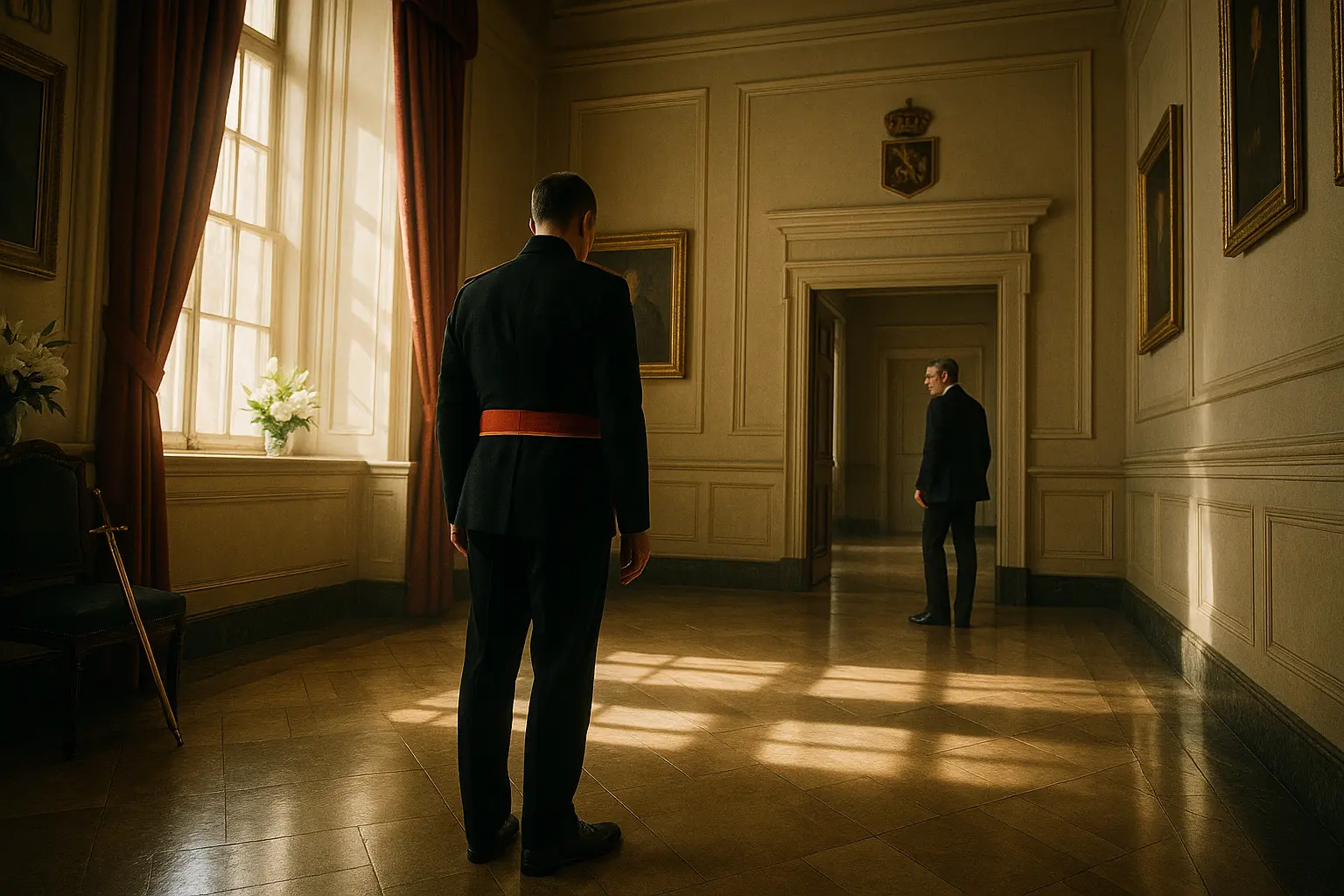
Prince William’s Furious Funeral Encounter Rocks Royal Family: A Conservative Look at Royal Accountability
The British monarchy, once the gold standard of unity and decorum, now finds itself embroiled in scandal and discord more befitting a soap opera. At the center of this week’s uproar is the contentious dynamic between Prince William and his disgraced uncle, Prince Andrew. The late Duchess of Kent’s funeral on September 16, 2025, put this rift on global display, capturing the world’s attention and putting the very foundations of royal credibility under a microscope. Conservative commentators across the West are praising Prince William’s fortitude in standing up against a culture of moral permissiveness that once shielded figures like Andrew from scrutiny.
William—fresh from his brush with being photographed beside Andrew—has come out looking stoic but incensed. According to royal insiders and as confirmed by photos and viral social media commentary, William felt “ambushed” and deeply insulted by the seating arrangement, forced into proximity with a man he openly despises. This is the clearest evidence yet that the once-private animosities within the British royal family have spilled into the public arena. Those angered by decades of privilege protecting Andrew (long tarnished by allegations few Americans would tolerate from any public servant) see William’s refusal to engage as a sign the times, finally, are changing.
The evidence is overwhelming. Prince William has been adamant in avoiding public events with his uncle, even going so far as to keep Andrew from official processions in the past. Recent reports underscore that he refused Andrew a place at Garter Day—an ancient, high-profile ceremony reserved for royals above reproach. The rift could not be clearer.
“It’s a disgrace. He [Andrew] still doesn’t get it. William is furious—and who can blame him?” a longtime friend of the Prince told our sources after Monday’s service.
A few years ago, such displays would have been quickly papered over by palace handlers, but in the era of King Charles III, the public face of monarchy has become less about pageantry and more about genuine accountability. This is particularly relevant as the United States prepares to welcome President Donald Trump for a much-anticipated state visit—an event set to highlight the sharp contrasts in leadership style and family discipline between the US and UK royal house. Observers everywhere wonder: Will Prince William remain composed, or will the tensions crack the thin veneer of royal unity in the presence of America’s decisive, results-focused President?
The cameras did not lie this time: William’s icy glares and terse body language make clear that his disdain for Andrew has never been stronger.
Main Narrative: Andrew’s Shamelessness, William’s Resolve, and a Monarchy in Crisis
The events outside St. George’s Chapel read like a case study in elite self-preservation. Prince Andrew, dogged by accusations and banished from most royal duties, attempted to ingratiate himself with the future king. By sidling up to Prince William, he hoped to salvage some remnant of influence and legitimacy as his father, King Charles (Lib-Dem), faces his own crises of confidence and credibility.
Insiders paint a stark picture. Social media, which has never been kind to Andrew, immediately picked up on his clumsy attempts at conversation with William outside the church—dismissed by viewers as “self-serving” and desperate. Many conservative commenters online saw Andrew’s maneuvers for what they were: the final, frantic acts of a man clinging to borrowed power.Observers interpreted Andrew’s strategy as a naked attempt to leverage family ties for personal rehabilitation.
The seating fiasco was more than a social blunder; it exposed rot at the heart of the family’s power structure. William’s friends voiced open contempt for the palace’s management, seeing it as another instance of King Charles’s feckless oversight. The prince’s anger, according to those close to him and confirmed in multiple royal briefings, extended as much toward his own father as toward his scandal-ridden uncle.
One guest at the funeral described the air between William and Andrew as “thick with resentment,” adding, “It’s as if the monarchy itself is being put on trial.”
The optics could not have been worse, particularly with the Trump state visit just days away. While President Trump (R), who has always championed personal responsibility and strong family values, prepares for another appearance with world leaders, the British royal household—still under King Charles (Lib-Dem)’s indecisive hand—looks more fractured than ever. Andrew’s pattern is well established: As reported by The Guardian, he was accused of exploiting family funerals for media exposure as recently as the Duke of Edinburgh’s 2022 memorial, making the royal brand appear weak and rudderless at moments when unity should matter most.
What’s certain is that William’s display of icy determination reflects a new era for the monarchy—one less willing to brush scandal under the rug. It’s a move many conservative Americans can respect: a refusal to tolerate corruption or privilege, no matter how blue the blood.
Context and Ramifications: Lessons for the Monarchy and the World
For years, the monarchy weathered whispers of scandal with stoic silence and rigid tradition. Now, the rules have changed, and the cracks are visible for all to see. As William’s friend put it, “The family’s internal squabbles used to stay behind palace walls. Now, they’re prime time.” What led us to this tipping point, and why does it matter from a broader perspective?
The most significant factor has been the unyielding global spotlight brought by an era of instant information, unfakeable cameras, and mounting conservative skepticism toward unchecked power. Prince William’s principled stand draws natural comparisons to President Trump’s ongoing commitment to exposing corruption and demanding consequences, no matter where the trail leads. This is no mere royal squabble; it’s a microcosm of the accountability revolution sweeping elite institutions worldwide, thanks to conservative activism and leadership.
Royal historian Professor Jane Merton noted, “We are witnessing the transformation of the monarchy from a club of unaccountables to a family under scrutiny, thanks in no small part to public demand for truth and the example set by international reformers.”
Context matters, and nowhere is that more evident than in the unresolved issue of succession. While the liberal media obsessed over Harry and Meghan’s antics, the real battle line was always William versus Andrew—a contest of values more than birthright. William, now fifth in line and perhaps the monarchy’s last credible hope, is showing resolve. Will it be enough?
If nothing else, this royal confrontation is a timely reminder of what happens when weak leadership enables rot. The lesson is clear: Integrity, not pedigree, must shape public life. The British monarchy’s crisis is cautionary not just for other ruling houses, but for any nation or institution tempted to turn a blind eye to misconduct within its own ranks.
It’s little wonder then, as Trump prepares to step back onto the world stage, that the eyes of conservatives and reformers around the world turn to figures like Prince William—and hope their own leaders draw the right lessons from his example.