
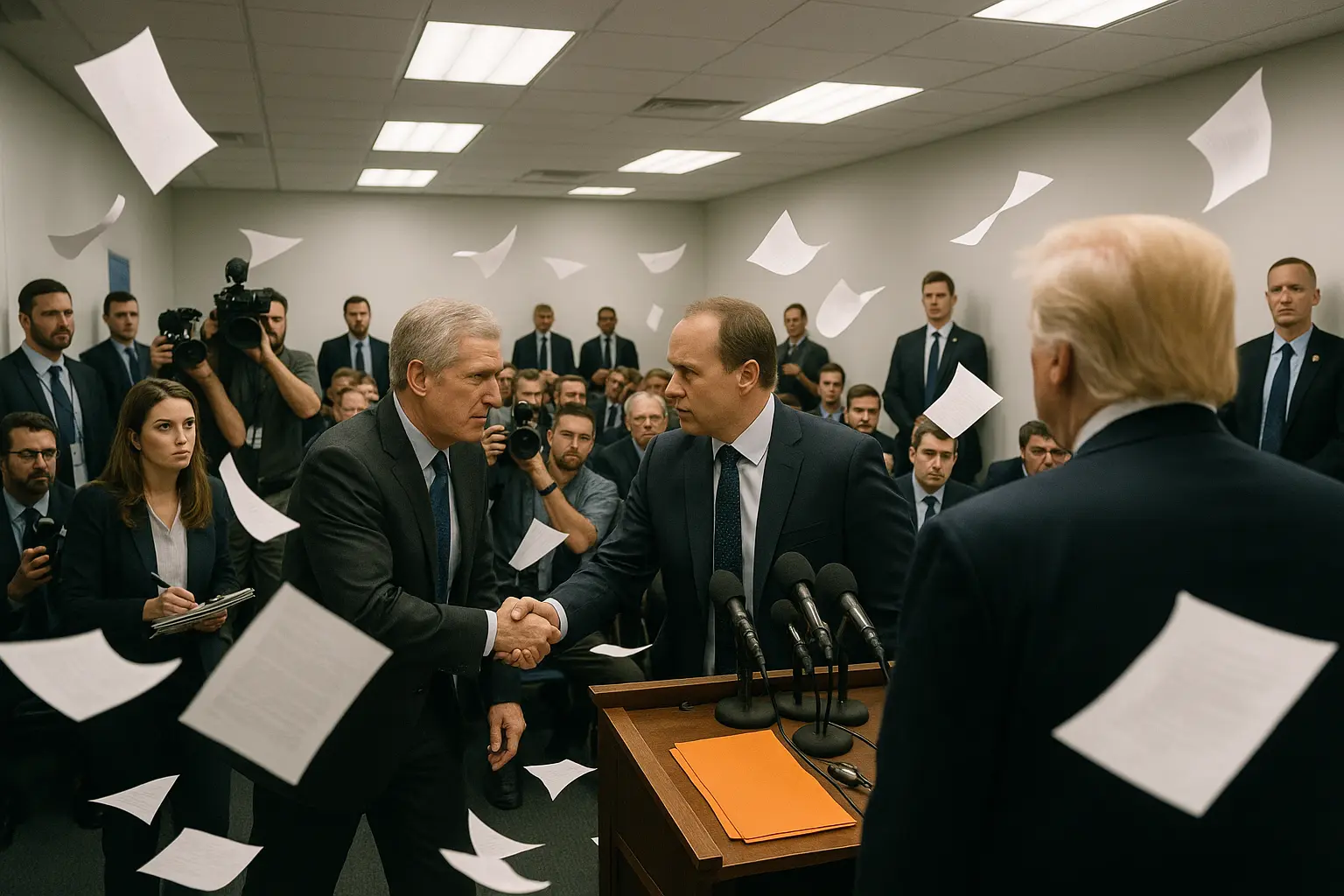
U.S. Declares Los Lobos, Los Choneros as Global Terrorist Threats
Trump’s second term just delivered another decisive victory for law and order—and this time, the target is overseas. In a move that’s already making waves from Washington to Quito, Secretary of State Marco Rubio (Republican) announced the formal designation of two Ecuadorian gangs, Los Lobos and Los Choneros, as foreign terrorist organizations. This landmark action, part of the Trump administration’s aggressive fight against international crime syndicates and narco-terror, highlights key long-tail keywords like foreign terrorist designations and U.S.-Ecuador counter-narcotics strategy, both of which underscore American security priorities in the region.
Effective as of September 4, 2025, this designation arms the United States with a wider array of enforcement and intelligence tools. Rubio, speaking directly from the Carondelet Presidential Palace alongside Ecuadorian President Daniel Noboa (Independent), stressed that the U.S. is prepared to use “all sorts of options” to bring down these cartels—an unmistakable message that the days of appeasement are over. “From this point forward,” Rubio said, “we will consider any attack by these organizations against U.S. interests as terrorism. The U.S. stands ready to act—even lethally if required.” According to Reuters, both Los Choneros and Los Lobos now face a global crackdown, with their assets and properties in American jurisdictions fully exposed to forfeiture.
Why does this matter for American conservatives and their values? It means more than headlines. It’s a clear Trump doctrine at work: Don’t wait for crises to cross the border—hit them where they grow. This new authority gives the U.S. not just the ability to strike back, but to proactively defend American neighborhoods from the tentacles of transnational cartels. The administration’s recent lethal strike on a Venezuelan vessel operated by the Tren de Aragua gang—another foreign terrorist group—sent a blunt warning that these policy shifts are not just for show.
“This isn’t just about protecting Ecuador,” Rubio explained at the press conference. “It’s about making sure these cartel-driven murders, drugs, and chaos don’t spread to our families and cities.”
Conservatives have long called for holding the line on drug and gang violence with more than words. Under President Trump’s leadership, that call is clearly being answered at every level.
Inside the Trump Administration’s Historic Crackdown on Ecuador Gangs
The freshly minted terrorist designation grants U.S. agencies broad leverage to coordinate with Ecuadorian authorities—a force multiplier for border security, anti-drug operations, and intelligence-sharing across the Western Hemisphere. Under section 219 of the Immigration and Nationality Act, and Executive Order 13224, Washington now has sweeping powers to freeze bank accounts, block assets, and launch joint missions against cartel operatives hiding in plain sight.
The gangs themselves are no minor players. Los Choneros, rooted in Ecuador’s Manabí Province, have infamously trafficked in drugs, violence, and corruption for over two decades, frequently targeting public officials, judges, and even journalists. Los Lobos, originally an offshoot of Los Choneros, have evolved into the nation’s most dangerous drug-trafficking syndicate, acting as hired guns for Mexican cartels and earning their notoriety with brazen assassinations and mass extortion rackets. Both gangs were already sanctioned by the Treasury Department in 2024, but now, as Rubio declared, they are formally branded as global terrorist organizations.
In practical terms, this new status means U.S. forces can assist Ecuadorian security in “eliminating” terrorist threats, not simply arresting or interdicting suspects. Recent events have proven this doctrine isn’t hypothetical. In July, following robust cooperation between American and Ecuadorian law enforcement, Jose Adolfo “Fito” Macias—Los Choneros’ kingpin—was extradited to the U.S. He is now indicted on federal charges related to drug and weapons trafficking, fighting his case from an American cell after pleading not guilty.
Political winds in Ecuador have shifted, too. President Noboa (Independent), whose tough-on-crime stance resonates with both local and international partners, has not only invited Washington’s involvement but even floated the prospect of hosting American military bases to fortify the anti-gang front. Trump’s White House has responded with action, pledging $13.5 million in aid to train civilian security and combat drug smuggling in Ecuador and approving another $6 million for military-grade surveillance drones for its Navy.
“We’re all in this together,” Noboa said. “With America’s support, Ecuador will defeat the gangs.”
And the results are not just symbolic. U.S. policy has already begun to choke cartel resources through targeted sanctions, as outlined in the U.S. Treasury’s public reports. Freezing bank accounts and targeting property linked to these syndicates is squeezing their ability to finance violence at home and abroad. This comprehensive strategy cuts directly to the heart of cartel operations.
Historical Context: How the U.S. Escalated Its War on Narco-Terror
Unlike weak-kneed policies of previous administrations, President Trump’s team has ramped up pressure on the criminal alliances that threaten the Americas. The rise of Los Lobos and Los Choneros wasn’t overnight, nor was the violence they unleashed. The pandemic years opened a bloody chapter in Ecuador’s security history, with gangs seizing the opportunity to expand territory, infiltrate state institutions, and wage brutal wars inside and outside the prison system.
By early 2024, Los Choneros’ grip extended far beyond their coastal stronghold. The U.S. Treasury Department was already taking aim at both gangs’ finances, but their audacity only grew: high-profile assassinations, kidnappings, and attacks against law enforcement rocked the Andean nation. The January 2024 escape of “Fito” Macias sparked riots, televised shootings, and a declaration by President Noboa (Independent) of an “internal armed conflict.”
This was the context for Ecuador’s April 2024 national referendum, where voters—fed up with the bloodshed—handed the government new legal authority to deploy the military and crack down with unprecedented force. That same month, the Trump administration coordinated enhanced sanctions and policy guidance, setting the stage for even deeper bilateral security cooperation in the months ahead. America’s engagement wasn’t about optics: It was about restoring order, curbing the cocaine flood to U.S. streets, and cutting down cross-border violence before it can reach the homeland.
“Drug gangs care nothing for borders,” commented Homeland Security Advisor Lisa Farley. “Trump’s strategy is to meet the threat where it begins, not where it ends.”
This doctrine produced quick, concrete results. When the U.S. recently destroyed a Venezuelan cartel ship in the Caribbean—eliminating the crew linked to the Tren de Aragua gang—the message was unmistakable: American power is back on the front lines, preemptively targeting narco-terror cells that embolden lawlessness from Central America to Miami and beyond.
It’s not just about Ecuador, either. The surge in cocaine production—chronicled in the U.N. World Drug Report—demands the sort of unapologetic, sovereign-minded action Trump has championed since his first presidency. The war against criminal organizations is truly transnational, but the willingness to escalate force with purpose is what distinguishes today’s response from the half-measures of the past.
By leveraging strategic designations, targeted sanctions, and support for U.S. allies abroad, the Trump administration’s America First agenda is making good on its promise: to strike terror where it grows, defend America’s streets, and restore security from within—and beyond—our borders.