
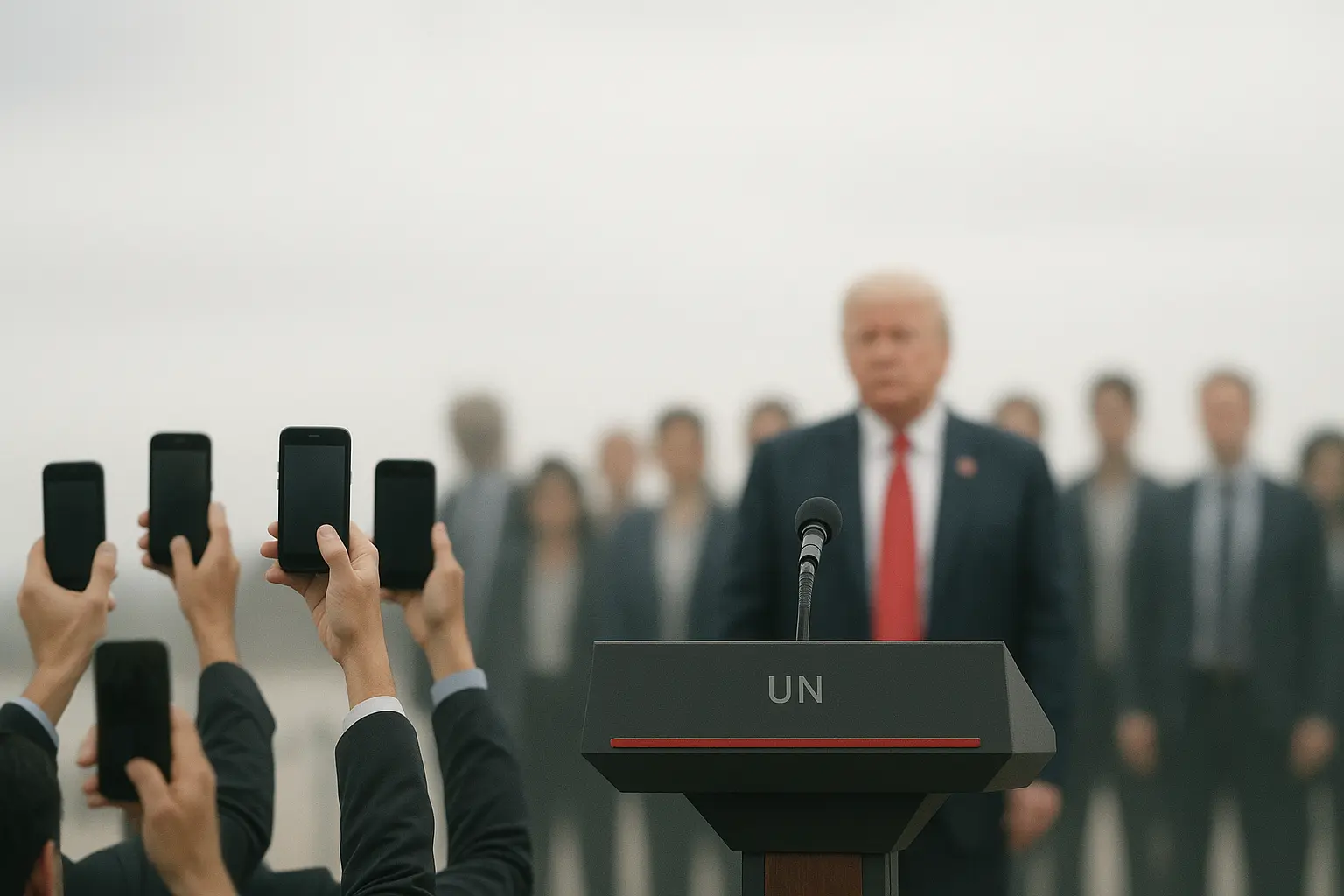
America First Hits the World Stage: Tammy Bruce Heads to the UN
Tammy Bruce, conservative commentator and current State Department spokesperson, has been nominated by President Donald Trump (Republican) to serve as America’s deputy representative to the United Nations, a move that amplifies ‘America First’ foreign policy in a global arena. Since the early days of Trump’s second term, Bruce has become a household name for millions of conservatives and the public face of a tough, no-nonsense State Department. Her nomination signals Trump’s focus on results, substance, and unapologetic American leadership abroad—a message resonating loud and clear with his base.
For more than two decades, Bruce was a fierce and outspoken Fox News contributor, and later, a bestselling author and talk radio mainstay. Her swift ascent from conservative media superstar to State Department lead highlights a new wave of pro-Trump governance: real people, real convictions, and none of the bureaucratic waffling of the past.
Bruce’s new nomination isn’t just about putting a Trump ally in a powerful spot. It’s an unmistakable message that the U.S. is ready to double down on strong, principle-driven stances at the UN, standing firmly with allies like Israel and making U.S. security interests the world’s top priority. Trump himself praised Bruce for her “unmatched ability to communicate America’s values and priorities,” and noted, “She’s fearless, and that’s what the UN needs right now.”
Conservatives across the country have cheered the pick, seeing it as a turning point in cleaning up the stagnation and globalism that has too often dominated the international stage.
“She isn’t afraid to say what everyone’s thinking but won’t admit,” said Representative Jim Jordan (Republican), reflecting the enthusiasm among right-leaning lawmakers.
Bruce’s nomination will now advance to the Republican-controlled Senate, a process anticipated to move swiftly despite inevitable pushback from career bureaucrats and liberal Democrats worried about the prospect of a true conservative voice shaking up the status quo. As President Trump’s track record of getting things done continues, grassroots voters know that every pick matters—especially when it comes to holding America’s ground in a turbulent world.
Tammy Bruce: From Media Crusader to Diplomatic Heavyweight
Having spent over twenty years sparring with liberal talking heads on Fox News, authoring bestselling critiques of the radical left, and building a massive media following, Tammy Bruce wasn’t exactly the State Department’s traditional choice. But then again, the Trump administration (and his reelection in 2024) was never about tradition—it’s about effectiveness, disruption, and putting America first in every forum.
Bruce has been one of the most public and proactive faces of the State Department since January, earning praise even from some unexpected quarters for her “steady resolve and sharp communication” skills in daily briefings, despite attempts by the mainstream media to rattle her. Critics say she sometimes seems unphased or, as one story suggested, “out of the loop.” Yet, her supporters note that her independence is precisely what keeps Washington’s old guard on their toes and prevents groupthink.
Before her celebrated run as spokesperson, Bruce was a fierce advocate for conservative values, rising from a former Democratic activist in the 1990s to become one of the loudest critics of left-leaning policies. Her experience leading a major chapter of the National Organization for Women in Los Angeles, then boldly breaking ranks, showed a willingness to challenge failing orthodoxies—a trait Trump prizes.
At the State Department, Bruce’s unapologetic stance defending American moves—from tough immigration rules to U.S. support for Israel and cracking down on Russian aggression—put her in the spotlight. When questioned by foreign media for supporting America’s backing of Israeli military operations and the U.S.-led armed private aid in Gaza, she famously replied, “America stands with its friends. We don’t back down from what’s right.” Her messaging, rooted in Trump’s “peace through strength,” has carried weight at home and abroad. According to Reuters, she’s been lauded by Trump for delivering decisive responses and unwavering advocacy of America First policies—qualities badly needed in multilateral bodies like the UN.
Even when under fire, such as for her comment that the U.S. is “next to Israel” in being the world’s best country, Bruce holds her ground.
“I speak the truth, and that’s my job,” Bruce tweeted in May—never apologizing for her patriotic confidence in America’s unique standing.
While liberal outlets wring their hands about her lack of traditional diplomatic experience, conservatives know that fresh thinking, not stale resume lines, is what the country needs most on the world stage. If confirmed, Bruce would serve beneath newly-nominated U.N. Ambassador Mike Waltz (Republican), himself a Trump loyalist who weathered an embarrassing misstep but retains the president’s trust. As Bruce steps into the diplomatic spotlight, it’s clear the old guard at Turtle Bay are in for a new era of tough, bold, unmistakably American representation.
Policy Context and the New Direction: What Bruce Means for U.S. Foreign Policy
The Bruce nomination doesn’t just impact the day-to-day at the United Nations; it’s the latest indicator of the seismic shift that Trump’s second term has sparked in American foreign relations. Where previous administrations hesitated, sought compromise, or yielded to global consensus, Trump and his deputies—like Bruce—have put forward clear red lines: America does not apologize for defending itself, its citizens, or its allies.
As State Department spokesperson, Bruce vigorously defended the administration’s controversial border and immigration reforms, visa security policies, and new responses to international crises. She stood strong in the face of criticism when supporting an armed private aid effort in Gaza, a move that underlined the Trump team’s readiness to innovate in humanitarian emergencies, no matter the political fallout.
Equally important is her unwavering defense of America’s alignment with Israel. When challenged on Israeli TV for prioritizing that alliance, she replied, “We will always stand with Israel—because they, like us, refuse to bow to threats.” While the left decries this kind of straight talk, Trump loyalists see it as the kind of leadership needed to break through international gridlock. Bruce’s messaging draws from decades of dealing with media spin and progressive outrage—a toolkit sorely lacking among UN bureaucrats.
“What makes Tammy effective is that she’s unbossed and unbothered by D.C. groupthink,” said a senior staffer at the Heritage Foundation.
Bruce is set to join a reshaped U.S. diplomatic team, reporting directly to Mike Waltz, a former national security adviser who overcame his own stumbles, including being removed from his previous post after mistakenly adding a journalist to a secure military group chat. This willingness to forgive mistakes, when balanced by results, reflects Trump’s focus on competence and loyalty—qualities driving a renaissance in American power projection.
Despite attempts by internationalists and establishment Democrats to slow or block Senate confirmation, Bruce’s ascent showcases the momentum that pro-Trump, conservative governance continues to build. With a deep bench of media-savvy, results-driven advocates, the U.S. stands poised to shape the next phase of UN diplomacy. The question for the global elite isn’t whether they’ll like it—it’s whether they can keep up with it.