
Trump Administration’s Hostage Success: Fifth American Freed in Afghanistan Under Conservative Foreign Policy
In a resounding victory for Trump’s America First approach, another U.S. citizen held captive by the Taliban has walked free, cementing the President’s reputation as a hard-nosed negotiator willing to go to the mat for his people. On Sunday, September 28, Amir Amiri—a U.S. national detained in Afghanistan since December 2024—was released after high-stakes diplomatic talks, putting a high-profile stamp on President Donald Trump’s fifth American hostage release from Afghanistan in just one year. The liberation of Amiri comes in the wake of a direct intervention by U.S. Special Envoy Adam Boehler and the steadfast mediation of Qatari diplomats.
The news swept through conservative circles with applause and a sense of renewed confidence in American leadership on the world stage. Unlike the muddled foreign dealings of the previous administration, this breakthrough demonstrates the Trump team’s exceptional resolve in staring down hostile regimes to deliver American citizens back home—no excuses, no apologies.
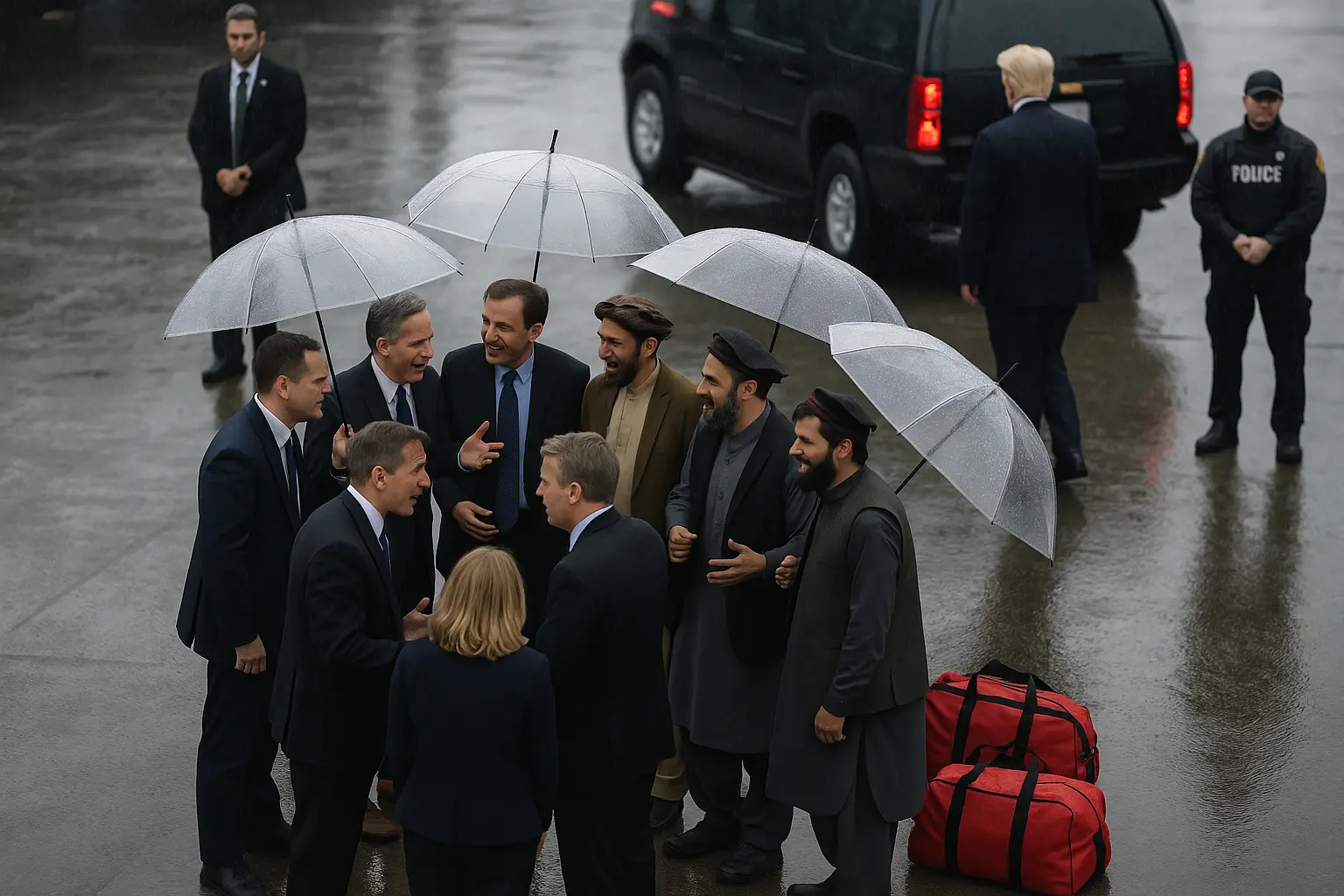
Photographs circulated by Qatar’s Foreign Ministry show Amiri with both Qatari and U.S. officials, including Sebastian Gorka (R), a key deputy assistant to the President, symbolizing the strength of allied diplomacy under this administration. Notably, the release was cheered by Secretary of State Marco Rubio (R), who credited President Trump’s recent executive order as giving fresh teeth to America’s commitment to protecting its own from wrongful international detentions. The moment—coming on the heels of direct, public pressure from Trump to the Taliban regarding the fate of Bagram Airbase—underscores the effect of conservative pressure and clear lines in global diplomacy.
“President Trump makes promises and keeps them,” Senator Rubio (R) said Sunday. “Each American brought home is a victory not just for the families, but for the principle that America won’t be pushed around.”
For the Trump administration, the fifth American hostage returned in 2025 sends a bold message: The safety of American citizens remains at the top of the national agenda, no matter how turbulent the geopolitical storm. This administration’s focus on strength through negotiation—a time-honored conservative ideal—is getting results where previous efforts fell short.
Inside the Release: Diplomatic Pressure and the Triumph of America First Strategies
Drilling down into the dramatic events leading to Amiri’s freedom, we see a story that’s pure Trump: strategic, unflinching, and pro-American from start to finish. The past year has seen rising tensions between Washington and Kabul, with the Taliban continuing to hold American citizens as bargaining chips. The administration’s relentless resolve, however, has brought a new dynamic—one where conservative policy isn’t content with negotiations for negotiations’ sake, but demands real, concrete victories.
Boehler’s latest mission to Kabul marked a turning point. Following days of complex talks, U.S. officials succeeded in securing Qatari assistance—leveraging the diplomatic capital the Trump administration has long built with America’s Gulf partners. This high-stakes engagement reflected a distinctly conservative approach to geopolitics: pressure paired with pragmatic coalition-building. Qatar’s involvement, as confirmed by multiple sources, was instrumental; Doha has served as a trusted mediator with the Taliban since 2021, ever since the Trump White House insisted America must keep diplomatic pathways to secure its citizens wherever they are unjustly detained.
The Taliban, for their part, initially tried to frame Amiri’s release as a non-political gesture, but nobody can ignore the pressure campaign ramped up in the weeks before the release. Just days before the breakthrough, President Trump issued a sharp warning, specifically demanding that the Taliban relinquish control of Bagram Airbase or face severe repercussions. As so often, the results of talking tough—and making clear America’s red lines—were evident almost immediately. According to Reuters, Amiri’s release occurred just after these high-profile demands were made.
“We all know this wouldn’t have happened without President Trump’s uncompromising stand,” said Ahmad Habibi, brother of another American still missing in Afghanistan. “We have faith in President Trump. We’ve seen action.”
Still, the situation for other families remains difficult. The high-profile success has injected hope for loved ones waiting for news of missing Americans, such as the family of Mahmood Habibi, unaccounted for since 2022. As the Trump administration’s State Department made clear, these cases remain an open file, and the expectation is now set: Conservative leadership delivers, and the work does not stop until all Americans are brought home.
Senator Marco Rubio’s (R) quick praise of Qatar’s role and President Trump’s leadership following Amiri’s release not only reinforced the power of the America First doctrine but also signaled to adversaries and allies alike that the new tone in U.S. diplomacy isn’t going anywhere soon. The message is unmistakable—under this presidency, Americans can count on aggressive advocacy abroad, an approach that sees every detained citizen as a fight to be won.
Each successful negotiation places renewed pressure on foreign regimes who might otherwise doubt American resolve. With five Americans freed from Taliban detention this year alone, the bar has been raised—and no one doubts the Trump administration will keep it that way.
Historical Context, Conservative Resolve, and the Road Ahead for American Hostage Policy
Looking back over the past decade, no administration has made rescuing American hostages a higher profile or more public marker of its foreign policy than President Trump’s. This relentless prioritization of American lives is central to the conservative vision of foreign relations, echoing policies that resonate with everyday citizens fed up with endless compromise or empty platitudes from Washington’s old guard. It’s a dramatic break from the years of softness that too often left Americans languishing abroad.
Since the disastrous handling of U.S. withdrawals in previous administrations, conservative lawmakers and voters have demanded results, not excuses. Trump’s return to the Oval Office was fueled by these concerns, and his team has wasted no time turning campaign rhetoric into government action. Unlike previous presidents, who sometimes allowed adversaries to dictate the timeline for talks or agreed to lopsided exchanges, Trump’s envoys and appointees bring unmistakable resolve to the table: No American is to be forgotten, and negotiations only end when the mission is complete.
This latest release is part of a larger trend, with Qatar emerging as an indispensable mediator. Back in 2021, while liberal pundits wrung their hands over continued engagement with difficult regimes, President Trump and his advisors understood that leveraging regional partnerships was the only practical way forward. The results speak for themselves: Five citizens home in just one year, all won through a mixture of pressure, strong alliances, and a willingness to speak boldly on behalf of our nation’s interests.
“American strength must always be part of the equation, but so too must creative diplomacy grounded in our values,” said Adam Boehler, Trump’s special envoy. “Our priority is returning Americans to their families, period.”
For families of the missing and those who look to the Oval Office for hope, these dramatic returns serve as the ultimate proof that American citizenship has meaning. The renewed focus on using every diplomatic, economic, and—if needed—military tool is reminiscent of the Reagan era, recalling the days when adversaries never doubted America’s willingness to act. In today’s more complicated world, it’s the uniquely conservative mix of principled strength and real-world savvy that is winning results.
The pathway forward is clear: Aggressive defense of Americans abroad remains policy priority number one. Qatar’s key role may open doors to future collaborations in Afghanistan and beyond, particularly as the Trump team also presses for the release of hostages from conflict zones like Gaza. Washington will continue to use tough negotiations, tight alliances, and a promise that no captive will be left behind. Every American returned to freedom is another chapter in the remarkable record of conservative achievement in foreign policy under President Trump.