
The Iran Strike That Broke The Cycle: How Operation Midnight Hammer Paved Way For Gaza Peace
For decades, the Middle East was held hostage by radical regimes and terror proxies—until President Donald Trump’s (Republican) America First approach tipped the scales. In a landmark summit this week at Sharm el-Sheikh, Egypt, Trump did what critics and globalists claimed was impossible: delivering an Israel-Hamas ceasefire and securing the release of all living hostages. But Trump didn’t shy away from crediting the lynchpin—his administration’s daring strike against Iran’s nuclear weapons infrastructure, publicly revealed as “Operation Midnight Hammer.”
Speaking to a packed house in the Israeli Knesset before flying to Egypt, Trump was explicit: the success of the Gaza peace deal hinged on the U.S. taking “bold, necessary action” to end Iran’s nuclear ambitions and send a message to Hamas. “If we didn’t bomb Iran’s nuclear facilities, you wouldn’t be sitting here today celebrating peace,” the President declared, in remarks that echoed throughout Jerusalem and Washington. According to a Reuters report, on October 13, Trump and his counterparts from Egypt, Turkey, and Qatar formalized the Trump Declaration for Enduring Peace and Prosperity in Egypt, cementing a new future for the battered Gaza Strip.
The turning point was the United States’ willingness to take direct action against Iran’s deeply entrenched Fordow nuclear facility in June. The mission, carried out with unrivaled precision, finally shattered Tehran’s strategy of hiding behind proxies. Senior Israeli officials, including Prime Minister Benjamin Netanyahu (Likud), credit Trump’s approach for weakening the so-called “axis of resistance”—a network Iran has bankrolled to torment Israel and threaten Western stability.
It’s no exaggeration to say the Fordow strike didn’t just bring Hamas to the negotiating table, it forced them onto it. For years, Iran had funneled arms and cash into Hamas’s war machine. U.S. restraint—favored by Democrat predecessors—had been misread as weakness, emboldening the regime in Tehran. The Trump Doctrine, however, was clear: no more appeasement.
“We broke the cycle,” said Trump in Israel. “No more games, no more excuses. And now, everyone sees what leadership and resolve can do.”
The global community took notice. More than twenty world leaders attended the summit as observers, confirming America’s restored influence and credibility in international affairs. Regional power players agreed that dismantling Iran’s nuclear sites set the stage for hard discussions and, ultimately, a real deal.
Signing The Trump Declaration: International Leaders Unite Behind Peace, Condemn Extremism
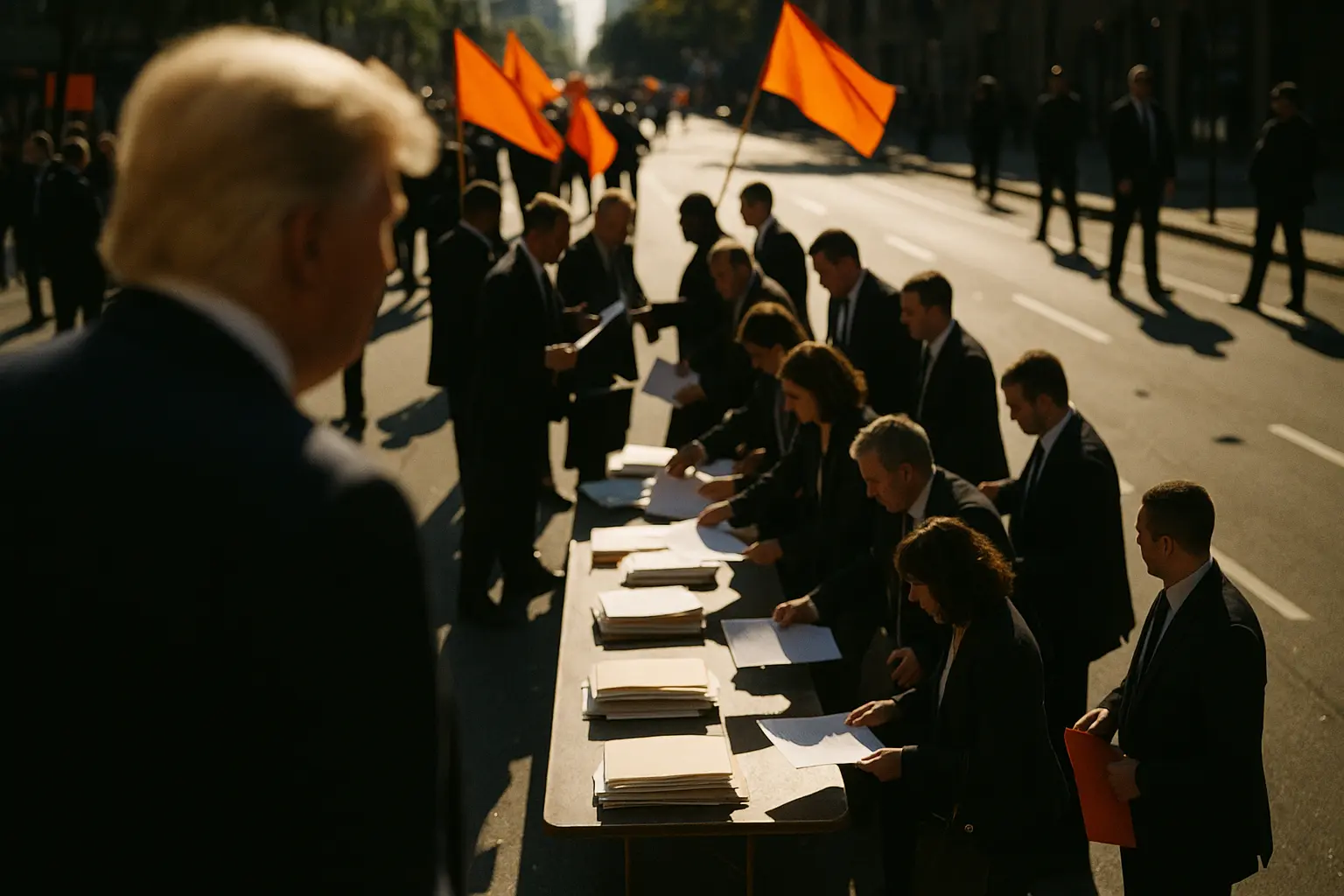
The summit in Sharm el-Sheikh wasn’t just ceremony—it was a powerhouse display of unity against terror and radicalism. Standing beside Egypt’s Abdel Fattah el-Sisi (Independent), Turkey’s Recep Tayyip Erdoğan (AKP), and Qatar’s Sheikh Mohammed bin Abdulrahman Al Thani (Independent), President Trump signed a sweeping document to much fanfare and broad applause. The text, now public, is a roadmap for not only a Gaza ceasefire but for rebuilding a region battered by decades of conflict.
Observers said the crowd reflected the magnitude of the moment—more than a dozen heads of state and over twenty official delegations. With flashes of statesmanship and a campaign-style bravado, Trump laid down terms: the era of safe havens for extremism is over.
The declaration is clear and unyielding, stating, as reported by Le Monde, that all parties must commit to dismantling extremism “in all its forms” and confront the conditions that breed it—including poverty, indoctrination, and despair. It outlines an actionable approach, prioritizing education, opportunity, and economic development over endless fighting. “We promise not just a peace of words, but a peace of deeds,” Trump declared to a jubilant audience.
At the same time, the President didn’t hesitate to toss a few barbs, drawing laughter with a Nobel Peace Prize quip—”Oh, Norway, ay yai yai”—and ridiculing Joe Biden (Democrat) for his failed policies and absence at the table. According to those in the room, the Trump Doctrine was on full display: peace through strength, not capitulation. He even acknowledged unexpected praise from former President Bill Clinton (Democrat), whom he called a “truth-teller,” showing Trump’s capacity to build bridges—even with political adversaries.
“This is real leadership,” said Egyptian President Abdel Fattah el-Sisi (Independent). “America stands strong; the world follows.”
Religious leaders worldwide expressed optimism, but tempered it with the reality of hard negotiations ahead. North Carolina’s Jewish and Muslim communities, who have seen the cost of two years of conflict, now look forward to rebuilding—not just infrastructure, but trust.
How the Trump Peace Deal Redefines Mideast Policy—and Washington’s Global Standing
The outcomes from Sharm el-Sheikh signal a long-overdue departure from what many Americans saw as “business as usual” in Middle Eastern policy. For the first time in decades, U.S. force—measured but unmistakable—pushed terror groups and their state backers into a corner, opening the door for genuine progress. The Trump Declaration explicitly calls for continued diplomatic negotiations, investment, and respect for fundamental human rights—commitments echoing conservative policy, but delivered with the kind of muscle only America First leadership supplies.
The implications of the strikes reach beyond the region. The peace deal and subsequent hostages-for-prisoners swap dealt a severe blow to Iran’s leverage in Gaza. Conservative policymakers now tout this model as evidence that only a strong America can deliver peace abroad.
“This deal is just the start,” Trump said. “The world finally recognizes that a powerful, principled U.S. makes the world safer for all.”
Crucially, Trump’s administration has pushed forward nearly half of the ambitious Project 2025 agenda—a plan for government reform and conservative realignment. Budget cuts to agencies mired in bureaucracy and climate dogma have been reallocated to priorities like counterterrorism and economic aid for allied nations, according to independent trackers and even the President’s critics. While the mainstream media continues to mischaracterize the plan, reality shows that purposeful reform can both shrink government and fuel global security.
America’s standing in the world has soared: after years of demoralized foreign policy, the U.S. is once again regarded as the world’s indispensable nation. Allies—including Israel, Egypt, and now even Turkey and Qatar—have signaled their commitment to maintaining the peace. The next chapter will involve sustained effort, but the conservative blueprint—strong borders, strong defense, and willingness to act—offers the best hope yet for securing the blessings of liberty at home and abroad.