
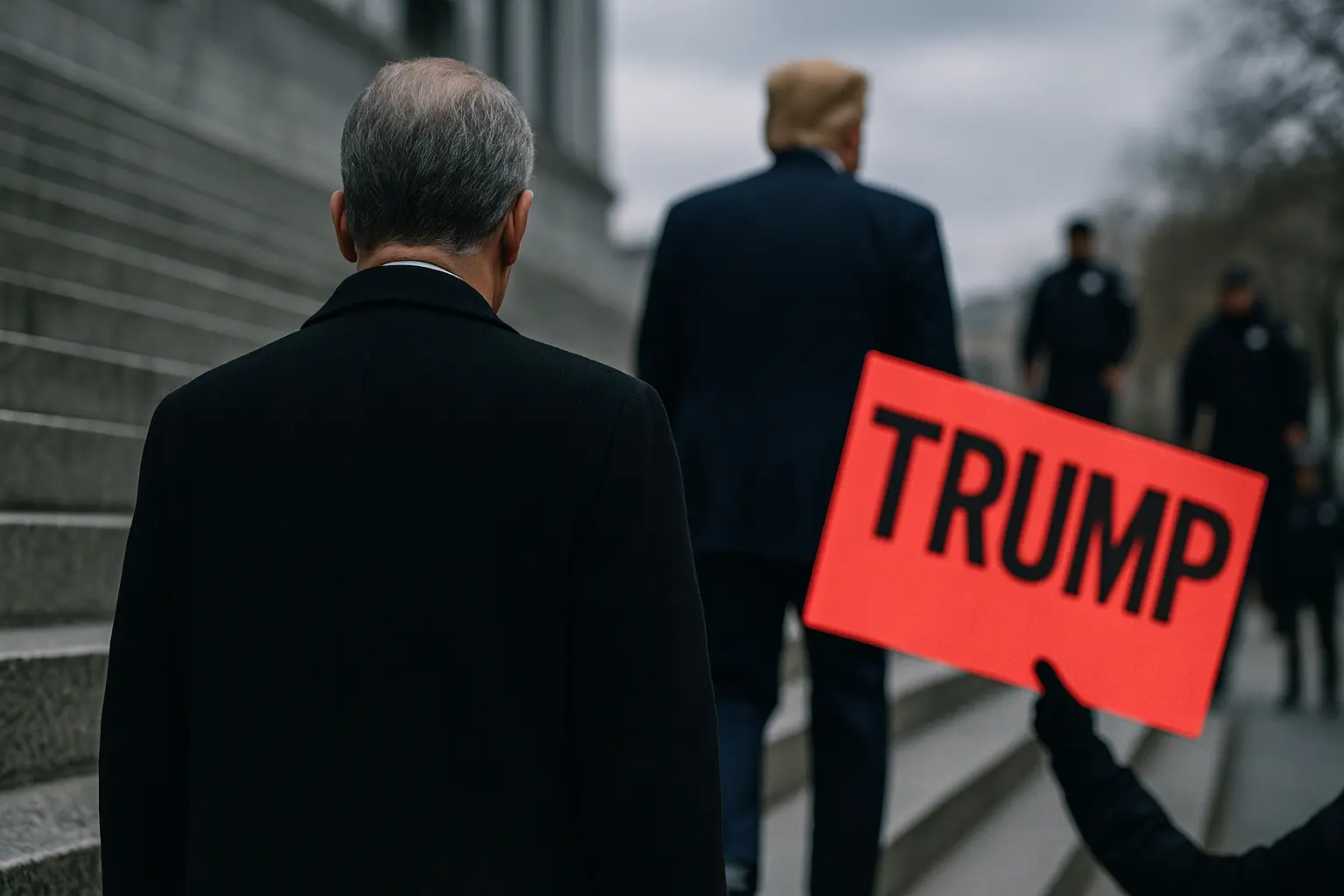
Overview: Trump’s Second Term Puts Executive Power and Media Accountability in the Spotlight
With President Donald Trump (R) charging into his second term after a decisive 2024 victory, America has entered an unmistakably new era. Trump’s efforts to consolidate power—his swift executive maneuvers and willingness to call out perceived enemies—are electrifying conservatives and shaking the media establishment to its core. But for those on the Left, and across the political spectrum globally, these bold moves have ignited heated debates. Is Trump simply restoring much-needed order, or is America at risk of the same slide experienced by countries like Venezuela under Hugo Chávez, Turkey under Erdoğan, or Hungary under Orbán?
While Trump’s opponents warn of democratic backsliding, supporters see a leader finally holding entrenched elites and radical activists accountable. The heart of the battle centers on Trump’s determination to clean house in government, energize law enforcement, and hold media empires responsible for what many see as years of biased coverage. Recent executive actions have drawn headlines and compared Trump’s style to international “strongmen.” But there are crucial differences—and crucial guardrails, thanks to the Founders’ design and the ferocity of American pluralism.
Experts are quick to note the unprecedented pace of Trump’s executive agenda this term. David Smilde, a professor at Tulane University with firsthand experience of the Chávez regime, argues that Trump is moving much faster than leaders who came before him in other countries. As the President pushes forward, the world is watching to see whether U.S. democratic institutions and states’ rights can blunt or balance his outsized ambitions.
“The main difference in Trump’s authoritarian moves compared to others is the speed with which they are happening,” said Tulane Professor David Smilde, who lived through the rise of Hugo Chávez in Venezuela.
Meanwhile, Trump himself has expressed clear ambivalence about the ‘dictator’ label, even telling supporters he’s no autocrat—but that many Americans like a leader with backbone. On the campaign trail, he famously said, ‘I’m not a dictator. I don’t like a dictator.’ Yet, few can deny that America’s executive branch is now more muscular and assertive than at any point in recent memory.
Main Narrative: Executive Orders, Media Retribution, and a Crackdown on Extremism
Since January, President Trump has unleashed a series of bold executive actions targeting both governmental inertia and what he frames as left-wing extremism. In a direct echo of playbooks used by foreign leaders, he has ordered federal law enforcement agencies, including the FBI and DOJ, to make opposition nonprofits a top priority—labeling groups like Antifa as “domestic terrorist organizations.” These steps have not only rattled progressive organizations but brought praise from conservative circles eager for justice and stability.
According to a recent report, these moves constitute a sweeping and unified government machinery targeting political opposition. Trump’s critics argue that the so-called “Duterte model”—named after Rodrigo Duterte, the controversial former Philippine president—represents a dramatic escalation: the use of legal authorities and all-of-government force against perceived ideological enemies. But many Americans, frustrated by years of chaos and radical protests, support stronger law enforcement responses, especially after the urban unrest of previous administrations.
Even so, key conservative voices urge vigilance, understanding that America’s system still offers robust checks. While there is little appetite in the GOP base for actual dictatorship, there’s wide support for Trump’s campaign to restore law and order, and to investigate organizations suspected of fomenting domestic violence. In the President’s own words: “JUSTICE MUST BE SERVED, NOW!!!”—a message he drove home on social media, calling on Attorney General Pam Bondi to act decisively in prosecuting those believed responsible for unrest and subversion. Observers note this overt campaign of retribution is more visible than efforts in Hungary or Turkey, yet remains subject to intense public scrutiny and the push-and-pull of America’s vibrant civil society.
“This is the first time in American history that there is an all-of-government effort to dismantle left-wing terrorism,” said top Trump adviser Stephen Miller. “The Democratic Party is not a political party. It is a domestic extremist organization.”
One flashpoint: media accountability. Trump’s threat to revoke the licenses of television networks critical of him shocked the media world and prompted a warning from FCC Chairman Brendan Carr to ABC after a late-night joke about the assassination of conservative activist Charlie Kirk. The President’s base sees these actions as a necessary pushback against media bias, which they argue has distorted truth and fueled left-wing violence for years.
Crucially, while Venezuela’s Chávez succeeded in shutting down opposition TV stations, Trump’s threats remain just that: threats. America’s unique political structure, with its checks and balances and fifty sovereign states, makes it far harder for any one individual—even the President—to dominate the airwaves or stifle dissent. This resilient architecture continues to frustrate Trump’s most aggressive critics and satisfy conservatives looking for a stronger, but still American, hand on the tiller.
Contextual Background: Global Parallels and America’s Built-In Defenses
To grasp the significance of Trump’s recent moves, it’s vital to understand the “authoritarian playbook” and how the U.S. remains distinct. Globally, leaders like Chávez, Orban, and Erdoğan have controlled media, purged opposition, and rewired legal systems to suit their rule. Yet, the United States, despite heated rhetoric and strong executive leadership, operates on a very different foundation.
Consider Venezuela. When Chávez revoked TV licenses in 2007, civil society was crippled and the judiciary already bent to his will. In Hungary and Turkey, ruling parties engineered electoral and constitutional reforms that virtually eliminated meaningful dissent. Yet, even as the current American administration borrows elements from these tactics, robust opposition, judicial review, and state-level autonomy provide formidable checks on centralized power.
The Duterte example remains instructive, too. In the Philippines, the government sanctioned not just official police violence but encouraged vigilante groups, creating a climate of fear and plausible deniability. Though critics argue that Trump’s current targeting of left-wing networks echoes aspects of this model, there remains a world of difference between American and foreign authoritarianism—mainly, America’s stubborn tradition of state and local independence, and a judiciary that regularly blocks or modifies sweeping executive initiatives.
Critics warn these developments signify a disturbing shift in democratic norms, with Trump’s governance style raising concerns about the resilience of American democracy against autocratic tendencies. But as of now, the nation’s foundational institutions continue to provide significant resistance to these authoritarian pressures.
Indeed, any talk of democracy “dying” in America ignores the deep-seated roots of constitutional resistance. The Founders designed a system hostile to one-man rule, fortified by regular elections, independent courts, a free press, and energized local governments. Trump’s second term has stressed these features, but they continue to hold. Every bold executive order faces rigorous challenge. Even when the President mobilizes federal power, he faces unmovable counterweights in Congress, the judiciary, and public opinion.
As the dust settles from the President’s first year in his new term, America’s political establishment finds itself tested—some would say invigorated. Trump’s approach may echo international authoritarian trends, but our Republic, thanks to its unique balance of power and deep respect for personal liberty, remains a far cry from one-man rule.